


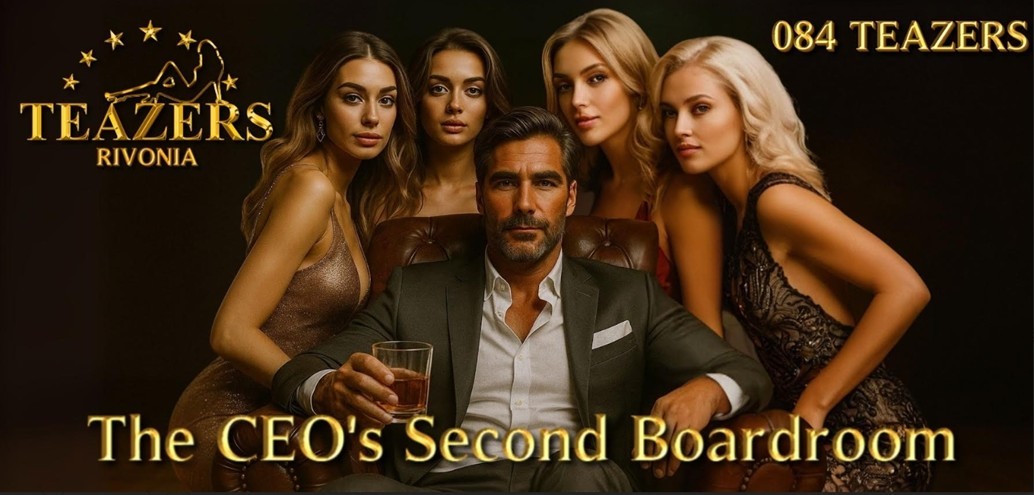
- A complaint argued the billboard portrayed CEOs as morally irresponsible and undermined trust in corporate leadership.
- The ARB found the billboard promoted negative stereotypes, objectified women and linked power with sexual entitlement, setting a damaging precedent.
- Teazers must remove the advert within two weeks, with the ruling highlighting the broader impact on public values and business reputation.
A Teazers billboard that depicted a suited executive figure surrounded by women has been banned after the Advertising Regulatory Board found that it sent a damaging message about business leadership in South Africa. The complaint focused on what the image suggested about power, authority and ethics in corporate culture.
The complainant told the regulator the image was “offensive, highly suggestive” and said it sent “the wrong message about CEOs.” She said it appeared to be “promoting infidelity” and “giving the message that this is how CEOs behave.” In her submission, she linked her concern directly to the moral crisis facing leadership in the country, stating, “In a society where fraud, corruption is rife, this is a further nail in that coffin.”
ARB draws a line around leadership and sex
In ruling on the matter, the Advertising Regulatory Board rejected the idea that the billboard was merely aspirational imagery. It accepted that adult entertainment is legal in South Africa, but said that legality does not excuse harmful symbolism.
The Directorate stated that advertising “should contain nothing that is likely to cause serious or widespread or sectoral offence,” and made it clear that this case involved more than personal offence. It explained that context matters, including “the medium, likely audience, the nature of the product or service, prevailing standards, degree of social concern, and public interest.”
Addressing the deeper implications of the image, the rule was unequivocal. “There should be no association between professional stature and sex, or between power and the likelihood of attracting (or coercing) women,” the Directorate said.
It went further, stating plainly that “women cannot be depicted as a benefit or prop of wealth or power, as this is clear objectification,” and concluded that “this is exactly what the Advertisement is depicting.” On that basis, the ARB ruled the advert unlawful under Clause 1 of the Code, which protects dignity and public values.
Teazers denies wrongdoing
Teazers argued that the billboard did not depict nudity, exploitation or explicit content and rejected the idea that it made any statement about leadership. The company defended the image as symbolic and aspirational rather than literal.
“Viewed objectively, the advertisement is not likely to cause serious or widespread offence and therefore does not breach Clause 1 of the Code,” the company said in its response. It insisted that the billboard did not portray men or women in a degrading manner, adding that there was “no suggestion of inequality, ridicule, or stereotyping directed towards any gender or profession.”
The company also pushed back strongly against the allegation that it promoted infidelity, stating that “there is nothing in the visual composition or the message presented” that supports that interpretation. “Interpreting the imagery as endorsing infidelity requires a subjective moral assumption that falls outside the reasonable-person standard,” Teazers argued.
Why the defence failed
The Advertising Regulatory Board was not persuaded. It agreed that adult entertainment advertising is lawful, but emphasised that it cannot be shielded from ethical scrutiny.
The Directorate stated that while some members of the public may find adult entertainment uncomfortable, that alone is not grounds for a ruling. However, it drew a sharp distinction between services that are legal and symbolism that is harmful.
Referring to previous rulings, the ARB reiterated that adult businesses “are entitled to advertise them, within the parameters of the Code of Advertising Practice.” In this case, the problem was not the business being advertised, but how power was portrayed.
The Directorate also placed the billboard within a broader global context, referring explicitly to high-profile abuse cases involving elite figures. It observed that wealth and power have increasingly been associated with exploitation, citing concerns stemming from the Jeffrey Epstein scandal and similar cases involving influential figures.
Against that background, the ruling held that the billboard carried “implications of sexual harassment, which should certainly not be depicted as desirable in any context.”
Removal ordered
Teazers has been instructed to remove the billboard within two weeks. The order applies specifically to “the Advertisement featuring a CEO surrounded by women, stating ‘the CEO’s second boardroom.’”
Get your news on the go. Click here to follow the Conviction WhatsApp channel.


