


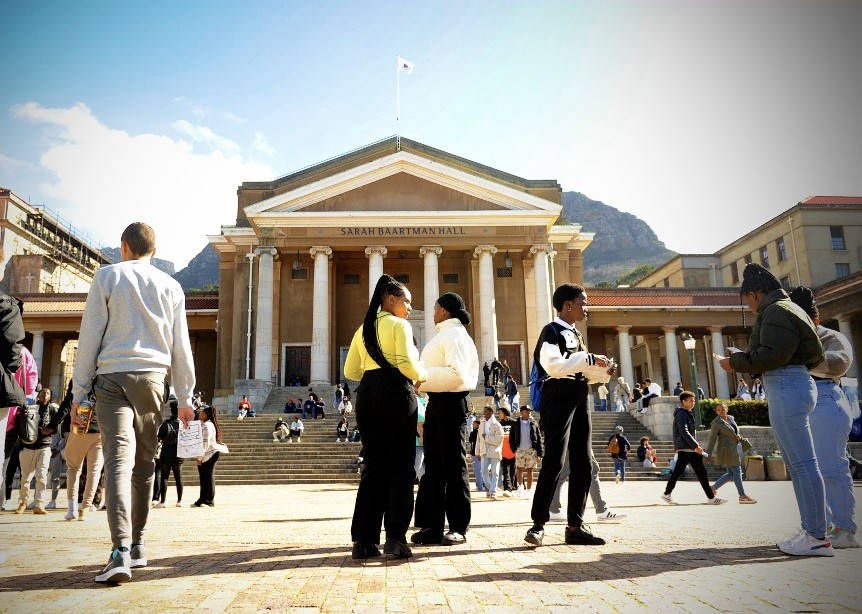
- The High Court dismissed the UCT’s attempt to remove former student residents and others living on university property after finding that some occupiers had made homes there.
- Judge Adhikari found that constitutional eviction protections under the Prevention of Illegal Eviction and Unlawful Occupation of Land Act applied, as eviction could leave some of the occupiers homeless.
- The ruling makes it clear that university land, including a parking lot, can legally become a home for vulnerable people with nowhere else to go.
For months, a parking lot below the M3 highway on the University of Cape Town property became a last resort for people with nowhere else to go.
What started as the aftermath of an eviction from student accommodation turned into a constitutional dispute about dignity, homelessness and the meaning of home. However, the High Court in the Western Cape has now ruled that UCT could not simply remove the remaining occupiers through ordinary legal processes because, according to the facts before the court, that parking lot had become their home.
UCT approached the court to enforce an earlier eviction order against former residents of the Philip Kgosana residence in Mowbray. The university argued that those who moved into a nearby parking area after being removed from the residence were acting unlawfully and breaching agreements to vacate university property. UCT asked the court to order their removal and to bar them from occupying any UCT property again without permission.
Acting Judge M Adhikari rejected that argument, finding that the case was much more serious than a simple trespass dispute because the evidence showed that at least some of the occupiers had nowhere else to go. Under the law, that changed everything for them.
What became of the displaced residents
The case involved several people who had previously lived in university housing, including SML, NM, LM, Lwazi Van Staden and Mveliso Kraai. After being evicted from the Philip Kgosana residence in December 2025, their belongings were moved to a university-owned parking lot next to the sports fields.
A tent was put up, a vehicle was parked alongside it, and some people started living there. UCT insisted that these individuals had homes elsewhere and that the Prevention of Illegal Eviction from and Unlawful Occupation of Land (PIE ) Act protections did not apply to them.
Judge Adhikari examined each person’s circumstances closely and reached a different conclusion for some of them. The court found that Van Staden and Kraai had shown evidence that they could not return to their parents’ homes and had no other safe place to go. On the balance of probabilities, the parking lot had become their only home.
Judge Adhikari wrote that the parking lot is, on a balance of probabilities, the home of Kraai and Van Staden, and there is a real risk that they will be rendered homeless if they are evicted from it. That finding meant they were entitled to the full protection of the PIE.
The judge continued that any application for their eviction must be sought in terms of the Act. That was fatal to UCT’s case because it had not brought a PIE eviction application.
A parking lot can become a home
One of the most important parts of the ruling is the court’s rejection of the idea that university property can never become a protected home.
UCT relied heavily on earlier case law about student accommodation, arguing that university housing is temporary and therefore not a home under PIE. Judge Adhikari said that the interpretation was too rigid.
The judge wrote that where the facts establish that a university parking lot or any other university property is the home of an unlawful occupier, PIE finds application, and the unlawful occupier is entitled to the procedural and substantive protections afforded by PIE.
That statement goes beyond just this case. It confirms that courts will look at people’s lived reality, not just the labels attached to land.
A residence room might be a temporary accommodation. A parking lot is usually just a parking lot. But if someone lives there with some permanence and has nowhere else to go, the Constitution may recognise it as their home.
Why UCT lost
The court also found that UCT overstated what earlier settlement agreements meant. The respondents had agreed to leave Philip Kgosana's residence, but they never promised not to occupy any other UCT property.
Judge Adhikari said there is nothing in the text or context of their undertakings that can reasonably be interpreted as them having also undertaken not to occupy any other property belonging to UCT.
UCT also asked for a court order to prevent any future unlawful occupation. That failed because several respondents were no longer living in the parking lot, and there was not enough evidence that they would try to occupy UCT property again.
In the end, the entire application was dismissed with no costs order.
Get your news on the go. Click here to follow the Conviction WhatsApp channel.


