


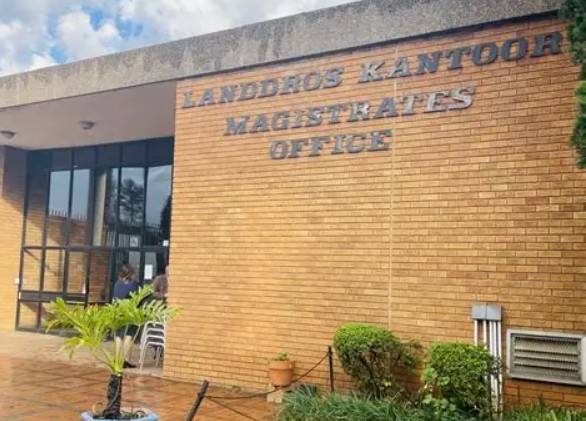
- The Full Court set aside the sanction that resulted in the removal of former Kempton Park Chief Magistrate Judith van Schalkwyk.
- Nine out of the original 13 misconduct findings were overturned during the review, leaving only four findings in place.
- The case has been referred back to the Magistrates Commission for them to reconsider what sanction is now appropriate.
The Full Court of the High Court in Johannesburg has set aside the removal of former Kempton Park Chief Magistrate Judith van Schalkwyk. The court found that a sanction based on 13 misconduct findings cannot stand after nine of those findings were overturned.
Judge LR Adams, with Judge S Mali and Acting Judge M van Nieuwenhuizen concurring, upheld part of Magistrate Van Schalkwyk’s appeal against the Minister of Justice and Constitutional Development, the Magistrates Commission, the chairperson of the misconduct inquiry Anand Maharaj, and Parliament.
The judges confirmed that four misconduct findings remain in place, but they set aside the recommendation that Magistrate Van Schalkwyk be removed from office. They also set aside the subsequent decisions by the Magistrates Commission, the Minister, and Parliament that followed from that sanction. The matter has been sent back to the Magistrates Commission for reconsideration.
Disciplinary process began with 24 charges
Magistrate Van Schalkwyk originally faced 24 charges of misconduct relating to her conduct as Chief Magistrate in Kempton Park. In October 2020, the presiding officer in the misconduct inquiry found her guilty on 13 counts and recommended that she be removed from office in terms of the Magistrates Act.
The 13 misconduct findings originally upheld against Magistrate Van Schalkwyk included improper use of a state vehicle; being rude, humiliating, belittling and threatening toward judicial and other officials; circulating a derogatory email about Chief Magistrate Jonker and the Chief Justice; gambling during work hours or being absent from work without leave; calling a magistrate out of court to do her hair; arranging a loan application for that magistrate without consent, and involving the magistrate in an Eduloan application to pay her son’s university fees.
She was also accused of removing the magistrate from court duties for several weeks to work on a Mozambican report; using the magistrate for Judicial Officers Association of South Africa activities; taking the magistrate to assist with an international judges’ conference and related meetings; requesting payment of travel expenses from attorney Moloi or receiving cash through another magistrate; using official parking at Kempton Park without paying; and failing to comply with a lawful order to submit daily returns.
Magistrate Van Schalkwyk launched a review in the High Court in Johannesburg. During the proceedings, the Magistrates Commission did not oppose the setting aside of nine of the 13 findings, leaving only four findings in force.
Judge Twala, who presided over the first hearing, upheld those four findings and refused to change the sanction of removal. Magistrate Van Schalkwyk then appealed.
Sanction was linked to all 13 convictions
The appeal court said the central issue was whether a sanction based on 13 misconduct convictions could still stand after nine of those convictions had been overturned. Judge Adams noted that the presiding officer’s original decision repeatedly referred to the fact that Magistrate Van Schalkwyk had been found guilty of multiple charges and 13 counts of misconduct.
Judge Adams wrote that the sanction was based on the finding that the appellant was guilty of thirteen counts of misconduct. He added that if a substantial portion of those findings is set aside, then the sanction should also either fall away or, at the very least, be reconsidered.
The Full Court found that the earlier judgment was mistaken by treating dismissal as inevitable, even though only four findings remained.
Parliament’s removal decision also falls away
Because the sanction was set aside, the court also overturned later decisions that depended on it, including Parliament’s resolution on 8 June 2022 to remove Magistrate Van Schalkwyk from office. Judge Adams said that when an initial administrative decision is invalid, any later decisions based on it cannot stand.
The court ordered that the recommendations of the presiding officer, the Magistrates Commission, the Minister of Justice, and Parliament all be reviewed and set aside. The matter must now go back to the Magistrates Commission for reconsideration.
No proof of ulterior motive or bias
Magistrate Van Schalkwyk argued that the disciplinary proceedings were driven by hostility towards her involvement in the Judicial Officers Association of South Africa and that the presiding officer was biased against her. The Full Court rejected both arguments.
Judge Adams said the claim of an ulterior motive was based on suppositions and unsubstantiated allegations, and that the complaints against Magistrate Van Schalkwyk came from other magistrates and court officials. He wrote that Magistrate Van Schalkwyk was charged with misconduct because she had actually committed misconduct, not because of her association with a voluntary organisation.
Regarding the allegation of bias, the court found no evidence apart from Magistrate Van Schalkwyk’s dissatisfaction with how the evidence had been evaluated.
Four misconduct findings remain
After the review, only the findings relating to Magistrate Van Schalkwyk’s treatment of judicial and other officials, the circulation of a derogatory email about senior judicial figures, the travel expense arrangements involving attorney Moloi, and the use of official parking without payment remained in force.
Judge Adams said the appeal court’s job was not to decide the matter all over again, but to determine whether the presiding officer’s conclusions were so unreasonable that no reasonable decision-maker could have reached them. The court found that this threshold had not been met for the remaining four findings.
Matter returns to the Magistrates Commission
The judgment does not automatically reinstate Magistrate Van Schalkwyk. Instead, the Magistrates Commission must reconsider what sanction, if any, is appropriate now that only four of the original 13 misconduct findings remain.
Judge Adams explained that a court may only replace an administrative decision in exceptional cases, and that this was not such a case. He said that no special case had been made for substituting the decision.
The court ordered the Minister, the Magistrates Commission, the presiding officer, and Parliament to pay Magistrate Van Schalkwyk’s appeal costs, including the costs of two counsel where employed. Each party must bear its own costs for the original review application.
Get your news on the go. Click here to follow the Conviction WhatsApp channel.


