





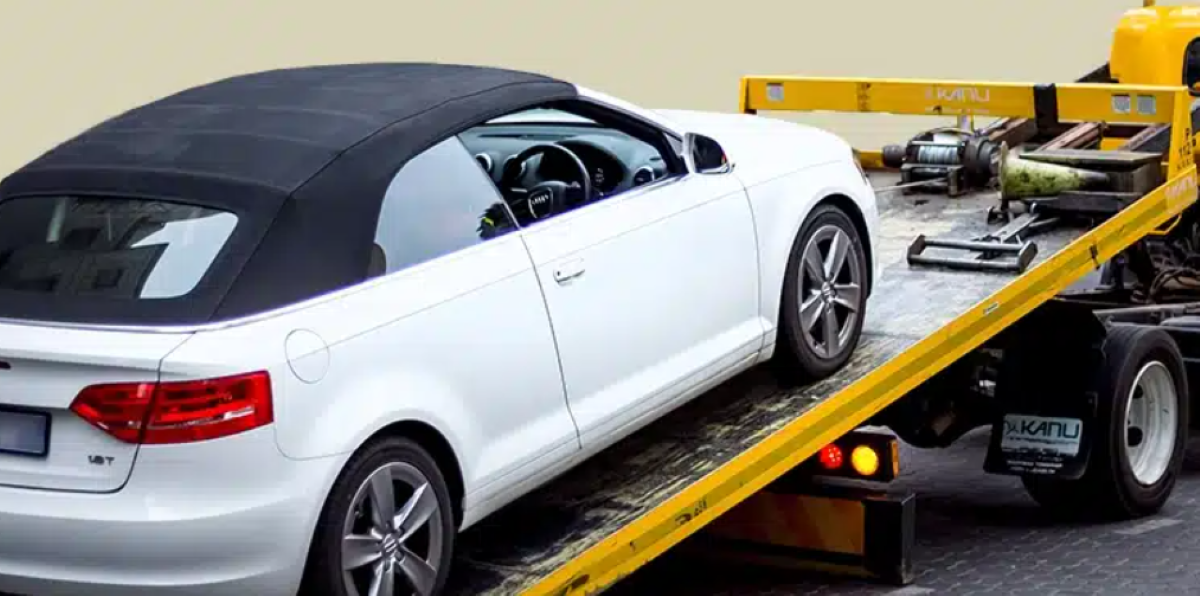
- A consumer who falls behind on vehicle payments still has legal protection against improper repossession.
- Voluntary surrender and repossession are two different processes, each with its own legal requirements.
- Two recent NFO cases led to R30 000 in compensation and a R300 000 shortfall being written off.
Financial pressure can make it hard for people to keep up with vehicle repayments. However, falling behind on payments does not give a bank the right to take back a financed vehicle without following the proper legal steps.
The National Financial Ombud Scheme (NFO) encourages consumers in financial difficulty to know their rights and understand the difference between voluntary surrender and repossession before handing over a vehicle or letting a credit provider take it.
Two cases handled by the NFO show what can happen if banks do not follow the correct process.
Minibus taxi retained after border impoundment
The first case involved a minibus taxi that police impounded at the South Africa-Zimbabwe border after a passenger was caught with illegal substances. Authorities eventually found that neither the vehicle owner nor the driver was involved in any crime.
Despite this, the vehicle was given to the bank that financed it instead of being returned to the owner. The bank kept the vehicle for several months, and during this time, more arrears built up on the account.
The NFO found that the consumer had made genuine efforts to sort out the dispute and pay off the arrears. However, she had broken the finance agreement by letting the vehicle cross the border without meeting its requirements.
But the NFO also found that the bank had not followed the correct legal process when it kept the vehicle. The NFO recommended the bank pay the consumer R30 000 for distress and inconvenience, and write off the legal and storage costs added to her account. The bank agreed to this.
Vehicle sold leaving R300 000 shortfall
In the second case, a bank repossessed and sold a consumer’s vehicle after getting it from his employed driver. The consumer said he had not voluntarily surrendered the vehicle and that there was no court order for the repossession.
During the NFO’s investigation, the bank could not provide a signed voluntary surrender form or proof that a court had authorised the repossession. While the consumer was far behind on payments and the bank had the right to pursue the debt, the NFO said this did not let the bank skip the legal steps for repossessing and selling the car.
By then, the vehicle had already been sold, leaving the consumer with a shortfall of about R300 000. Considering the consumer’s large arrears and the limited payments made while he still used the vehicle, the NFO recommended writing off the full shortfall. The bank agreed to this.
Voluntary surrender is not repossession
Nerosha Maseti, Lead Ombud of the Banking and Credit Division at the NFO, says these cases show that a bank’s right to recover a debt is separate from how it goes about doing so.
“A voluntary surrender cannot be forced on a consumer, and a bank cannot simply treat possession of a vehicle as proof that it was voluntarily surrendered”, says Maseti. “Likewise, if a bank wants to repossess a vehicle, it must follow the correct legal process. The protections in the National Credit Act are there for a reason and cannot be ignored.”
Section 127 of the National Credit Act allows a consumer to start the process of surrendering a vehicle by giving written notice to the bank. After that, the bank has to follow set procedures, which include valuing and selling the vehicle and giving the required notices.
Repossession is different. It is started by the credit provider to enforce its rights, and it must meet legal requirements, such as getting a court judgment allowing the repossession and sale of the vehicle.
Consumers remain liable for possible shortfalls
The NFO says that returning a vehicle does not always clear the debt. If the vehicle sells for less than what is owed, the consumer may still have to pay the difference. If there is any money left after the sale, it must go to the consumer.
Consumers who are struggling to keep up with payments should contact their bank as soon as possible. They should read all notices and letters, and make sure they know which legal process is being followed before handing over a vehicle. It is important not to sign anything they do not understand, and to keep records of payment arrangements and any documents about surrender or repossession.
If a consumer thinks a bank has repossessed, kept, or sold a vehicle without following the correct process, the NFO recommends first raising the issue with the bank. If it is not resolved, they should approach the NFO.
The NFO offers free, independent, and impartial help to consumers who have complaints against financial institutions in the banking, credit, non-life insurance, or life insurance sectors.
Consumers can contact the NFO by calling 0860 800 900, sending a WhatsApp message to 066 473 0157, emailing info@nfosa.co.za, or visiting www.nfosa.co.za.
Get your news on the go. Click here to follow the Conviction WhatsApp channel.