


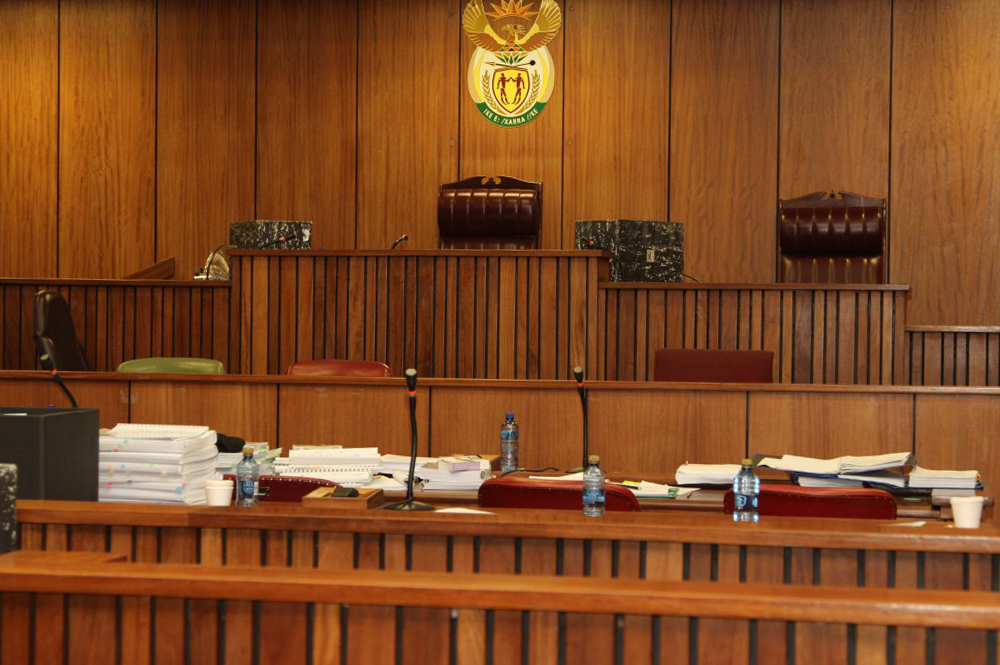
- The Mpumalanga High Court dismissed a woman’s bid to stop paying maintenance to her estranged husband, finding she failed to prove a significant change in her financial situation.
- The court accepted that her business was impacted by a snowstorm but ruled she still managed to meet her obligations, including maintenance payments, for months afterward.
- The judge emphasised that temporary maintenance orders remain in effect unless clear evidence of a material change in circumstances is provided.
The case involves a couple engaged in divorce litigation since November 2023. In February 2024, the court ordered the wife, BLM, to pay her husband, VM, R10 000 per month in maintenance, as well as a R50 000 contribution to his legal costs, pursuant to Rule 43 of the Uniform Rules of Court. These temporary measures are meant to provide financial stability while the divorce is finalized.
BLM later asked the court to vary the order, citing a rare snowstorm in September 2024 that she said devastated her flower farming business in KwaZulu-Natal. She claimed her monthly income had dropped to R17 416 after expenses, and that the business suffered a R1.9 million loss, requiring her to inject R4.1 million to remain operational. She also mentioned that Absa Bank had declined her request for credit.
The wife further argued that rising costs related to their autistic minor child, who attends a boarding school charging R199 000 per year, added to her financial strain. Although her parents had agreed to cover tuition, she said she was still responsible for nearly R200 000 in additional expenses and therapy not fully covered by medical aid. She asked the court to cancel her maintenance obligations entirely, claiming she could no longer afford them.
In addition to her financial claims, BLM accused VM of misusing the maintenance money for luxury spending, travel, and legal fees. She also alleged that he had found employment but failed to disclose his income, and that he contributed nothing towards their child’s welfare.
VM denied these allegations, asserting that his legal fees were paid by his sister and that he had not misused the maintenance funds. He argued that BLM had not provided full and transparent financial disclosure, and urged the court to dismiss her application.
No proof of material change
The presiding judge reaffirmed that Rule 43 orders are temporary measures designed to ensure stability during a divorce. These orders can only be changed if there is clear evidence of a material change in circumstances. While the judge accepted that the snowstorm impacted BLM’s business, he found she had not demonstrated an inability to meet her obligations. The court noted that she continued to pay all her bills, including school fees, business expenses, and maintenance, for 11 months after the snowstorm. She had not implemented cost-cutting measures or explained how she raised the R4.1 million to keep her business afloat.
“Whilst I accept that the applicant’s business was affected by the storm, I do not accept the contention that the effect is of such a serious nature that it makes it difficult for her to honour the court-mandated obligation towards the respondent,” the judge ruled. He also noted that VM’s need for support had not changed since the original order.
The court dismissed BLM’s application and made no costs order against her, finding that her attempt was neither frivolous nor malicious. The judgment reinforces the principle that Rule 43 orders remain in effect unless a clear and significant shift in circumstances is proven.
Get your news on the go. Click here to follow the Conviction WhatsApp channel.


