Skip to content
Close Menu
ConvictionConviction
  • Home
  • Law & Justice
  • Special Reports
  • Opinion
  • Ask The Expert
  • Get In Touch

Subscribe to Updates

Get the latest creative news from FooBar about art, design and business.

What's Hot

A Pan Afrikan intellectual reflects on June 16, Africa’s youth and the future of education

June 16, 2026

From Soweto to 2076 — 50 years of reckoning, and 50 more of possibility

June 16, 2026

Defending our democracy against misinformation and disinformation in South Africa

June 15, 2026
Facebook X (Twitter) Instagram
Trending
  • A Pan Afrikan intellectual reflects on June 16, Africa’s youth and the future of education
  • From Soweto to 2076 — 50 years of reckoning, and 50 more of possibility
  • Defending our democracy against misinformation and disinformation in South Africa
  • Mothers considering adoption have rights to privacy, dignity and legal support
  • Father gets suspended jail sentence for prioritising business interests over maintenance
  • Ekurhuleni faces looming deadline to rebuild homes at N12 settlement
  • Homeowner’s challenge to FSCA decision fails as tribunal finds no direct benefit for him
  • Municipality worker says he was underpaid for three years, wins right to pursue claim
Facebook X (Twitter) Instagram
ConvictionConviction
Sonneblom
  • Home
  • Law & Justice
  • Special Reports
  • Opinion
  • Ask The Expert
  • Get In Touch
ConvictionConviction
Home » Lawyers for Human Rights applauds Constitutional Court ruling on inmates’ access to education
Civil Law

Lawyers for Human Rights applauds Constitutional Court ruling on inmates’ access to education

Decision affirms the fundamental role of education in rehabilitation
Kennedy MudzuliBy Kennedy MudzuliApril 30, 2025Updated:April 30, 2025No Comments
Facebook Twitter Pinterest LinkedIn WhatsApp Reddit Tumblr Email
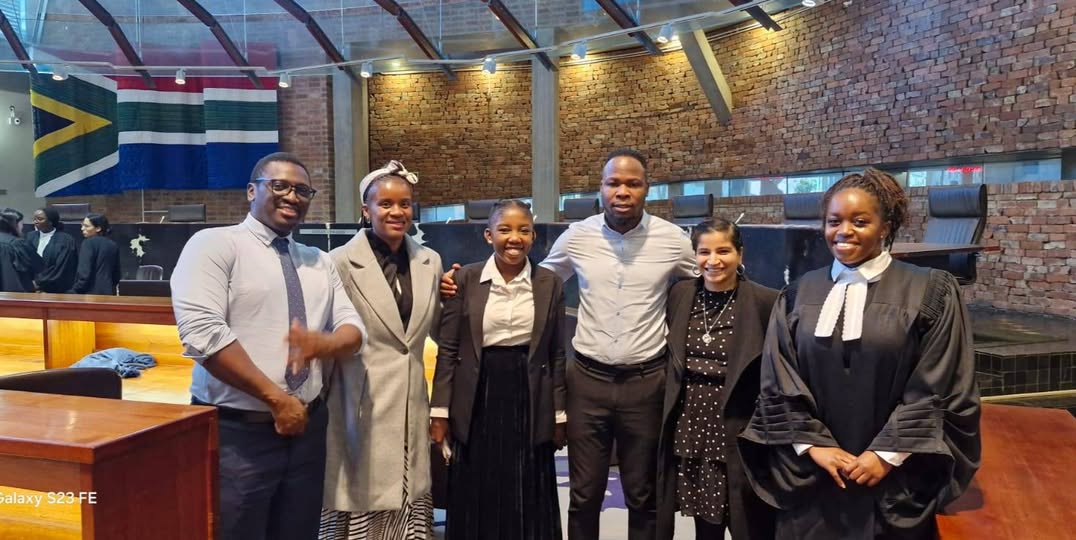
The Lawyers for Human Rights team that successfully represented Mbalenhle Sidney Ntuli in the Constitutional Court. Picture: LHR
Share
Facebook Twitter LinkedIn Pinterest Email

The Lawyers for Human Rights (LHR) has hailed a Constitutional Court ruling that significantly alters inmates' access to education by allowing personal computer use within prison cells.

In a unanimous judgment delivered on April 30, 2025, the court upheld a previous ruling from the Supreme Court of Appeal, declaring the Department of Correctional Services' blanket prohibition against computers in correctional centres unconstitutional. The case was brought forward by Mbalenhle Sidney Ntuli, represented by LHR.

“The Constitutional Court has correctly recognized that access to further education and the tools required for it is fundamental to upskilling incarcerated persons and setting them up for a successful life following their release,” said Nabeelah Mia, Head of the Penal Reform and Detention Monitoring Programme at LHR.

“This is a vindication of our client's rights, who, at the end of the day, only wanted to further his education and increase his capabilities. We hope that no incarcerated student seeking to upskill themselves must undergo what Mr. Ntuli has experienced,” Mia added.

At the heart of the case was Ntuli’s challenge as an inmate enrolled in computer studies. He argued that the total ban on using personal computers in cells infringed on his constitutional right to further education, as outlined in Section 29(1)(b) of the Constitution, which mandates that the state must progressively offer education. The court found this outright prohibition to be not only a violation of this right but also an unjustified limitation that did not serve legitimate state interests.

Ntuli had been allowed to use a desktop computer in a previous facility but lost that privilege when he moved to Johannesburg Medium "C" Correctional Centre. Strikingly, inmates were limited to using communal computers during restrictive hours in a noisy environment, which was hardly conducive to learning.

Upholding the right to education behind bars

Justice SA Majiedt, writing for the court, underscored the importance of education in rehabilitating offenders and noted that the blanket ban demonstrated a failure on the department’s part to effectively balance educational needs with security concerns. The court insisted that a nuanced approach is necessary, one that considers the individual circumstances of inmates and their educational requirements.

The court’s ruling affirmed inmates' inherent right to access educational tools, including personal computers. It allows any inmate registered at a recognized tertiary institution and who reasonably needs a computer for their studies to possess one in their cell—though without modem capabilities to prevent security breaches. Essentially, this ruling facilitates access to educational resources critical for the successful rehabilitation and reintegration of inmates into society.

Acknowledging ongoing security concerns, the court stipulated that correctional authorities may inspect these computers regularly and may restrict their use if inmates breach the rules governing their use. The decision requires the National Commissioner of Correctional Services to draft and publish a revised policy within 12 months to ensure compliance with the judgment’s principles.

#Conviction

Get your news on the go. Click here to follow the Conviction WhatsApp channel

Constitutional Court ruling correctional services policy higher education in prisons inmate rehabilitation inmates' access to education Lawyers for Human Rights legal rights of inmates penal reform personal computers in prison prison education rehabilitation through education South African correctional system
Share. Facebook Twitter Pinterest LinkedIn Tumblr Telegram Email
Kennedy Mudzuli

Multiple award-winner with passion for news and training young journalists. Founder and editor of Conviction.co.za

Related Posts

Father gets suspended jail sentence for prioritising business interests over maintenance

June 15, 2026

Ekurhuleni faces looming deadline to rebuild homes at N12 settlement

June 15, 2026

Homeowner’s challenge to FSCA decision fails as tribunal finds no direct benefit for him

June 15, 2026
Leave A Reply Cancel Reply

Prove your humanity: 9   +   8   =  

Subscribe to our newsletter:
Top Posts

Making sectional title rules that work: A practical guide

January 17, 2025

Protection order among the consequences of trespassing in an ‘Exclusive Use Area’

December 31, 2024

Between a rock and a foul-smelling place

November 27, 2024

Irregular levy increases, mismanagement, and legal threats in a sectional title scheme

June 2, 2025
Don't Miss
Opinion
5 Mins Read

A Pan Afrikan intellectual reflects on June 16, Africa’s youth and the future of education

By Ras Advocate Sipho MantulaJune 16, 20265 Mins Read

Ras Adv Sipho Mantula reflects on June 16, the Day of the African Child and the urgent need for African-centred education.

From Soweto to 2076 — 50 years of reckoning, and 50 more of possibility

June 16, 2026

Defending our democracy against misinformation and disinformation in South Africa

June 15, 2026

Mothers considering adoption have rights to privacy, dignity and legal support

June 15, 2026
Stay In Touch
  • Facebook
  • Twitter
  • WhatsApp
Demo
About Us
About Us

Helping South Africans to navigate the legal landscape; providing accessible legal information; and giving a voice to those seeking justice.

Facebook X (Twitter) YouTube WhatsApp Twitch RSS
Latest posts

Making sectional title rules that work: A practical guide

January 17, 2025

Protection order among the consequences of trespassing in an ‘Exclusive Use Area’

December 31, 2024

Between a rock and a foul-smelling place

November 27, 2024
OUR PICKS

Law enforcement officer keeps job after City of Cape Town fails in cannabis dismissal appeal

June 10, 2026

Phumeza Shoba loses maintenance claim after court finds distorted picture of her finances

June 12, 2026

Mother kept son in SA in breach of agreement with Australian father

June 11, 2026
© 2026 Conviction.
  • Home
  • Law & Justice
  • Special Reports
  • Opinion
  • Ask The Expert
  • Get In Touch

Type above and press Enter to search. Press Esc to cancel.

Powered by
►
Necessary cookies enable essential site features like secure log-ins and consent preference adjustments. They do not store personal data.
None
►
Functional cookies support features like content sharing on social media, collecting feedback, and enabling third-party tools.
None
►
Analytical cookies track visitor interactions, providing insights on metrics like visitor count, bounce rate, and traffic sources.
None
►
Advertisement cookies deliver personalized ads based on your previous visits and analyze the effectiveness of ad campaigns.
None
►
Unclassified cookies are cookies that we are in the process of classifying, together with the providers of individual cookies.
None
Powered by