


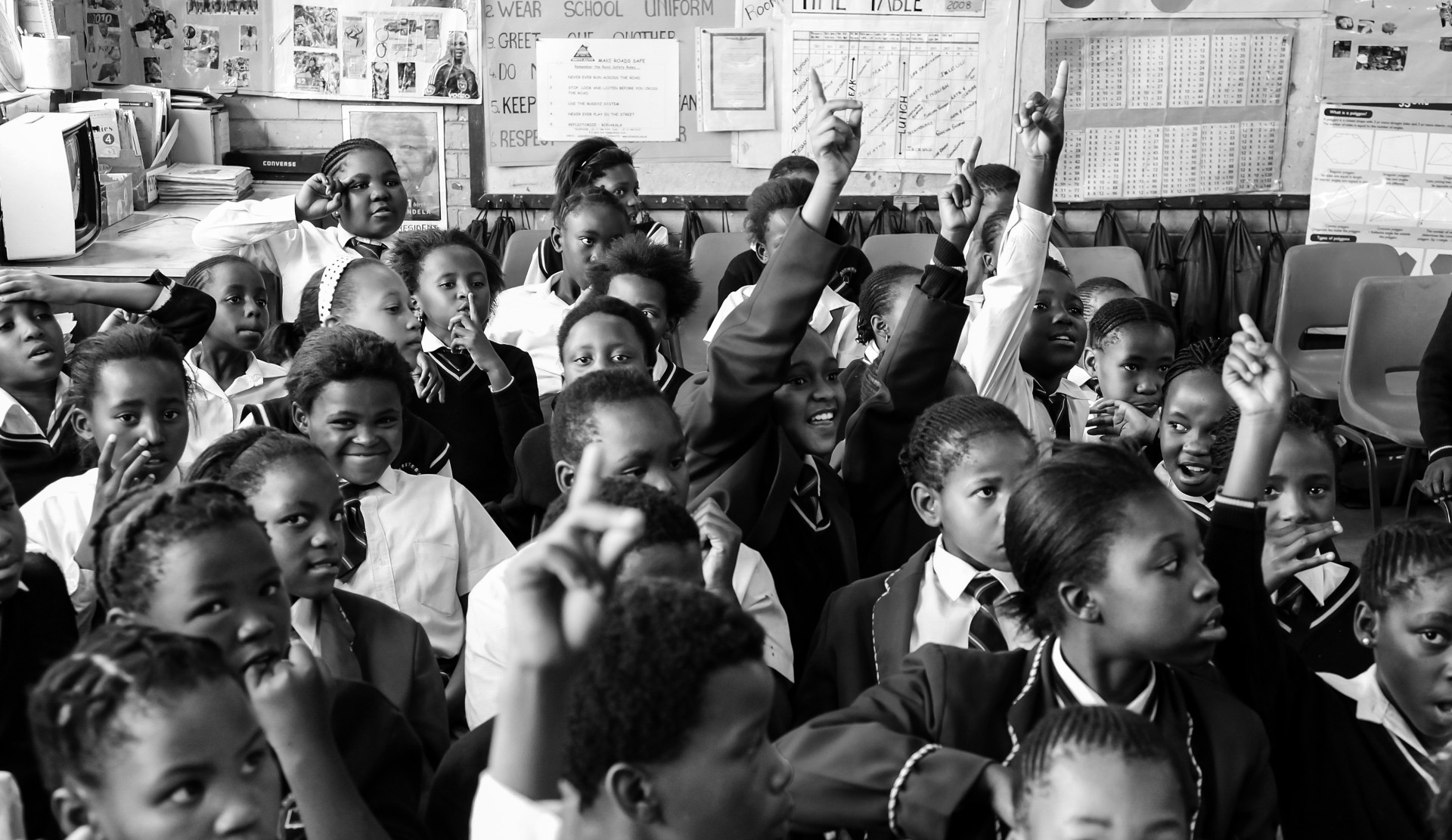
- Fifty years after the Soweto Uprising, South Africa continues to grapple with deep educational inequality and poor learning outcomes.
- The legacy of Bantu Education remains visible in literacy, infrastructure, access and economic opportunity.
- The next 50 years require bold reforms to build an education system that advances economic freedom, social cohesion and national development.
As we mark the 50th anniversary of 16 June 1976, when schoolchildren in Soweto marched against the apartheid regime’s decree that Afrikaans be imposed as a medium of instruction in ‘black schools’, we are compelled to remember that the state responded with bullets.
Hector Pieterson became the enduring symbol of that brutality and of a generation’s refusal to accept an education designed to subjugate them. Fifty years on, we must ask: has the promise of liberation been kept in South Africa’s classrooms? And if not, who has failed the children of this democracy?
Hendrik Verwoerd, the architect of the Bantu Education Act of 1953, stated its purpose with chilling candour: black South Africans were to be educated only insofar as they could serve the white economy. By the mid-1970s, the system had produced a curriculum that denied black learners access to mathematics, science and critical thought. The 1976 uprising wasn’t merely a language protest; it was a rejection of the entire apparatus of intellectual dispossession.
Despite continued resistance like the 1980 school boycotts and the De Lange Commission, by 1994 South Africa’s education system remained racially fractured, with per-pupil spending ratios of 10:1 between white and black schools.
The socio-economic consequences were devastating: generations of black South Africans were locked out of skilled professions, wealth accumulation and economic self-determination. Bantu Education did not merely deny knowledge; it manufactured poverty as state policy.
The unfinished promise of educational liberation
South Africa’s democratic government abolished racial segregation and introduced compulsory education. Curriculum 2005, launched in 1997, was criticised for vague outcomes and the demands it placed on a teaching corps still shaped by Bantu Education.
The Revised National Curriculum Statement (2002) and the Curriculum and Assessment Policy Statement (2011) acknowledged that curriculum reform alone could not remedy decades of systemic underfunding and infrastructure neglect.
Here we must ask a difficult question: did post-apartheid governments treat education as the economic liberation tool it needed to be, or as a political programme to be managed? The evidence is uncomfortable: South Africa cycled through three curriculum frameworks in barely 13 years, each disrupting teacher practice and learner continuity, while the socio-economic dividend that quality education should deliver remained stubbornly out of reach.
The past 15 years have brought both progress and persistent failure. South Africa achieved near-universal primary enrolment, expanded university access via the National Student Financial Aid Scheme and introduced compulsory Grade R.
Yet the systemic picture remains troubling: the 2023 PIRLS results confirmed that 81% of Grade 4 learners cannot read for meaning; rural schools lack basic infrastructure, libraries and electricity; the #RhodesMustFall and #FeesMustFall movements exposed higher education’s fault lines; and in 2025, over 2 400 teaching posts were cut.
The socio-economic verdict is damning. South Africa’s unemployment is above 32%, with youth unemployment exceeding 60%. Student debt deepens this crisis: by 2025, South Africa’s universities were reportedly grappling with over R9 billion in unpaid student debt, turning higher education from a ladder of mobility into another site of financial exclusion.
These are the downstream consequences of an education system that still produces too many school leavers without the literacy, numeracy or entrepreneurial and technical skills the economy demands. Three decades into democracy, the education system continues to reproduce the very inequality it was redesigned to dismantle.
After 50 years, some questions can no longer be deferred. Why does a country that spends 20% of its national budget on education produce some of the worst learning outcomes on the continent? Why do quintile 4 and above schools continue to produce university-ready graduates while quintile 1 to 3 schools, often only kilometres away, struggle to teach children to read by age 10?
Has the post-apartheid political class, many of whom send their children to private and former Model C schools, lost the moral urgency to fix public education? These are structural questions about power, accountability and who benefits from the status quo. Until they are answered with policy rather than rhetoric, the anniversary of 16 June will remain a day of mourning dressed as a celebration.
Building the next 50 years
If the first 50 years after Soweto were defined by the struggle to dismantle an unjust system, the next 50 must be defined by the courage to build one that works. Incremental tinkering will not suffice. The education of South Africa’s citizens must be the nation’s highest priority.
Over the next 50 years, the country must build a learned society through a high-quality, equitable, future-oriented education system that advances economic freedom, social cohesion, democratic citizenship and national development. Below are five key proposed strategic imperatives.
Firstly, South Africa must make every school a centre of excellence. This requires strong leadership, high-quality teaching, safe and disciplined learning environments, modern infrastructure, and meaningful academic support in every community, not only in historically privileged spaces.
A dedicated education levy should underpin this effort by providing stable, transparent funding for infrastructure renewal, teacher development, STEM education, early childhood development and post-school access.
Secondly, every child should have access to quality early childhood development and a national reading guarantee by age 10, backed by immediate intervention where schools fall behind. This should be supported by integrated school and curriculum management systems that track school governance, teacher effectiveness, learner attendance, curriculum coverage, learner progress and school performance in real time.
Thirdly, South Africa must align what it teaches with the demands of the future. A comprehensive review of the school curriculum and tertiary education offerings is needed to remove outdated, low-impact content and economically irrelevant programmes, and to prioritise the knowledge and capabilities that enable economic participation, entrepreneurship, innovation, social cohesion and citizenship. Practical, digital, entrepreneurial and problem-solving skills must be strengthened across the system.
Fourthly, South Africa must build a credible pathway from school into adulthood. Every Grade 12 graduate should be guaranteed a meaningful next step through higher education, vocational training, apprenticeships, entrepreneurship support or structured public service.
This must be reinforced through education justice zones in the most disadvantaged districts, learner support and a service model in which newly qualified teachers in scarce-skill areas, especially STEM, serve in rural and township schools with incentives, housing support and accelerated career progression.
Lastly, South Africa must treat education as a shared national project, not a shifting political contest. Education, curriculum reform and system governance should be guided by a politically independent national body that brings together society, business and industry, higher education, teacher formations and civil society. In the same spirit, universities and businesses should adopt local schools and provide whole-school development support.
The children of 1976 marched so that future generations might learn in freedom and dignity. Fifty years on, South Africa has the constitutional architecture and democratic institutions to honour that sacrifice. What’s been lacking is the political will and the honest reckoning with failure that transformation demands.
Education is not merely a social service; it is the primary mechanism through which a society either reproduces inequality or dismantles it. South Africa has spent 30 years reforming the mechanism while inequality deepened. The next 50 years offer no guarantees, only the possibility that this generation will choose honesty over ceremony and action over commemoration, to finish what the youth of Soweto began.
Get your news on the go. Click here to follow the Conviction WhatsApp channel.
