


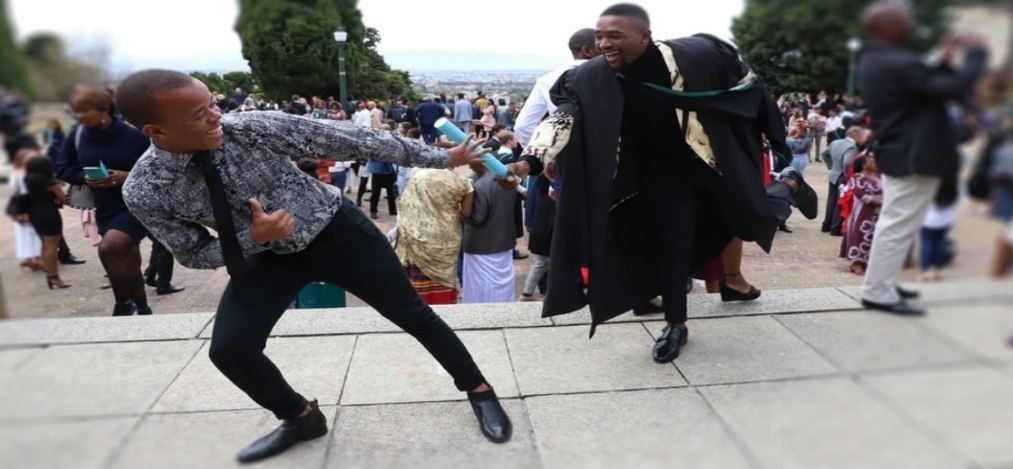
Every year, autumn graduation ceremonies at South African universities dazzle the public with joy, tradition, and cultural pride.
Auditoriums erupt with ululations, vibrant dances like indlamu, and emotional tributes. Social media lights up with the now-familiar scenes of black graduates crying, dancing, and celebrating with family. These ceremonies — especially for first-generation students — represent personal triumph against immense odds.
But behind the drumming and the dancing lies a far more sobering reality. For many, autumn graduation has become a performance of success masking systemic failure. While it rightfully honours perseverance, it also risks becoming a form of denial — a national celebration that ignores the structural betrayal of South Africa’s black youth. This is what we must now confront: graduation as illusion.
Graduation and artificial unemployment
Joy is not the problem. Celebration is earned, particularly in a country where just making it through school and university is a battle. But the scale and emotional intensity of autumn graduation ceremonies often obscure the grim truth that South Africa’s education system is failing to deliver meaningful futures.
Youth unemployment stands at a staggering 62%. For thousands of graduates, a degree has become a symbolic milestone rather than a practical tool for social mobility. What they face after their names are called and their photos are taken is not opportunity — it is exclusion. These graduates are not unemployable. They are artificially unemployed — victims of a system that produces skills without pathways, qualifications without prospects.
This mirrors the yearly spectacle around matric results. In January 2024, the Basic Education Department celebrated an 82.9% pass rate. But when dropout rates are accounted for, the real pass rate is closer to 55%. These celebrations mask deep dysfunction: overcrowded classrooms, outdated materials, and underqualified teachers. In both basic and higher education, we see the same illusion — statistical “success” masking systemic decline.
When tradition masks injustice
Despite calls for transformation from movements like #RhodesMustFall and #FeesMustFall, universities have largely maintained colonial structures. Education theorist Saleem Badat observes that most African universities are still modelled on their European ancestors. They are local in geography but foreign in purpose. Their knowledge production remains Eurocentric, and their curricula detached from South African socio-economic realities.
In this context, autumn graduation can become a form of symbolic escape — a beautiful moment that conceals a brutal reality. Universities have not sufficiently interrogated their role in the crisis. Instead, they double down on ceremonies that offer closure but no direction, spectacle without substance. Degrees are handed out with flair, but what follows is often silence.
Even cultural additions like traditional dances do not resolve the contradiction. The presence of indlamu beside Gaudeamus Igitur — the Latin hymn still sung at many ceremonies — highlights a deeper discomfort. As Geoff Mapaya argues, this musical juxtaposition reflects a university that still leans on colonial rituals while trying to appear African. Including African culture in ceremonies without transforming pedagogy or research priorities is not decolonisation. It is window dressing.
And industry is no better. Corporations call for “work-ready graduates” but do little to invest in inclusive hiring, mentorship, or curriculum reform. They rely on elitist recruitment practices that marginalise those without connections. This is how Black graduates are kept out — qualified, but excluded.

Universities at a crossroads: Performance or purpose?
So, what is the purpose of higher education in a society that is structurally unequal and economically stagnant? Is it merely to issue degrees, or should it help build a fairer world? Education theorists like Michael Gibbons argue for a shift from traditional, hierarchical knowledge (“Mode 1”) to socially embedded, interdisciplinary knowledge (“Mode 2”). Yet most South African universities remain stuck in the past, focusing on abstract knowledge disconnected from communities.
This makes the growing ritualism of autumn graduation even more unsettling. The dancing, singing, and regalia create the illusion that something great has been achieved — when in fact, little has changed. These events risk numbing students, families, and society at large to the deep inequalities that still shape post-apartheid South Africa.
What’s needed is real transformation. Curricula must be restructured to align with South Africa’s development needs. African epistemologies must be elevated — not as folklore, but as rigorous, valid frameworks of knowledge. As Sabelo Ndlovu-Gatsheni urges, we must reclaim Africa’s own intellectual traditions, from Timbuktu to Ifa, and centre them in education. This isn’t about nostalgia — it’s about relevance and justice.
Universities must become spaces of innovation, problem-solving and healing. They must serve the people, not abstract metrics or global rankings. They must connect theory to lived experience. Otherwise, they risk becoming hollow institutions, where success is celebrated but never realised.
Ending the illusion
Let’s be clear: the joy of autumn graduation is not the enemy. But we must not let it sedate us. We must not allow cultural affirmation to mask systemic abandonment. Universities must be held to a higher standard — not just to graduate students, but to prepare them for lives of dignity, purpose, and impact.
If we continue to treat graduation as a finish line instead of a springboard, we are dancing toward disaster. South African universities are at a crossroads. They can either cling to colonial habits dressed up in African attire, or they can become transformative institutions that redefine success on African terms.
Let us not dance around the truth. A university that cannot equip its graduates to change their world is not a success story. It is part of the problem.
Siya yi banga le economy!
Get your news on the go. Click here to follow the Conviction WhatsApp channel
