


Key points
- Unisa showcased African-led solutions at GSDC 2025 in İstanbul.
- Delegates shared breakthroughs in digital learning, health research, and AI ethics.
- The congress strengthened global partnerships and Unisa’s international impact.
The University of South Africa (Unisa) continued to make a meaningful contribution to global discourse and action on sustainable development and the future of higher education during the 2025 Global Sustainable Development Congress (GSDC), held from 16 to 19 June in İstanbul, Türkiye.
As a regional partner, Unisa’s 13-member expert delegation featured a multidisciplinary team of institutional leaders, researchers, and academics who participated in high-level discussions on the United Nations Sustainable Development Goals (SDGs), digital transformation, public health, and research innovation. Unisa featured in three major sessions within the first few days, reinforcing its role as a driver of inclusive, African-centred solutions to global challenges.
African-centred leadership on the global stage
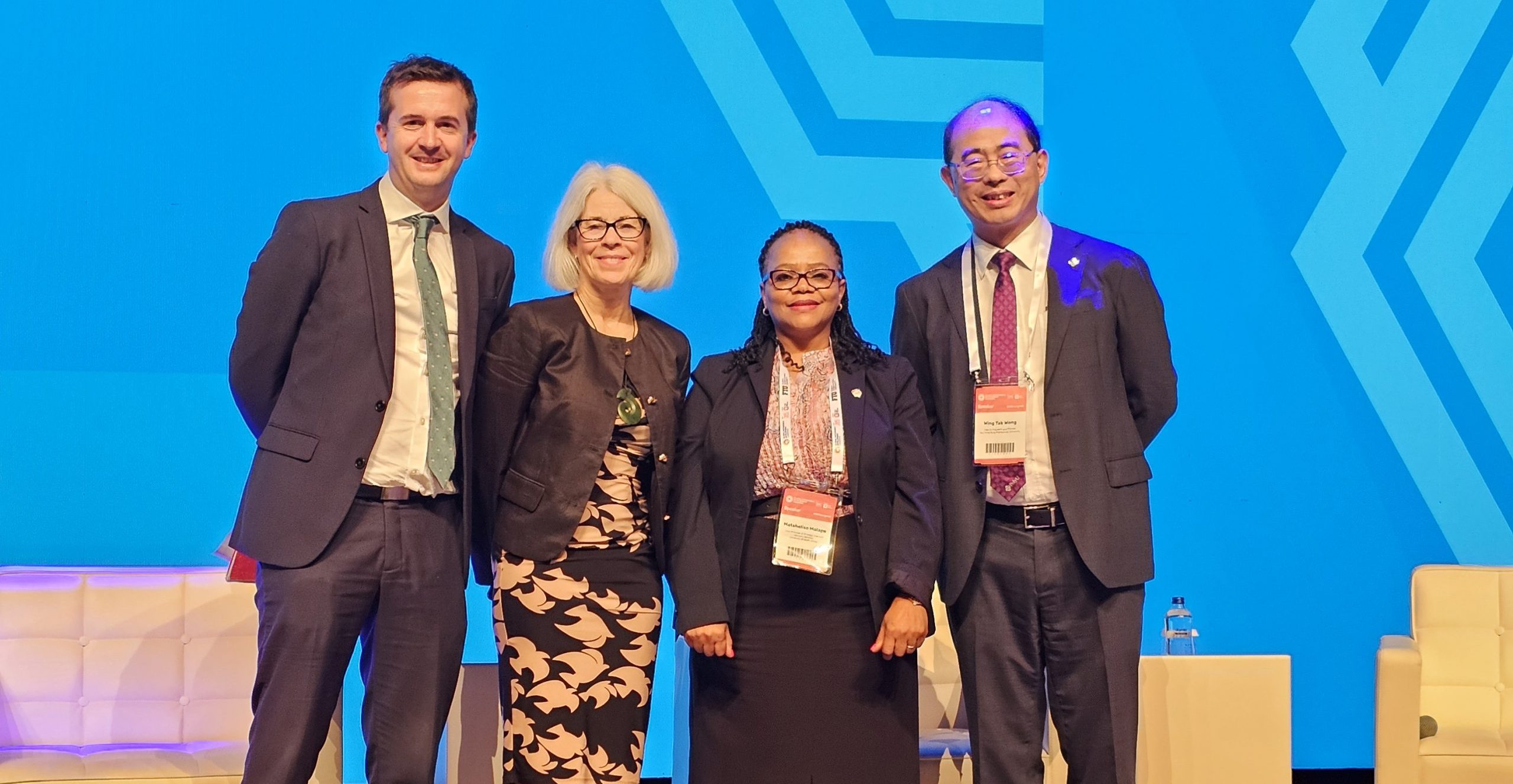
In a flagship panel on universities’ role in advancing the SDGs, Dr Matsheliso Molapo, Vice-Principal for Strategy, Risk and Advisory Services, shared a stage with Professor Dawn Freshwater (University of Auckland) and Professor Wing-tak Wong (Hong Kong Polytechnic University). The session was moderated by Times Higher Education Editor, Chris Havergal.
Molapo emphasized that “at Unisa, sustainability is not a trend – it is a core value.” She reflected on the institution’s long-standing commitment to equity, social justice and transformative development, embodied in its Catalytic Niche Areas, which respond directly to African and global priorities. “Long before the global community articulated the SDGs, our institution was already deeply engaged,” she added.
She also highlighted Unisa’s strength in open, distance and e-learning (ODeL), and issued a global call to action: “We cannot advance the SDGs in isolation. Universities must move from competition to collaboration. Our shared future depends on institutions co-creating solutions that serve humanity.”
From research to community resilience
Dr Xolani Makhoba, senior lecturer in the College of Agriculture and Environmental Sciences, delivered a presentation on “How biotechnology research is transforming the fight against disease.” He showcased Unisa’s applied biotechnology innovations to address public health challenges in underserved communities.
“Our research focuses on practical innovations – using molecular diagnostics, environmental monitoring, and genomics to address real health threats,” said Makhoba. “We are not just producing data; we are translating science into community resilience.” He called for greater investment in interdisciplinary health research and biotechnology capacity across the continent.
Unisa’s digital transformation leadership also featured prominently. Letlhogonolo Marumolwa, Acting Executive Director: Institutional Intelligence, facilitated a panel on the university’s digital strategy. Mathabo Nakene-Mginqi, CIO and Vice-Principal for ICT, highlighted the institution’s efforts to serve more than 400,000 students through smart, scalable systems underpinned by Unisa’s AI roadmap. “We’re building intuitive platforms that support each student from onboarding to graduation,” she explained.
Innovating through engagement and ethics
Unisa’s role as a catalyst for engaged scholarship was captured by Dr Genevieve James, Deputy Director: Community Engagement. She introduced the university’s bespoke app that manages sustainability-driven projects across departments, funding streams and partnerships. “We are an open, engaged and connected university,” she said. “Our technology tracks practice, progress and impact, enabling more effective development outcomes.”
Dr Mampilo Phahlane, Director of the School of Computing, added a critical perspective on AI ethics, equity and inclusion: “We see AI not as a replacement for educators but as a partner in supporting student success. Our AI principles focus on academic integrity, data privacy and digital inclusion—always grounded in the lived realities of our students.”
Growing global partnerships
Unisa’s strategic participation in the GSDC drew considerable attention from stakeholders and potential collaborators, confirming the university’s relevance on the international stage. This engagement has opened new avenues for research, academic exchange, and sustainable development partnerships.
#Conviction
Get your news on the go. Click here to follow the Conviction WhatsApp channel
