


- Membership alone in a close corporation doesn’t create personal liability.
- Herman Crous was not liable for his daughter’s fraud as he wasn’t involved.
- Members owe duties to the corporation, not to outsiders.
Herman Mercer Crous is not a man you’d expect to find on the losing side of a courtroom. A retired civil servant, Crous lived a quiet life far removed from scandal.
He once helped his daughter launch a business, Eastco Travel CC, by registering it in his name. Years later, that gesture would land him in the middle of a fraud case involving almost R640 000 in stolen school funds.
Crous became the unwitting co-accused in a case that tested not just the limits of corporate law, but the weight of family ties and the meaning of justice in South Africa’s small business sector.
A school trip that turned into a nightmare
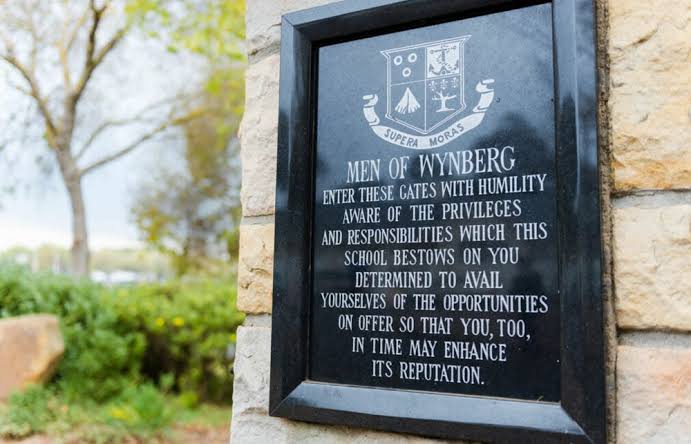
It started with what should have been a moment of excitement. Wynberg Boys High School was planning a student trip to the United States. The school turned to Eastco Travel, the travel agency operated by Crous’s daughter, Lorraine Fourie, to secure tickets for the trip. Fourie offered discounted fares. But those discounts came at a heavy price.
Instead of securing proper bookings, she allegedly issued tickets only to cancel them after securing airline refunds, money that was never returned to the school. Wynberg Boys suffered a substantial loss and sued the company. They also sued Fourie. And then, because Crous was still listed as a member of the close corporation, they sued him too.
The High Court’s error: Guilt by association
At the High Court, things didn’t go Crous’s way. Even though he testified that he hadn’t been involved in the business since 2008 and had tried to resign in 2014, the court found him jointly and severally liable for the loss. Their reasoning? Crous was still registered as a member of the close corporation, and therefore shared in its responsibility, even if he hadn’t known what his daughter was doing.
It was a ruling that cut deeply, not just financially, but emotionally. A father’s goodwill had become a legal noose.
The Supreme Court steps in: Looking beyond the name
But Crous didn’t give up. He appealed the decision, and his case reached the Supreme Court of Appeal (SCA), where judges took a long, hard look at what it really means to be held personally liable for a company’s wrongdoing.
Their finding? Being on the books isn’t enough.
The court made it clear that Section 65 of the Close Corporations Act allows courts to hold individuals personally liable only when there’s proof of abuse of the corporate structure by that individual. That abuse must be deliberate, gross, and usually for personal gain. But in Crous’s case, there was no such evidence.
The court accepted that while Crous was listed as a member, he had long since stepped away. He received no income. He played no role in operations. His daughter ran the business entirely, and he had no idea what she was doing.
In fact, his only mistake was assuming that resigning in writing was enough, when it needed to be formally recorded. That mistake, the court held, did not make him a fraudster.
A win for common sense and for justice
The Supreme Court went further by dismantling a dangerous precedent set by the lower court: that all members of a close corporation owe a fiduciary duty to the public. Not so, said the SCA. Those duties are owed internally, to the corporation itself, not to outside parties.
The Supreme Court of Appeal made the following key rulings:
- Crous’s appeal was upheld with costs, including the costs of two counsel.
- The orders against him by the High Court were set aside.
- The application by Wynberg Boys High School against Crous was dismissed.
- Only Eastco Travel CC remains liable for the R638,853.16 debt.
#Conviction
Get your news on the go. Click here to follow the Conviction WhatsApp channel.
