


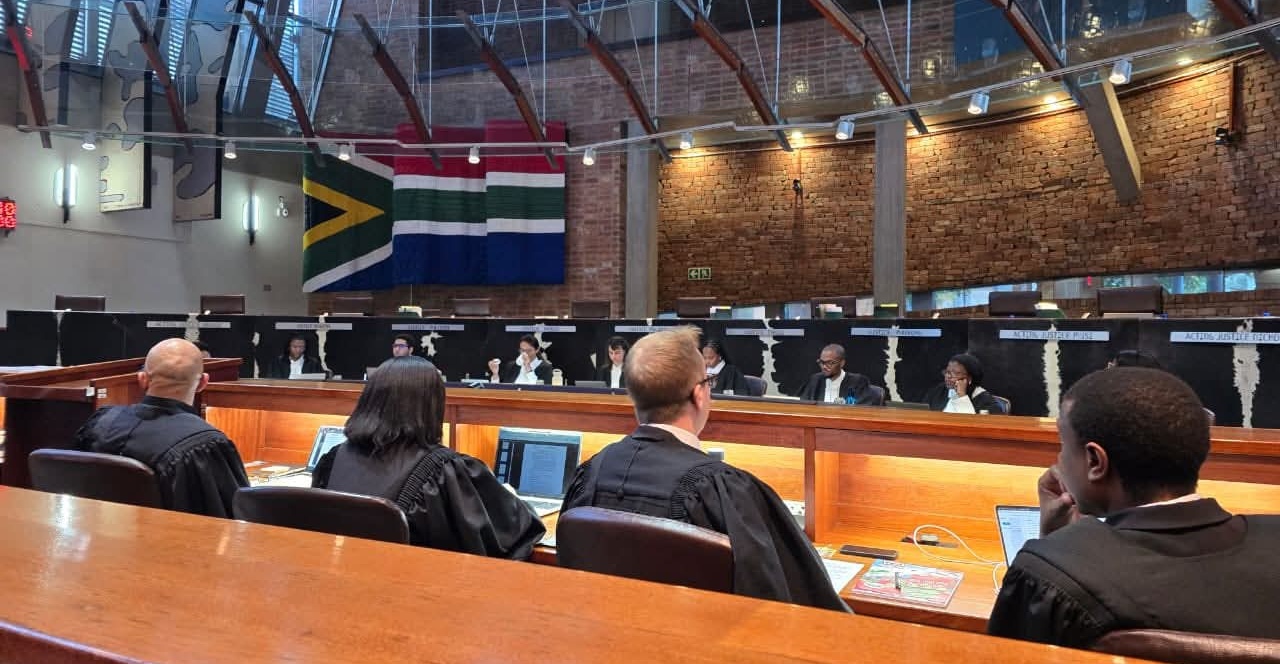
- Landowner challenges a ruling that treated a settlement order as permanently closing the door to court.
- The case concerns environmental authorisations for a composting facility located next to a protected reserve.
- The Constitutional Court will consider the limits of res judicata, settlement orders, and access to justice in environmental law.
The Constitutional Court will, on 3 February 2026, decide whether a settlement order can permanently prevent an affected landowner from challenging a later environmental authorisation.
Jan Louis Jordaan seeks leave to appeal against a Supreme Court of Appeal judgment that dismissed his environmental challenge on the basis that the dispute had already been finally decided.
The ruling effectively held that once a settlement order has been granted between a company and the state, any later administrative decision taken pursuant to that settlement becomes immune from review, even by a party who was never joined in the settlement proceedings.
At the centre of the case is a composting facility operated by South African Farm Assured Meat Group CC, known as SAFAM, which processes abattoir waste next to Jordaan’s property and alongside the Doornkloof Private Nature Reserve, a protected area under national environmental legislation.
How the dispute arose
SAFAM commenced operations before obtaining the required environmental authorisations. Applications for a waste management licence and environmental authorisation were initially refused. Those refusals led to internal appeals and review proceedings, which were resolved through a settlement between SAFAM and provincial authorities in October 2019.
Jordaan was not joined in those proceedings and did not participate in the settlement. Nevertheless, the settlement order set aside the earlier refusals and remitted the matter to decision makers to take a fresh decision. On 29 November 2019, one month after the order, new authorisations were granted to SAFAM.
Jordaan challenged those fresh approvals through internal appeals and judicial review in the Western Cape High Court. He argued that SAFAM had unlawfully commenced listed activities, that the authorisations breached provisions of the National Environmental Management Act, and that the decision-making process was procedurally and substantively unlawful.
The High Court dismissed the review and refused leave to appeal. The Supreme Court of Appeal later dismissed the appeal on a technical basis, holding that the settlement order had already finally resolved the factual and legal issues between SAFAM and the provincial authorities and that the later authorisation could therefore not be reviewed.
Why the case reached the apex court
Jordaan now argues that this approach fundamentally undermines access to court. In his application, he contends that the settlement order never decided the merits of the later authorisation and merely compelled officials to take a new decision within fixed timeframes. Treating that order as permanently dispositive, he says, extends res judicata beyond its proper limits and allows administrative decisions to be insulated from judicial scrutiny.
He further argues that the approach violates Sections 33 and 34 of the Constitution by denying affected parties the right to challenge unlawful administrative action and by closing the doors of court to persons who were never heard in the settlement proceedings.
The application also raises the interpretation of key provisions of the National Environmental Management Act and the Environmental Impact Assessment Regulations governing when listed activities may lawfully commence and when environmental authorisation is required.
SAFAM’s defence and the case for finality
In opposition, SAFAM and the trustees of the Reben Trust argue that the litigation has already run its full course and that the Constitutional Court should not reopen what they describe as settled law.
In their answering affidavit, the respondents maintain that the 2019 settlement order lawfully resolved the dispute concerning the composting facility and cleared the way for the subsequent authorisations. They argue that the order did more than merely regulate procedure and that it effectively disposed of the central issues relating to unlawful commencement and regulatory non-compliance.
They contend that Jordaan’s later review sought to “ride roughshod” over a binding court order and to relitigate matters that had already been resolved between SAFAM and the provincial authorities. In their view, the Supreme Court of Appeal correctly held that the later challenge was barred by res judicata and that reopening the dispute would undermine certainty in administrative litigation.
SAFAM also places the operation in a broader regulatory context. The answering affidavit explains that the Robertson abattoir generates large volumes of animal waste classified as general waste and that changes in municipal disposal policy compelled the company to find an alternative method of waste management. Composting, they say, became a necessary component of the national waste management strategy and organic waste policy.
The respondents deny that the facility operates as a dumping site or that it produces hazardous environmental harm. They insist that the composting operation is run to a high standard, that detailed technical evidence was placed before the authorities, and that the facility should be regarded as a benchmark against which future developments are measured.
They further argue that by the time Jordaan pursued his later challenges, amendments to legislation and exemptions under the National Environmental Management Waste Act had rendered some of his objections academic. In their submission, the later litigation sought to stop an operation that had already been regularised through lawful regulatory processes.
What the court must now decide
The Constitutional Court is now required to decide whether the Supreme Court of Appeal’s extension of res judicata is constitutionally permissible, whether a settlement order can permanently shield later administrative decisions from review, and whether non-joinder of an affected landowner undermines the binding effect of such orders.
The court must also consider how settlement orders should operate in environmental litigation, where decisions may affect protected areas and long-term ecological interests, and whether procedural finality should outweigh access to court and environmental accountability.
Get your news on the go. Click here to follow the Conviction WhatsApp channel.
