


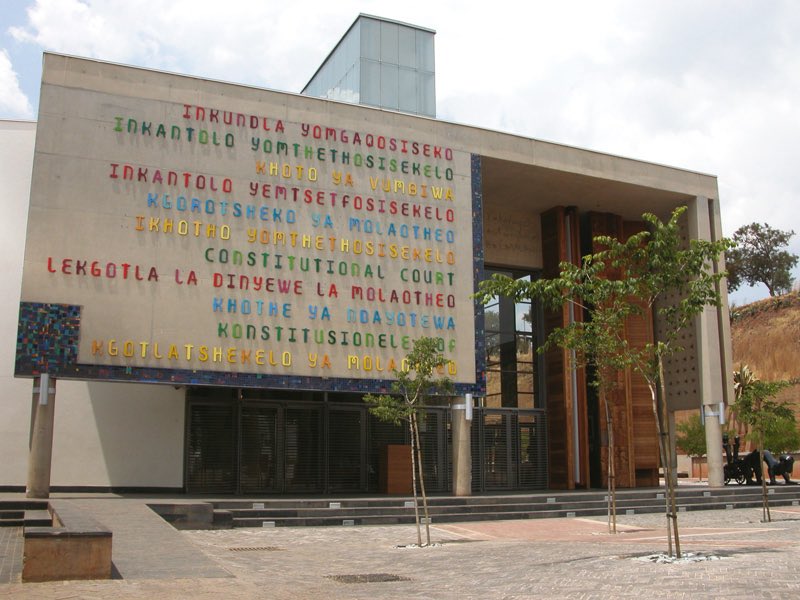
- The Constitutional Court found that workers dismissed after a failed retrenchment facilitation process may approach the Labour Court directly.
- The court ruled that requiring conciliation after facilitation would duplicate processes and create unnecessary delays.
- The matter has been sent back to the Labour Court to determine whether the dismissals were fair.
Workers facing large-scale retrenchments won an important victory in the Constitutional Court. The country's highest court ruled that employees do not have to refer a dismissal dispute to conciliation after a facilitation process has failed.
The case was brought by the National Union of Metalworkers of South Africa (NUMSA) and six of its members against Industrial Oleo Chemical Products, a business of AECI Chemicals.
At the heart of the dispute was whether employees dismissed during a mass retrenchment process had to refer their unfair dismissal dispute to the CCMA or a bargaining council before approaching the Labour Court. A majority of the Constitutional Court ruled that they did not.
How the dispute started
Industrial Oleo Chemical Products began a large-scale retrenchment process in early 2020 due to operational challenges within the business. The retrenchment affected several employees represented by NUMSA.
The workers initially approached the Labour Court urgently, arguing that the employer had already made decisions about who would be dismissed before meaningful consultations occurred. They also claimed they did not have a proper chance to challenge the employer's findings regarding their proposed dismissals.
The Labour Court sided with the workers and ordered their reinstatement while a new consultation process was conducted with a different facilitator. That new facilitation ended without agreement, and the workers were dismissed in November 2020.
After the dismissals, NUMSA and the affected employees referred an unfair dismissal dispute directly to the Labour Court.
The employer objected. It argued that the workers could not go directly to court because they had not first referred the dismissal dispute to conciliation through the CCMA or a bargaining council.
Labour Court and the Labour Appeal Court disagreed
The Labour Court rejected the employer's argument and ruled that no further conciliation process was needed after a facilitation had already occurred.
According to the Labour Court, the Labour Relations Act allowed workers in these situations to go directly to the Labour Court. The employer appealed.
The Labour Appeal Court reached the opposite conclusion. It ruled that facilitation and conciliation serve different purposes and that conciliation remained a necessary step before the Labour Court could hear the matter.
That ruling meant that the Labour Court could not decide the dispute until conciliation had first been attempted. NUMSA and the affected workers then approached the Constitutional Court.
What the Constitutional Court had to decide
The Constitutional Court was asked to determine whether Section 189A(7)(b)(ii) of the Labour Relations Act requires workers to first refer a retrenchment dismissal dispute to conciliation after a facilitation process fails.
The court also had to consider what role Section 191(11) of the Labour Relations Act plays in retrenchment disputes.
The employer argued that conciliation is a vital part of South Africa's labour dispute resolution system and that employees should not be allowed to skip it.
NUMSA argued that the law creates a special procedure for large-scale retrenchments. Once facilitation has failed, employees can go directly to the Labour Court. The majority says that another conciliation process makes little sense
Writing for the majority, Justice Z Tshiqi looked at the purpose of both facilitation and conciliation. The court agreed that the two processes are not the same. Facilitation occurs before dismissals and aims to find ways to avoid retrenchments or reduce job losses. Conciliation happens after a dispute arises and tries to resolve that dispute without litigation.
Despite these differences, the majority concluded that requiring workers to go through conciliation after participating in a failed facilitation would offer little practical benefit.
The court found that many issues discussed during conciliation would be the same issues addressed in facilitation, including reasons for retrenchment, alternatives to dismissal, selection criteria, and severance packages.
The judgment noted that both processes ultimately aim to find consensus and resolve disputes around retrenchments. For that reason, the majority concluded that a second dispute resolution process would merely repeat work that had already been done.
Direct route to the Labour Court
The Constitutional Court found that the wording of Section 189A(7)(b)(ii) gives employees the right to refer a retrenchment dismissal dispute to the Labour Court after a failed facilitation process.
The court dismissed the argument that workers must first overcome an additional requirement by referring the dispute to conciliation.
According to the majority, if Parliament intended conciliation to remain mandatory after facilitation, it would have stated that clearly in the law.
The court also pointed out that workers who choose to strike after a failed facilitation process do not need to go through another conciliation stage before exercising that right. The majority found no convincing reason to treat workers who opt for litigation differently.
The judgment concluded that Section 191(11) of the Labour Relations Act mainly serves as a time limit and does not include the usual conciliation requirements applicable to other dismissal disputes.
Get your news on the go. Click here to follow the Conviction WhatsApp channel.
