


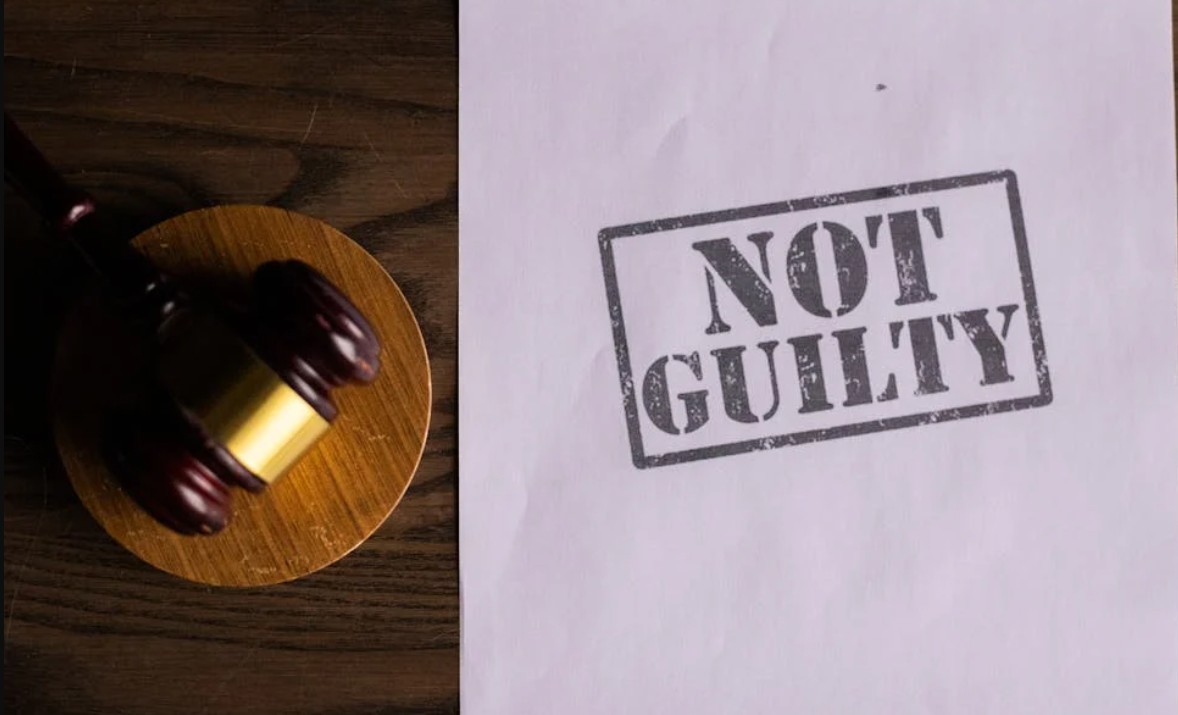
- Conviction and sentences for kidnapping and rape set aside, the accused was acquitted.
- Court finds State failed to prove complainant’s version of abduction and rape.
- Defence version of the altercation and non-involvement remains reasonably possibly true.
The complainant said she was assaulted at a golf club, forced into a vehicle, and taken to the home of Pule Ashley McDonald Mokou, where she was raped.
Mokou denied all of it and maintained that the night began with a fight between the complainant and his girlfriend, and that he spent the rest of the evening in his bedroom, uninvolved in any rape.
That dispute over what happened at the golf club and afterwards became the central issue on appeal. The High Court in Pretoria found that the State failed to prove its version beyond a reasonable doubt.
Mokou was convicted in the Benoni Regional Court on one count of kidnapping and one count of rape, arising from an incident on 14 July 2017. He was sentenced to five years' imprisonment for kidnapping and life imprisonment for rape, with the sentences ordered to run concurrently.
He appealed both his conviction and sentence, with the central question being whether the State had proved that events unfolded as the complainant described.
The legal test the court applied
The High Court made it clear that the case turned on whether Mokou’s version could be rejected as false beyond a reasonable doubt.
Judge FMM Reid, with Judge A Millar concurring, stated, “The question is not whether the court believes the accused, but whether there is a reasonable possibility that his version may be true.”
The court found that the trial court had failed to apply this principle and had instead accepted the complainant’s version without properly testing whether Mokou’s account could reasonably be true. This amounted to a material misdirection which undermined the conviction.
Why the complainant’s version failed
The High Court found that the complainant’s version of being assaulted, forced into a vehicle, and raped was not supported by reliable evidence.
Her testimony contained significant memory gaps, with repeated instances in which she said she did not know or could not remember what had happened. The court held that this directly undermined the reliability of her account.
Judge Reid explained, “When a witness’s memory is so impaired, the reliability of her account is necessarily called into question.”
The alleged abduction at a public golf club was also found to be inherently improbable, particularly given the absence of any supporting witnesses or any explanation for why none came forward.
Her conduct after the incident further weakened her account. Despite having access to her phone, she did not seek help when the opportunity arose. The court also considered the undisputed payment of R23,000 made to her the following day, noting the contradictions in how that payment was explained.
No corroboration and weak objective evidence
The High Court rejected the finding that the complainant’s evidence was corroborated. Witnesses who saw her after the incident could confirm only that she appeared distressed. They could not identify a perpetrator or confirm that a rape had taken place.
Medical evidence did not support the complainant’s version, nor did it exclude the possibility that her injuries resulted from the earlier altercation described by the defence.
The court also noted that allegations that she had been drugged were not supported by any objective evidence.
Defence version stands
By contrast, the High Court found that Mokou’s version, that the incident arose from a fight and that he played no part in any rape, could not be rejected beyond a reasonable doubt.
Judge Reid concluded, “The appellant is therefore entitled to the benefit of the doubt.” The court held that once a version remains reasonably possible true, the State’s case cannot succeed.
Convictions set aside and acquittal entered
The High Court found that the State failed to prove Mokou’s guilt on the charges of kidnapping and rape. The appeal was upheld, and both the convictions and sentences were set aside, resulting in Mokou’s acquittal on both counts.
Get your news on the go. Click here to follow the Conviction WhatsApp channel.
