


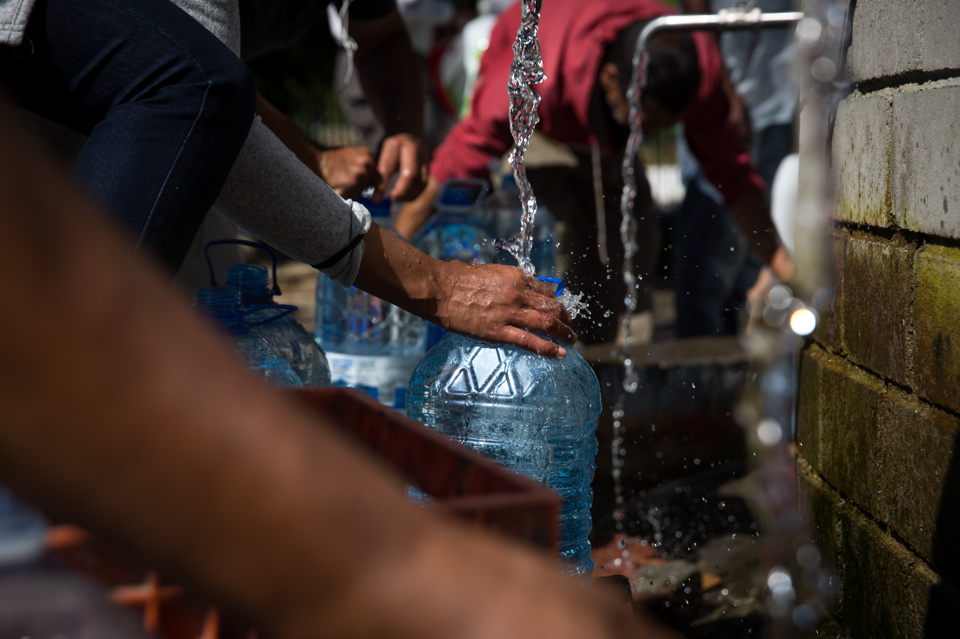
- Africa’s water crisis persists despite strong legal recognition of the right to water.
- Failures in infrastructure, governance and accountability continue to deny communities safe access.
- Effective implementation, not new promises, is required to realise water justice.
The availability of safe drinking water is key to understanding Africa’s water crisis. The WHO and UNICEF Joint Monitoring Programme found that just 39% of Africans used safely managed drinking water in 2020, highlighting a significant disparity between Africa and better-served regions.
The issue goes beyond rainfall and physical deprivation. Weak infrastructure, poor service delivery, governance failures and entrenched inequality determine who receives water, when and at what cost.
This situation must be framed within human rights law. Water is a legal right under international law. According to the Committee on Economic, Social and Cultural Rights General Comment No 15, everyone has the right to sufficient, safe, acceptable, physically accessible and affordable water for personal and domestic use.
In Resolution 64/292, the United Nations General Assembly recognised safe and clean drinking water and sanitation as a human right that is essential to the full enjoyment of life and all human rights.
Africa’s water crisis as a justice issue
Regional norms and interpretation support the right to water in Africa. While the African Charter on Human and Peoples’ Rights does not explicitly state a right to water, the African Commission’s Guidelines on the Right to Water in Africa link it to life, dignity, health, development and a satisfactory environment.
The African Charter on the Rights and Welfare of the Child, as well as the Maputo Protocol, explicitly protect children and women from unsafe drinking water. This makes Africa’s water dilemma a crisis of water justice. It is not just a question of whether water exists, but whether safe water is accessible to all.
The unsettling reality is that the right to water is recognised more often in law than in everyday life. The consequences are not abstract; they are reflected in the lived experiences of many, including the cholera outbreak in Hammanskraal in 2023.
According to the government, the outbreak was attributed to polluted water sources and prolonged failures at the Rooiwal wastewater works upstream, while investigations by the Water Research Commission focused on treatment and sanitation failures in the region. Access to safe water became a matter of life and death.
A pattern of systemic failure
Hammanskraal is not an isolated case. For years, residents of Makhanda have faced recurring water shortages, sewage leaks and deteriorating municipal systems. Johannesburg is currently experiencing similar challenges. The pattern is consistent across many regions of Africa. Rights are recognised, but infrastructure is not properly maintained, accountability is weak, and communities bear the consequences of state failure.
The issue is not confined to South Africa. A human rights assessment conducted in Kenya’s informal settlements, endorsed by the United Nations, revealed persistent inequality in access to safe and affordable water, particularly in Nairobi and other urban areas. For many residents, especially in rural communities and predominantly women, water is accessible only through unsafe, unreliable or costly means. This is not merely a service delivery failure. It is a failure of justice.
Some may argue that these are primarily technical challenges arising from urbanisation, climate change, drought or ageing infrastructure. These factors are real and important, but they do not fully explain the crisis.
The core questions remain who is protected, who is neglected and whose suffering is normalised. Poor communities are expected to rely on emergency measures while others enjoy uninterrupted supply. Water injustice persists where governance is weak, maintenance is delayed, and budgets are mismanaged. It persists where wastewater contamination is tolerated, tanker systems become permanent substitutes for proper infrastructure and communities are excluded from decisions that affect their lives.
Pathways to meaningful implementation
There are, however, real opportunities to improve access to water across the continent. Africa has strong legal and normative frameworks, including in countries such as South Africa, where constitutional, statutory and policy commitments can be used to demand accountability and improved performance. Recent crises have also made it impossible to treat water as a secondary issue.
Access to safe water affects health, education, dignity, food systems, livelihoods and public trust in government. There is also growing recognition that decentralised, community-responsive and well-monitored water systems can be more effective for underserved communities than centralised systems that fail to materialise. The challenge is not only the establishment of systems, but their maintenance, integrity in governance and accountability to the people they are meant to serve.
From recognition to accountability
What actions should be taken? Governments must treat failures in water provision as violations of human rights rather than minor administrative shortcomings. This requires sustained investment in maintenance, wastewater treatment, water quality monitoring and transparent budgeting, alongside the development of new infrastructure.
It also requires the publication of clear and accessible service delivery data. Communities must be meaningfully involved in planning and oversight processes. Where local government fails, intervention must be decisive and effective, not a continuous cycle of explanations without results.
Responsibility also extends to the private sector. Businesses that pollute water sources, benefit from exclusionary water arrangements or undermine community access must comply with human rights standards. Regional institutions, civil society, researchers and the media all have a role to play in holding states accountable and pushing for a shift from symbolic commitments to tangible outcomes.
Water is not merely a technical resource, a development objective or a service delivery issue. It is a fundamental human right with direct implications for dignity, equality, health and democratic accountability. Africa does not need further recognition of the right to water.
What is required is implementation grounded in substantive equality, with deliberate attention to those who have been historically disadvantaged and continue to wait the longest for access.
Get your news on the go. Click here to follow the Conviction WhatsApp channel.
