


- The Constitutional Court confirms the SAHRC’s importance but removes its ability to enforce its own directives.
- The burden of enforcing rights shifts from powerful violators to vulnerable victims who cannot afford litigation.
- Legislative reform is urgently required to restore the effectiveness of Chapter 9 institutions.
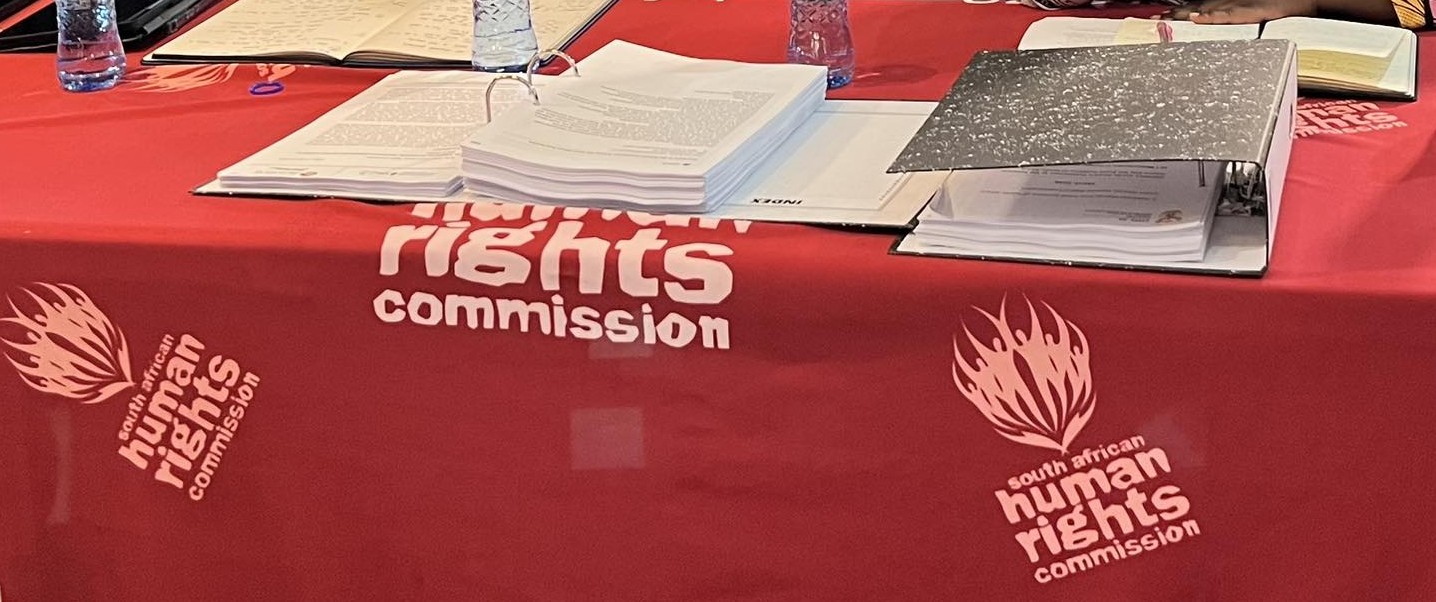
The Constitutional Court of South Africa's recent judgment in South African Human Rights Commission v Agro Data CC has, with respect, delivered a devastating blow to the struggle for the enforcement of the constitutional promises of human rights that remain beyond reach for the majority, and access to justice against flagrant daily violations, and emasculated an important Chapter 9 institution, the South African Human Rights Commission.
ALSO READ: Constitutional Court draws clear line between SAHRC and other Chapter 9 bodies
The contradictions between the rhetorical homage to the importance of the SA Human Rights Commission and the regressive essence of the judgment are glaring.
On one hand, the Court affirms the SAHRC as a "potent guardian" of the constitutional democracy. On the other hand, it strips that guardian of any enforceable power, declaring that its directives lack binding force absent a court order. The result is an institution that can speak but cannot act, can find but cannot enforce, can condemn but cannot compel.
Consider what this judgment actually does. Formally, it affirms the SAHRC's importance. Substantively, it strips the institution of practical efficacy. For a working-class family in a rural area, or a poor community surviving on the margins, securing an SAHRC finding in their favour is already a major challenge and a significant achievement.
That finding, however, now amounts to nothing more than a piece of paper if the violating party, often a powerful landowner, an employer, or a well-resourced private actor, simply refuses to comply. The next step, litigation, is precisely the costly, complex, and delay-ridden process that Chapter 9 institutions were designed to help ordinary people avoid.
The inevitable consequences of the new two-pronged approach
The two-pronged approach this judgment introduces has swept all of these aside and, in its essence, renders these constitutional mechanisms for affordable and accessible justice impotent. This is a grotesque attack on the constitutional protections of the poor, which is all the more outrageous owing to the widening inequalities in the country, where the costs of litigation bear no relation whatsoever to the reality of the vast majority of the population, including sections of the middle class, let alone the poorest of the poor.
To put this into perspective, an hour's worth of a senior attorney in Johannesburg is more than the monthly income of the 12.4 million unemployed people, 28 million people on social grants, and many in the workforce falling under the working poor.
This is where the grotesque injustice of the ruling reveals itself. The Court has shifted the entire burden of enforcement away from the powerful offender and onto the vulnerable victim. The farm owner who violates a right does nothing. The community that suffers the violation must now find a lawyer, find money, find time, and find the strength to navigate an overburdened court system. This is a judicial endorsement of impunity for the powerful and an onslaught against the poor.
The Court has effectively told the most vulnerable, you are welcome to a finding, but not to a remedy, unless you can afford a lawyer and endure years of judicial proceedings. For a working-class household relying on social grants or living paycheque to paycheque, or a rural community without access to legal advice, that second step will be impossible. The right becomes a mirage. The violation becomes permanent.
The message radiating outward is unmistakable. Chapter 9 guardians can be ignored with impunity, and the burden of litigating on the rights Chapter 9 institutions have ruled on now falls not on those who break the law, monopolise power and resources, but on those who can least afford to defend their rights.
This is not a technical change, but a fundamental shift in the onus and burden of litigation with enormous legal, political, and social consequences. It is a material betrayal of the Constitution's promise. Law, in its living reality, is not merely a set of declared rules. It is a practice of power, resources, and access. When the enforcement mechanism is placed beyond the reach of those who need it most, the right itself becomes an extravagance in the Constitution.
The landowner in Agro Data now knows that defiance carries no price. The community knows that justice requires resources they do not possess. The burden has been inverted, and the poor have been left carrying the weight.
The consequences extend far beyond the SAHRC. There can be no doubt that the same legal logic applies with equal force to other Chapter 9 institutions. The Commission for Gender Equality, mandated to protect and promote gender justice, will now find its directives similarly hollow. The CRL Rights Commission will operate under the same disability. None can bind. All must litigate.
Austerity and the capacity to litigate
In theory, the judgment says these institutions can approach the court to litigate and the burden doesn't have to fall on ordinary people. But this is much worse in reality, and its broader implications for the work of the Commission are significant.
In a period of relentless budget cuts, austerity, and fiscal contraction, these institutions will inevitably begin to ration. They will choose only the strongest cases, the most winnable litigation, the most politically visible violations. The silent, everyday abuses suffered by working-class and poor people, the farmworker denied dignity, the tenant facing illegal eviction, the community cut off from water, will fall through the cracks. That is not speculation. That is the material logic and inevitable consequence of scarce resources meeting an impossible mandate.
The Court sought to distinguish the Public Protector of South Africa, whose remedial action has binding force. That distinction, however, only deepens the jurisprudential puzzle. The SAHRC's mandate under section 184 of the Constitution is uniquely broad. It protects all human rights across both public and private spheres. If the primary institution for fostering a human rights culture cannot compel compliance, then that culture is hollow at its core, and it is the poor who will feel that hollowness first and most deeply.
Legislative intervention urgent
Parliament must act urgently. The legislative framework governing the SAHRC requires immediate amendment to provide for clear, binding, and enforceable directives, subject to appropriate judicial oversight—for example, a prompt review mechanism available to any aggrieved party. Such a model preserves the courts' ultimate authority while restoring the Commission's practical efficacy.
One can only hope that in the interim, all public and private actors voluntarily comply with SAHRC directives as a matter of constitutional good faith. But good faith is not a structural remedy, and in a society based on exploitation and ravaged by constant class struggle, such a hope is a dangerous illusion to foster. Only legislation can repair what this judgment has broken.
Upholding the right of access to justice is not sustained by declarations. It is sustained by accessible institutions with the power to make their findings matter. The Constitutional Court has left us with a guardian that cannot guard, a protector that cannot compel, and a promise of access to justice that, for the working class and the poor, has been pushed further beyond reach.
It has shifted the burden from the powerful to the powerless, from the offender to the victim, from those who can easily comply to those who can scarcely litigate. That is not a minor setback. It is a devastating blow, and one that only Parliament can now undo.
Get your news on the go. Click here to follow the Conviction WhatsApp channel.
