Skip to content
Close Menu
ConvictionConviction
  • Home
  • Law & Justice
  • Special Reports
  • Opinion
  • Ask The Expert
  • Get In Touch

Subscribe to Updates

Get the latest creative news from FooBar about art, design and business.

What's Hot

Virtual AGMs are lawful for homeowners’ associations despite member objections

May 20, 2026

Constitutional Court buckles under growing workload, warns Freedom Under Law

May 20, 2026

Is it harvest time for the DA as the ANC faces mounting pressure over Phala Phala?

May 19, 2026
Facebook X (Twitter) Instagram
Trending
  • Virtual AGMs are lawful for homeowners’ associations despite member objections
  • Constitutional Court buckles under growing workload, warns Freedom Under Law
  • Is it harvest time for the DA as the ANC faces mounting pressure over Phala Phala?
  • Employee fired for speaking to trustees without getting approval from management
  • ‘The more you get, the happier you are’ slogan draws complaints against brandy advert
  • Stable homes and emotional security matter more than wealth in child relocation disputes
  • Judge rules homeowners’ R681 000 levy repayment plan is not practical
  • Undocumented foreigners must now appear in court within 48 hours under new law
Facebook X (Twitter) Instagram
ConvictionConviction
Sonneblom
  • Home
  • Law & Justice
  • Special Reports
  • Opinion
  • Ask The Expert
  • Get In Touch
ConvictionConviction
Home » Constitutional Court buckles under growing workload, warns Freedom Under Law
Constitutional Law

Constitutional Court buckles under growing workload, warns Freedom Under Law

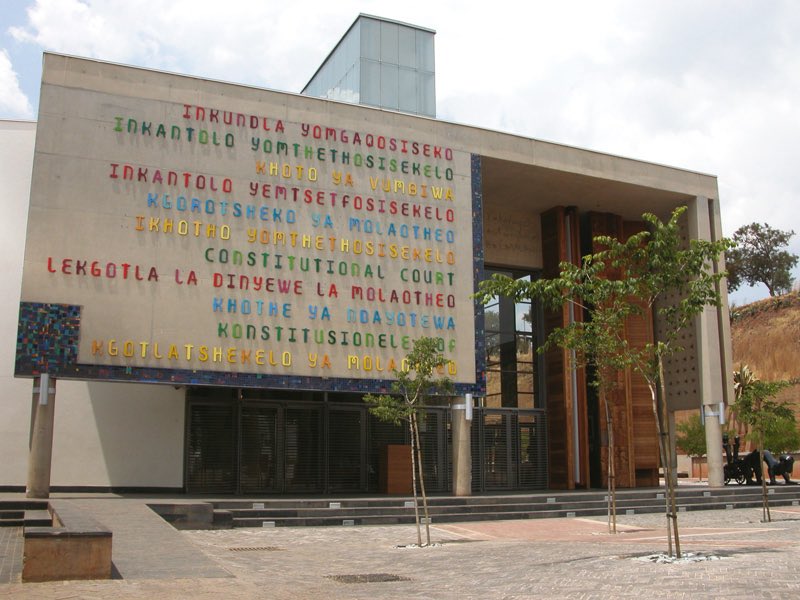
Report says growing backlogs, rising appeals, and procedural inefficiencies are threatening the Constitutional Court’s ability to fulfil its constitutional role.
Kennedy MudzuliBy Kennedy MudzuliMay 20, 2026No Comments
Facebook Twitter Pinterest LinkedIn WhatsApp Reddit Tumblr Email
Share
Facebook Twitter LinkedIn Pinterest Email
  • Freedom Under Law reports that the Constitutional Court’s workload has tripled since 2010.
  • The organisation warns that long delays and growing backlogs are putting public trust in the judiciary at risk.
  • Proposed solutions include smaller judicial panels, stricter appeal procedures, and changes to the structure of the apex court.

South Africa’s Constitutional Court is under increasing strain, with its ability to fulfil its constitutional duties now at risk.

This is according to a new report from Freedom Under Law, which details how rising appeals, a growing backlog of cases, and outdated processes are putting the country’s highest court under severe pressure.

The report, titled A Review of the Constitutional Court’s Jurisdiction and Operating Practices in Light of its Increased Workload and Consequential Delays, finds that the number of annual applications to the Constitutional Court has more than tripled since 2010.

The court now receives nearly 400 applications each year. At the same time, the wait between hearings and judgments has more than doubled over the past decade. Applications for leave to appeal can stay unresolved for months.

Freedom Under Law says these issues go beyond simple administrative delays and now threaten the court’s ability to act as the final guardian of the Constitution and the rule of law.

Judith February, Executive Officer at Freedom Under Law, says, “How the court functions is a critical concern for South Africa’s constitutional democracy. As the country’s highest court, it sets legal principles for all other courts and can strike down legislation or government actions.”

She adds, “If the court cannot fulfil its role as the ultimate guardian of the rule of law, the consequences reach far beyond lawyers and judges. The court’s rising workload, combined with old systems and structural limits, is making it harder to handle cases efficiently and on time. If judgments are delayed and the court seems unable to cope, public confidence in the judiciary itself may start to erode.”

Freedom Under Law identifies two main causes: the sheer volume of work and the way the court operates. The court’s powers were expanded more than a decade ago, but its structure and procedures have barely changed.

Currently, every application for leave to appeal must be considered by all 11 justices, with at least eight judges needed for even preliminary decisions. The report argues that this approach is now unsustainable as the workload increases.

Delays, backlogs and speculative appeals

The report also looks at how the court decides whether to grant leave to appeal, using the “interests of justice” test. Freedom Under Law argues that this test is too open-ended, which encourages speculative appeals because lawyers cannot easily predict when the court will grant leave.

Research in the report shows that the time between hearings and judgments rose sharply between 2010 and 2021 and has held steady at about 210 days since then.

It also notes that petitions for leave to appeal are now taking even longer to process. In 2012, a case in chambers took an average of 33 days. By 2024, at least half of all petitions will remain undecided for six months or more, even though many are eventually dismissed quickly.

Freedom Under Law warns that such delays are affecting the court’s ability to deal promptly with important constitutional matters.

This report comes amid rising public concern over delays at the Constitutional Court, including debate in 2024 about using retired justices to help process applications. Former Chief Justice Raymond Zondo explained that this was due to a “huge increase” in applications after the court’s powers were expanded.

Proposed reforms to restore efficiency

Freedom Under Law compared South Africa’s Constitutional Court with similar courts in Germany, Canada, the UK, the US, Singapore, Australia, and India. Many of these courts use smaller panels of judges, professional screening systems, and stricter procedures to manage large caseloads.

The report suggests changes that could be made in the short, medium, and long term. In the short term, recommendations include page limits for applications, a more rules-based approach to the “interests of justice” test, and providing reasons when leave to appeal is refused.

Medium-term proposals involve using smaller panels for new applications before matters go to the full bench. Long-term reforms include creating separate chambers in the Constitutional Court for different types of cases, merging the Constitutional Court and the Supreme Court of Appeal into one apex court, or limiting the court’s powers through constitutional amendment.

Chris Oxtoby, research consultant for Freedom Under Law, says, “The court’s authority depends not only on the quality of its judgments, but also on its ability to decide matters promptly, predictably and transparently. South Africa cannot afford an apex court that is overwhelmed and increasingly unable to perform its constitutional function.”

Freedom Under Law says the purpose of its report is to start a serious national discussion about how to protect the effectiveness, legitimacy, and constitutional role of the Constitutional Court.

Conviction.co.za

Get your news on the go. Click here to follow the Conviction WhatsApp channel.

Constitutional Court Freedom Under Law judiciary legal reform Raymond Zondo
Share. Facebook Twitter Pinterest LinkedIn Tumblr Telegram Email
Kennedy Mudzuli

Multiple award-winner with passion for news and training young journalists. Founder and editor of Conviction.co.za

Related Posts

Undocumented foreigners must now appear in court within 48 hours under new law

May 19, 2026

ConCourt blocks government plan to control private healthcare locations

May 18, 2026

Three-year waiting period for attorneys to appear in higher courts declared unconstitutional

May 15, 2026
Leave A Reply Cancel Reply

Prove your humanity: 5   +   5   =  

Subscribe to our newsletter:
Top Posts

Making sectional title rules that work: A practical guide

January 17, 2025

Protection order among the consequences of trespassing in an ‘Exclusive Use Area’

December 31, 2024

Between a rock and a foul-smelling place

November 27, 2024

Irregular levy increases, mismanagement, and legal threats in a sectional title scheme

June 2, 2025
Don't Miss
Property Law
3 Mins Read

Virtual AGMs are lawful for homeowners’ associations despite member objections

By Kennedy MudzuliMay 20, 20263 Mins Read

The Johannesburg High Court has confirmed that virtual AGMs are lawful for homeowners associations, while warning that members still retain the right to object where governing rules allow it.

Constitutional Court buckles under growing workload, warns Freedom Under Law

May 20, 2026

Is it harvest time for the DA as the ANC faces mounting pressure over Phala Phala?

May 19, 2026

Employee fired for speaking to trustees without getting approval from management

May 19, 2026
Stay In Touch
  • Facebook
  • Twitter
  • WhatsApp
Demo
About Us
About Us

Helping South Africans to navigate the legal landscape; providing accessible legal information; and giving a voice to those seeking justice.

Facebook X (Twitter) YouTube WhatsApp Twitch RSS
Latest posts

Making sectional title rules that work: A practical guide

January 17, 2025

Protection order among the consequences of trespassing in an ‘Exclusive Use Area’

December 31, 2024

Between a rock and a foul-smelling place

November 27, 2024
OUR PICKS

Three-year waiting period for attorneys to appear in higher courts declared unconstitutional

May 15, 2026

ICU doctor must face medical negligence lawsuit over patient’s death

May 14, 2026

GIWUSA and Sasol face off at CCMA amid deductions dispute

May 18, 2026
© 2026 Conviction.
  • Home
  • Law & Justice
  • Special Reports
  • Opinion
  • Ask The Expert
  • Get In Touch

Type above and press Enter to search. Press Esc to cancel.

Powered by
►
Necessary cookies enable essential site features like secure log-ins and consent preference adjustments. They do not store personal data.
None
►
Functional cookies support features like content sharing on social media, collecting feedback, and enabling third-party tools.
None
►
Analytical cookies track visitor interactions, providing insights on metrics like visitor count, bounce rate, and traffic sources.
None
►
Advertisement cookies deliver personalized ads based on your previous visits and analyze the effectiveness of ad campaigns.
None
►
Unclassified cookies are cookies that we are in the process of classifying, together with the providers of individual cookies.
None
Powered by