


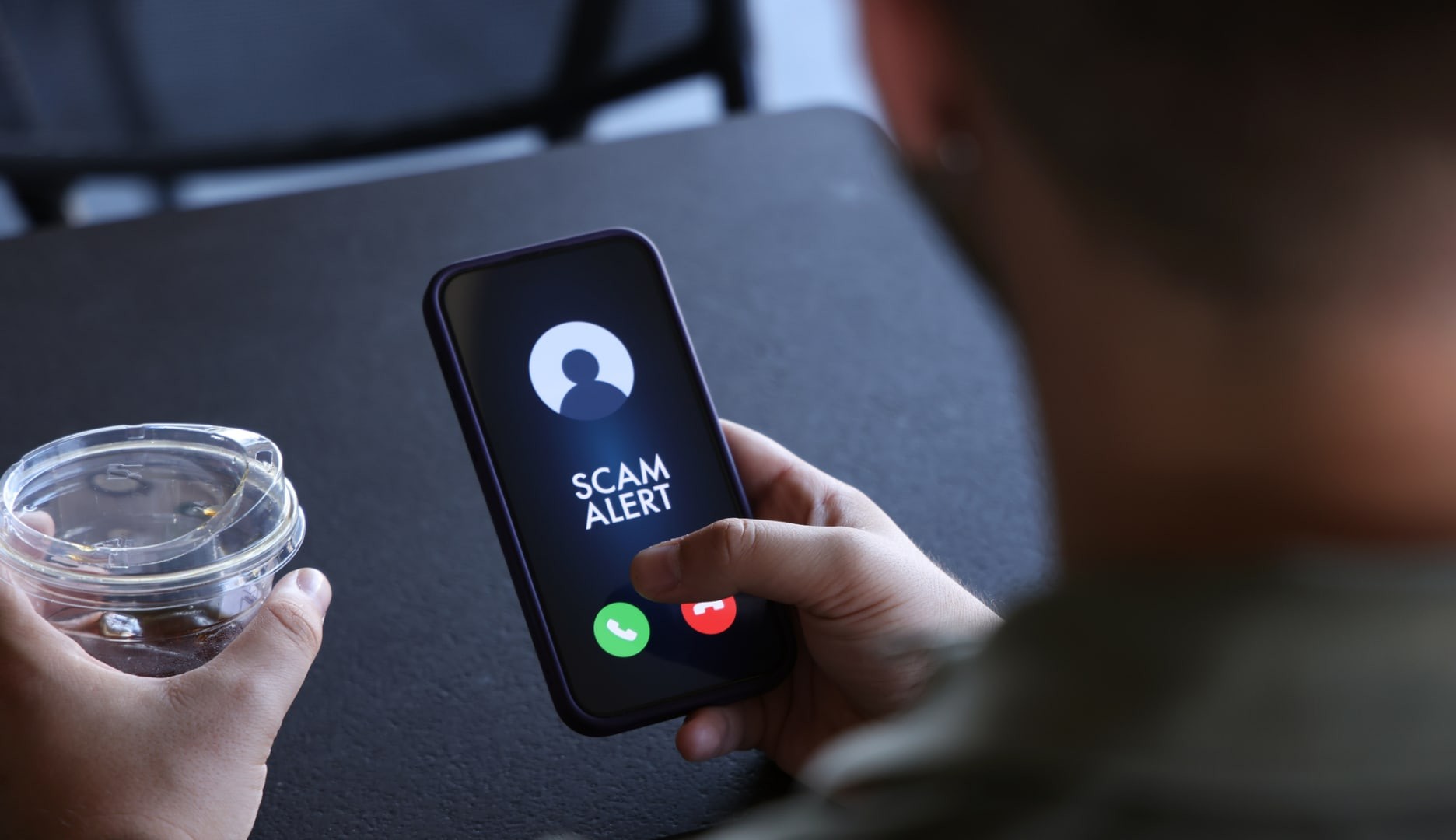
- A Facebook Marketplace seller spotted a forged proof of payment before handing over a television to a supposed buyer.
- Fraudsters are increasingly pretending to be buyers and using fake banking documents to get goods without paying for them.
- Community WhatsApp groups are also being targeted through deposit scams that use false addresses and fake identities
Online shopping scams are evolving faster than ever. Fraudsters are constantly adapting their tricks to exploit buyers and sellers using social media marketplaces and community groups.
Ashwini Singh, a law academic and affiliate of the Association of Certified Fraud Examiners South Africa, says that the growth of online fraud during the COVID-19 pandemic, along with the rapid rise of artificial intelligence, has led to scams that are becoming harder for consumers to spot.
“There are many types of online shopping scams and most of them are evolving faster than ever,” Singh said. She noted that earlier this year, the National Consumer Commission reported a rise in scams where suppliers receive payment from unsuspecting consumers but never deliver the promised goods. However, Singh warned that criminals are now increasingly targeting sellers as well.
Fraudsters pretending to be buyers
In one recent case, a Facebook Marketplace seller advertised a television for sale. Soon after, a man with a foreign accent contacted the seller and showed interest in buying the item.
The buyer first said he would collect the television in person and pay cash. The seller agreed, but insisted that the handover would happen with estate security guards present.
The arrangement changed when the buyer claimed he was at work and couldn’t collect the television himself. Instead, he said he would send an Uber driver to pick it up for him.
The seller made it clear that the television would not be handed over until payment showed in his bank account. The buyer then asked for banking details and claimed he had arranged for the payment to reflect immediately.
Shortly after, the seller received what looked like a proof of payment on a Nedbank letterhead. But he quickly noticed that the Nedbank logo looked fake and realised the document was fraudulent.
When the seller questioned the suspicious proof of payment, the supposed buyer phoned and told the waiting Uber driver to leave immediately. The driver sped out of the estate before security could be alerted. By the time the seller tried to notify security, the car had already left. "I do not believe that the messenger was a driver linked to Uber," the seller said.
According to Singh, this incident shows a new twist on traditional online marketplace fraud. “The scam involving the fraudulent purchase of electronic goods on Facebook Marketplace is a twist on the traditional fraudulent buyer model. This time, the roles are reversed,” Singh said.
“Now, the fraud is committed by a consumer pretending to have bought goods legitimately using fake proof of payment,” she added. She explained that criminals often get goods through deception and then try to sell them elsewhere.
“Often, the perpetrator will take the goods and try to resell them somewhere else,” Singh said. While many people are aware of scams involving fake sellers, Singh said fewer expect criminals to pose as real buyers.
“While buyers and sellers on social media sites might know about the usual scams where a fraudster pretends to be a seller, they may not be prepared for someone pretending to be a buyer,” she said.
She said this puts extra pressure on sellers to check that buyers are genuine before completing any deal. “In these cases, the proof of payment must be checked by making sure the money actually reflects in the seller’s bank account before any goods are handed over,” Singh said.
Community trust is being exploited
Singh also shared a recent incident involving a neighbourhood WhatsApp group where a fraudster claimed to live in the community and advertised items for sale.
According to Singh, the person seemed convincing and even gave what looked like a real neighbourhood address where the goods could be collected. Buyers were told they needed to pay a deposit before getting the exact location.
After receiving payment, the fraudster would give the collection address but then repeatedly claimed not to be home or available when buyers tried to collect their goods. Excuses followed, and the promised items never appeared.
The scam was only uncovered when a community member asked if anyone actually knew the seller. Further enquiries revealed the person had allegedly used similar tricks to scam someone else elsewhere in the country through Facebook, and likely did not live in the neighbourhood at all.
“It is worrying how sophisticated and creative online scams have become,” Singh said. “Criminals are always adapting their methods to take advantage of the trust that exists in community groups and online marketplaces,” she added.
She warned that fraudsters often use local addresses, familiar landmarks and convincing stories to create a false sense of legitimacy and lower suspicion among their victims.
“We have to be very careful on these buy-and-sell groups because the criminals are always trying something new,” Singh said.
Prevention remains the best defence
Singh advised people to independently verify payments before handing over goods. She said to be careful before paying deposits or transferring money to people whose identities are not confirmed.
For those who fall victim to these scams, she recommends reporting fake accounts to the relevant online platform and opening criminal cases for fraud, forgery and uttering with the police.
“For victims, the first step is to report the buyer’s account to Facebook Marketplace to stop the fraudulent buyer from continuing their scams,” Singh said. “Victims should also open a case for fraud, forgery and uttering at their local police station,” she added.
However, she warned that recovery is not always possible. “With an overburdened legal system, there is no guarantee that you will get your goods or your money back. In these cases, prevention is the best protection,” Singh said.
“If you are selling goods online, please make sure that any payment from a buyer actually reflects in your bank account before shipping any items. This helps avoid falling victim to these scams,” she said.
Get your news on the go. Click here to follow the Conviction WhatsApp channel.

1 Comment
When there was loadshedding&COVID there was this scam website that mimicked Builders and was selling generators. A lot of ppl got scammed and never got the generators they ordered. it was very convincing