Skip to content
Close Menu
ConvictionConviction
  • Home
  • Law & Justice
  • Special Reports
  • Opinion
  • Ask The Expert
  • Get In Touch

Subscribe to Updates

Get the latest creative news from FooBar about art, design and business.

What's Hot

Africa Day celebrations and the enduring gendered contradictions of African unity

June 4, 2026

Businesses urged to make only provable advertising claims

June 4, 2026

Women travel up to 300km as abortion services fail in Eastern Cape and Limpopo

June 4, 2026
Facebook X (Twitter) Instagram
Trending
  • Africa Day celebrations and the enduring gendered contradictions of African unity
  • Businesses urged to make only provable advertising claims
  • Women travel up to 300km as abortion services fail in Eastern Cape and Limpopo
  • Senior manager loses dismissal case before company could address CEO complaint
  • Toddler’s future forever changed after an accident just before his third birthday
  • Matric results publication stays public after High Court dismisses appeal by Information Regulator
  • More than maintenance: Rand Water building trust through action
  • Farm for sale advert slammed for misleading jacuzzi, workshop and three-phase power claims
Facebook X (Twitter) Instagram
ConvictionConviction
Sonneblom
  • Home
  • Law & Justice
  • Special Reports
  • Opinion
  • Ask The Expert
  • Get In Touch
ConvictionConviction
Home » Africa Day celebrations and the enduring gendered contradictions of African unity
Opinion

Africa Day celebrations and the enduring gendered contradictions of African unity

Africa Day debates often focus on unity and development, but women remain sidelined despite making up more than half of Africa’s population.
Professor Grace KhunouBy Professor Grace KhunouJune 4, 2026No Comments
Facebook Twitter Pinterest LinkedIn WhatsApp Reddit Tumblr Email
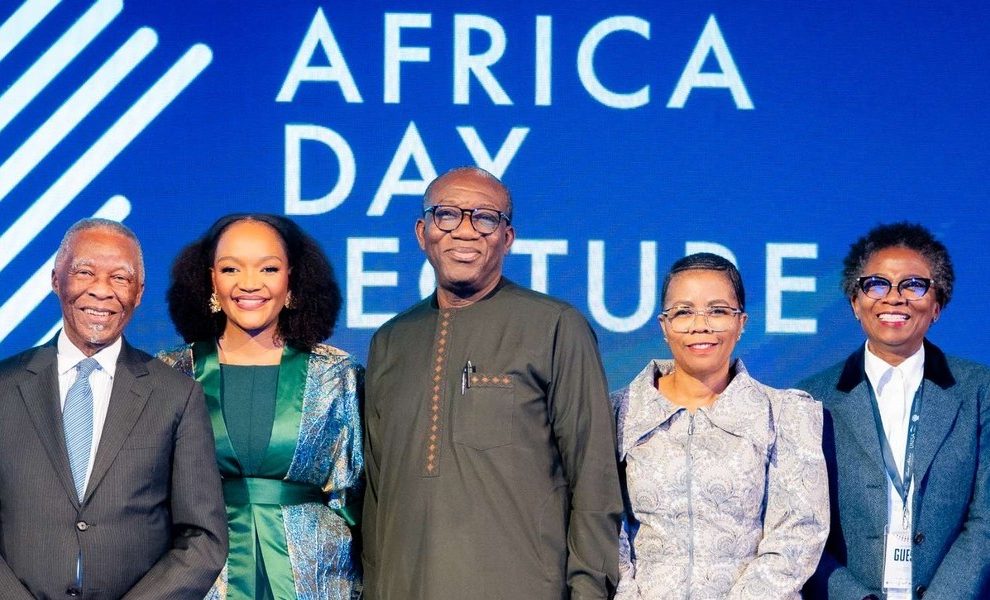
Dignitaries, scholars, policymakers, and citizens attend the annual Thabo Mbeki Africa Day Lecture in Cape Town, hosted by Unisa and the Thabo Mbeki Foundation to reflect on Africa’s place in a rapidly changing world. Picture: Unisa
Share
Facebook Twitter LinkedIn Pinterest Email
  • Africa Day discussions continue to promote African unity, but the position of women in these conversations remains largely overlooked.
  • African women continue to experience unequal outcomes in education, economic participation, political representation, and access to resources.
  • Meaningful African unity requires the voices, experiences, and interests of women to be placed at the centre of development initiatives.

Annually, Africa Day celebrations across the continent are filled with reminders of the promises of unity and solidarity for the continent.

In South Africa, Africa Day is commemorated through a diversity of activities promoting this very idea of unity, first championed by the Organisation of African Unity (OAU), the precursor to the African Union (AU), on 25 May 1963.

Within the South African higher education milieu, the celebrations continued this year despite ongoing tensions of Afrophobia in the country, marking the relevance of universities as places of continued reflection in the context of conflict.

Some of the debates rightfully focused on trying to find solutions for continued African solidarity in the context of the ongoing “scramble for Africa”, growing geopolitical conflicts, technological shifts, and the opportunities offered by multipolarity. While the debates emerging from the celebrations are important for advancing broader unity, what is not showing up is the position of women in this work to develop and unite the continent.

This is disturbing, as African women, both adult women and young girls, make up more than 50 percent of the continent’s population. Thus, more than half of the population dividend that many proponents of Africa’s development emphasise is made up of a group seldom centred in formal African development initiatives: adult women and young girls.

While we recognise that gender does not operate in the same way everywhere, gender development research shows that women across the world experience development disproportionately. This is even more so for women on the African continent. This is because development is not neutral; it is just as gendered as it is racialised.

The African Gender Development Index illustrates that women are underrepresented in education, economic participation, and political participation. While the numbers vary across the continent, what remains constant is that African women remain an addendum in African development programmes, on its platforms, and as beneficiaries of its projects, while carrying an unequal burden of the failures of this development.

For example, according to the Food and Agriculture Organization of the United Nations (UN), African women in Sub-Saharan Africa shoulder a disproportionate share of food production labour while holding lower levels of land ownership and being less likely to inherit land.

The cost of the patriarchal dividend

While South Africa shows progress in terms of access to education for girls and women compared to other African countries, this is not translated into access to jobs and leadership positions once women enter the workplace.

Research argues that this discrepancy is the result of the patriarchal dividend. It has become the norm for men to defer to other men, even when women are more qualified, more experienced, and even when they hold leadership positions. Similarly, powerful men will defer to other men, sometimes to the most junior and least qualified men in the room.

This patriarchal dividend leads to experiential contradictions for women leaders, who are rewarded for self-erasure while simultaneously being treated as disposable. The architectures of patriarchal power work tirelessly to unsettle and provoke women leaders, who are then forced to act in ways that the system labels as “irrational”.

Feminist researchers such as Bell Hooks have written extensively about these tactics and how they minimise women leaders’ achievements while imposing respectability politics on them. For example, when these women leaders resist dehumanisation, that resistance is defined as aggression. As a result, women are often labelled angry, aggressive, and difficult.

If African unity is to be achieved, African women and their interests should be centred. Their voices, presence, and experiences are indispensable. Otherwise, the shared aspirations of the continent will remain a pipe dream.

Conviction.co.za

Get your news on the go. Click here to follow the Conviction WhatsApp channel.

Africa Day African unity Gender equality Grace Khunou Women in Africa
Share. Facebook Twitter Pinterest LinkedIn Tumblr Telegram Email
Professor Grace Khunou

Executive Director for Leadership and Transformation at the University of South Africa (Unisa).

Related Posts

More than maintenance: Rand Water building trust through action

June 3, 2026

South Africa cannot afford to lag while youth nicotine addiction escalates

June 2, 2026

Do South Africa’s archives serve justice or preserve historical injustice?

June 1, 2026
Leave A Reply Cancel Reply

Prove your humanity: 6   +   9   =  

Subscribe to our newsletter:
Top Posts

Making sectional title rules that work: A practical guide

January 17, 2025

Protection order among the consequences of trespassing in an ‘Exclusive Use Area’

December 31, 2024

Between a rock and a foul-smelling place

November 27, 2024

Irregular levy increases, mismanagement, and legal threats in a sectional title scheme

June 2, 2025
Don't Miss
Opinion
4 Mins Read

Africa Day celebrations and the enduring gendered contradictions of African unity

By Professor Grace KhunouJune 4, 20264 Mins Read

Professor Grace Khunou argues that Africa’s unity project will remain incomplete unless the voices, experiences, and interests of women are placed at the centre of the continent’s development agenda.

Businesses urged to make only provable advertising claims

June 4, 2026

Women travel up to 300km as abortion services fail in Eastern Cape and Limpopo

June 4, 2026

Senior manager loses dismissal case before company could address CEO complaint

June 4, 2026
Stay In Touch
  • Facebook
  • Twitter
  • WhatsApp
Demo
About Us
About Us

Helping South Africans to navigate the legal landscape; providing accessible legal information; and giving a voice to those seeking justice.

Facebook X (Twitter) YouTube WhatsApp Twitch RSS
Latest posts

Making sectional title rules that work: A practical guide

January 17, 2025

Protection order among the consequences of trespassing in an ‘Exclusive Use Area’

December 31, 2024

Between a rock and a foul-smelling place

November 27, 2024
OUR PICKS

Agricultural advisors declared scientists in landmark Labour Court ruling

February 17, 2026

R13,914 debt triggers sale of R380 000 home, transfer halted amid execution flaws

April 20, 2026

Understanding employee rights, workplace protections and grievance resolution in South Africa

June 8, 2025
© 2026 Conviction.
  • Home
  • Law & Justice
  • Special Reports
  • Opinion
  • Ask The Expert
  • Get In Touch

Type above and press Enter to search. Press Esc to cancel.

Powered by
►
Necessary cookies enable essential site features like secure log-ins and consent preference adjustments. They do not store personal data.
None
►
Functional cookies support features like content sharing on social media, collecting feedback, and enabling third-party tools.
None
►
Analytical cookies track visitor interactions, providing insights on metrics like visitor count, bounce rate, and traffic sources.
None
►
Advertisement cookies deliver personalized ads based on your previous visits and analyze the effectiveness of ad campaigns.
None
►
Unclassified cookies are cookies that we are in the process of classifying, together with the providers of individual cookies.
None
Powered by