


- Liberal democracy prioritises individual rights, constitutionalism and elections while neglecting the economic and social questions at the heart of liberation.
- Politics increasingly reduces citizens to consumers, measuring government performance through service delivery and statistics rather than dignity and social responsibility.
- Reclaiming politics requires a shift towards democratic agency, mutual respect and a commitment to human flourishing.
What is discouraging and absent in political debates in South Africa is the nature of the politics we are engaged in. Suspend party politics for a moment and look at politics differently, away from what we think we understand of it.
Liberal democracy emphasises individual rights, constitutionalism and periodic elections. It shies away from dealing with what the quest for liberation since the early days of colonial conquest was all about, leading to political rights in squalor and economic marginalisation.
The liberal model of politics all over the world is only about services (materials) and numbers (voting), while it should be about restoring human dignity, respect and cooperation. All individuals, associations and political parties that appeared on the ballot this week are creations of this liberal model of democracy, which diverts attention from people to anything from markets, indices and other ‘feel-good’ issues.
A human being disappears into oblivion as international observers, international organisations and governments descend on our shores to check the “integrity” and “fairness” of voting systems. That is why South Africa is considered a good democracy, yet nobody dares talk about the base on which that democracy is rested. Mošito o tšwela pele!
Citizens reduced to consumers
Under the present conditions, people/citizens become consumers: the relationship between the state and the individual degrades into a service-level agreement. If a government delivers water or garbage collection, it claims success, ignoring whether community bonds are fraying, systemic humiliation persists or public trust has dissolved. I am not sure if any of the political actors understand these issues, especially in black communities.
Today’s politics is about quantification (statistics) rather than morality and ethical conduct (responsibility towards each other). The reason is that numbers (GDP growth, polling percentages and infrastructure budgets) are easily measured, whereas dignity, respect and mutual obligation are qualitative and hard to weigh. Meaning, governance prefers what it can measure over what actually matters, confusing efficiency with justice.
The depoliticisation of public debate
Now the worst part: there is a sustained depoliticisation of the public sphere. Every political debate centres solely on distribution efficiency. In this instance, moral alignment, systemic inequality and social dislocation are treated as technical bugs to be patched, rather than deep ethical issues requiring collective action.
For a party like the DA, it is easy and convenient to talk about potholes and gusheshe while avoiding land reform and the invisibility of the black population in the free-market economy.
Reclaiming politics centred on human dignity
Reclaiming a politics centred on human dignity requires shifting the objective of governance from mere administration to democratic agency and mutual respect. Material delivery without voice or respect breeds resentment, not cooperation.
A society can achieve material wealth while remaining deeply dysfunctional if large segments of the population feel culturally devalued, marginalised or ignored.
A politics stripped of moral purpose and human connection inevitably leaves a void filled by cynicism and division. Governance must deliver material needs. However, material delivery is meant to be the foundation for human flourishing and dignity, never a replacement for it.
Immunitas and the politics of exclusion
Roberto Esposito uses immunitas to analyse state governance. In his theory, society protects itself from internal and external threats through exclusionary measures (legal immunity, borders and surveillance), contrasting it with communitas (shared obligation and community).
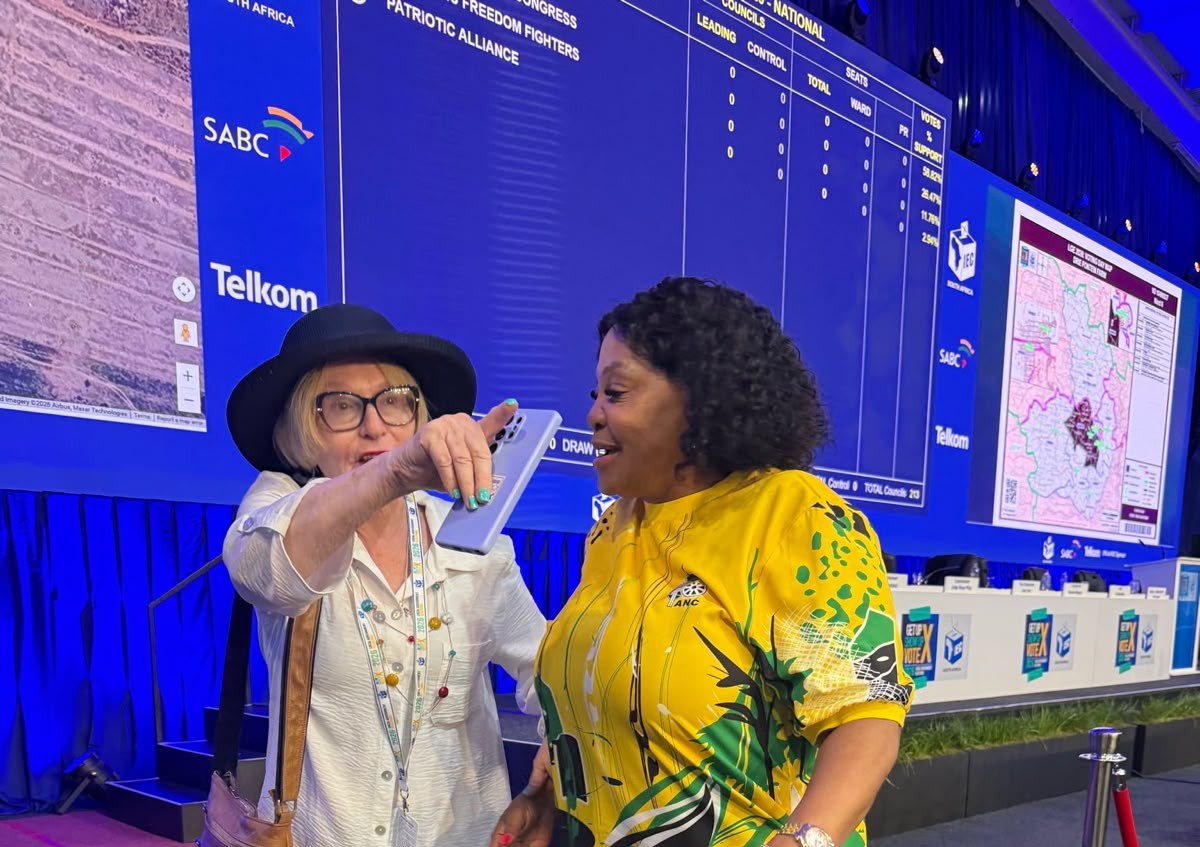
The recent elections intensified the line separating those whose value and voices count and others who do not exist in reality but are only recognised for their vote.
For as long as we promote the politics of walls…
Get your news on the go. Click here to follow the Conviction WhatsApp channel.
The opinions expressed in this article are solely those of the author and do not necessarily reflect the views of Conviction.co.za
