


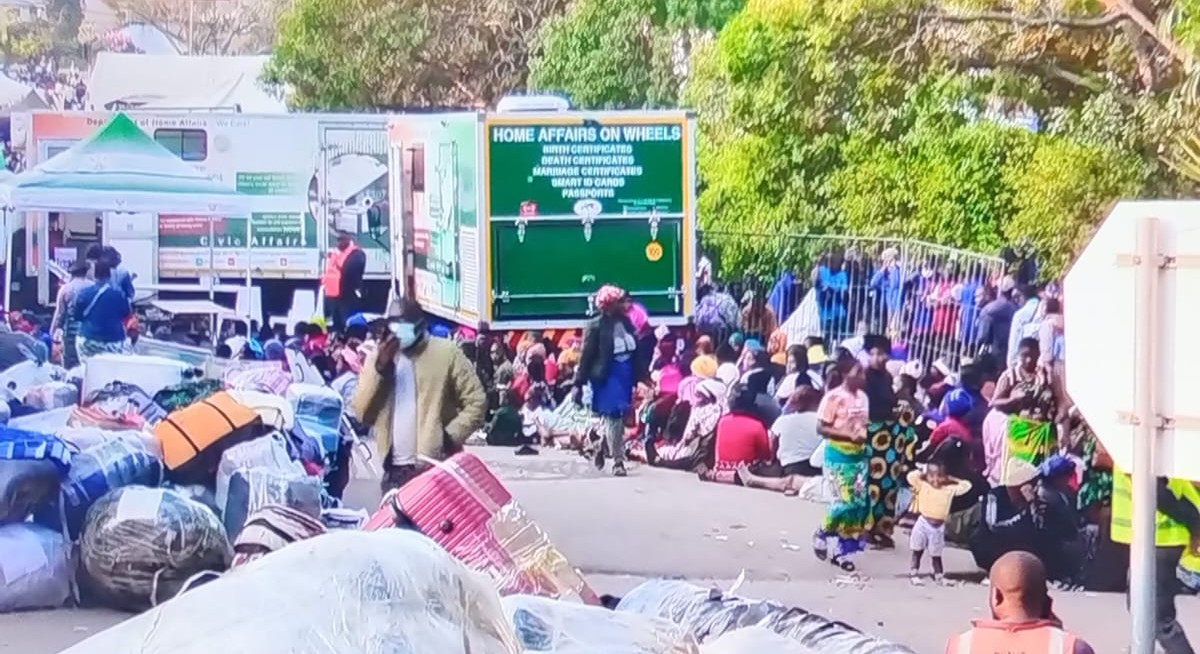
- Rising immigration tensions are rooted in deep socio-economic distress, unemployment and inequality.
- Governance failures across the region have contributed to migration pressures and public frustration.
- African countries must strengthen institutions, build inclusive economies and pursue regional solutions to migration challenges.
South Africa is at a defining moment, as rising tensions around immigration test the country’s commitment to unity, tolerance and shared prosperity.
In recent weeks, the streets of Durban, Johannesburg and Pretoria have witnessed regular marches, with citizens voicing frustrations over unemployment, crime and the perceived failures of the immigration system. These protests are not mere eruptions of anger but expressions of deep socio-economic distress. For many black South Africans, the struggle is about livelihoods, survival and the daily effort to make ends meet.
The protests were predictable. A failing economy, lack of opportunity and decades of unfulfilled promises have created fertile ground for desperation among citizens. Yet the challenge lies in how these frustrations are framed under current circumstances. Anger, suspicion and perceived hostility are often expressed in emotionally charged ways, blurring the line between immediate grievances and structural challenges that have accumulated over decades.
The country, still scarred by the injustices of apartheid, grapples with unresolved economic inequities. Not only is economic stability at stake, but also the constitutional promise of dignity, equality and freedom from poverty. What is unfolding is primarily an economic struggle, a fight for survival, not a struggle of “man against man”.
Distinguishing socio-economic grievances from xenophobia
Any critique or frustration arising from the government’s poor immigration policy is often stigmatised as xenophobia, largely because of South Africa’s history of perceived xenophobia and episodes of violence. Yet not all frustrations are rooted in hatred of foreigners.
What is currently taking shape are grievances grounded in socio-economic struggles that demand evidence-based, rights-respecting policy responses rather than emotional scapegoating. The protests, though imperfectly framed by protest leaders, have shown less violence than in the past, suggesting a shift towards pressuring the government rather than resorting to indiscriminate attacks on migrants. Moreover, there is a visible effort to engage law enforcement and the government at every stage of these demonstrations, marking a notable improvement from previous patterns of unrest.
Statistics paint a grim picture. Unemployment stood at 31.4% in March 2026, with youth unemployment hovering around 60%. Stagnant wages fail to keep pace with the rising cost of living. Consumer prices rose 3.1% in March 2026, while electricity tariffs increased by 12.7% in 2025, forcing households into impossible trade-offs between food, transport and power.
Surveys show that 86% of families have already cut back on groceries and transport, with many reducing meals or buying food on credit, sinking deeper into debt. Even education no longer guarantees stability, as graduates increasingly face poverty and underemployment. This convergence of inflation, debt and joblessness has eroded the dignity of labour, leaving households trapped in deprivation and poverty.
Governance failures and migration pressures
To understand today’s migration crisis, we must examine the long arc of governance in the region.
For decades, many African governments, including South Africa’s ANC, tolerated authoritarianism, entrenched corruption and failed to build inclusive economies, particularly in the SADC region. These choices created fragile states where opportunities were scarce, institutions were weak, and citizens were left with little hope.
The result has been waves of migration, driven not by choice but by necessity. Economic migrants from across the continent have sought refuge in South Africa, drawn by its relatively stronger economy and infrastructure. Yet South Africa itself has been grappling with high unemployment, inequality and unresolved frustrations among its black majority. Against this backdrop, the arrival of migrants has often been perceived as competition for scarce jobs, resources and services.
The political climate in South Africa is misunderstood, both internally and externally. With elections looming, politicians exploit public anger, framing immigration as the root of all problems. This unforgiving environment mixes genuine socio-economic grievances with populist rhetoric, creating confusion and division among Africans.
The need for dialogue and effective migration management
The absence of dialogue exacerbates the situation. Instead of fostering conversations about shared challenges and collective solutions, discourse is dominated by blame and suspicion. Citizens feel unheard in their struggles, while migrants feel targeted. This mutual mistrust undermines constitutional values of equality and dignity, breeding resentment.
Not all anti-foreigner sentiments are xenophobic. South African workers’ concerns that undocumented migrants undercut jobs and wages, and communities’ concerns about pressure on services, are legitimate. They reflect flaws in service delivery and the creation of opportunities for citizens, as well as immigration management, rather than necessarily hatred of foreigners.
However, because of the country’s violent history, such concerns are easily conflated with xenophobia. This conflation prevents honest dialogue and makes it harder for Africans to unite and for South Africans to be understood within the continent.
At the heart of the crisis lies misgovernance. South Africa’s immigration system is riddled with inefficiencies, corruption and a lack of enforcement. Borders are porous, documentation is inconsistent, and policies are reactive rather than strategic. This failure fuels resentment among citizens, who see migrants as beneficiaries of a broken system.
The problem is not unique to South Africa. Across the continent, governments have failed to coordinate migration policies, leaving each country to fend for itself. This lack of solidarity undermines African unity and perpetuates cycles of mistrust.
A continental challenge requiring continental solutions
Domestic tensions have spilt into the African Union. Diplomatic clashes have emerged, with some member states expressing concern that South Africa is not doing enough to protect migrants or uphold the principles of solidarity enshrined in African Union treaties, particularly the African Charter on Human and Peoples’ Rights.
Others have criticised South Africa’s handling of immigration, warning that continued hostility could diminish its influence within the African Union. If not addressed, these developments risk eroding the country’s moral authority and weakening its leadership role in continental affairs.
South Africa is at an economic boiling point, with political actors exploiting the moment for electoral gain. What is needed is principled dialogue, evidence-based policy and a reaffirmation of human rights.
The migration crisis is not just a South African problem; it is an African problem. Economic instability, political repression and inequality across the region demand collective solutions. African solidarity must move beyond rhetoric to concrete action.
Strengthening democratic institutions, building inclusive economies and fostering dialogue across borders will address migration challenges. South Africa cannot carry the burden alone, nor should migrants be scapegoats for systemic failures. Instead, African nations must work together to create pathways for legal migration, mechanisms for burden sharing and strategies for regional development.
Get your news on the go. Click here to follow the Conviction WhatsApp channel.
