


- The courage of the youth of 1976 remains a powerful lesson in leadership, organisation and collective action.
- South Africa’s young people face different challenges today, including unemployment, inequality and rapid technological change.
- Democracy will only fulfil its promise if today’s youth actively shape a more equal, united and prosperous future.
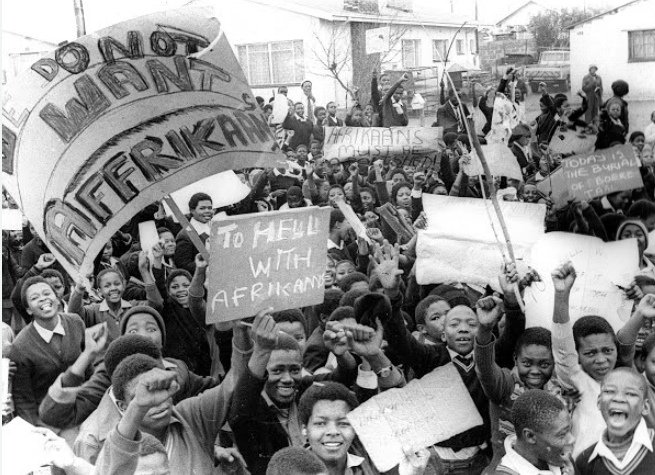
Fifty years ago, on 16 June 1976, thousands of young South Africans marched through the streets of Soweto carrying little more than conviction, courage and a determination to shape their own future. They were students protesting against the imposition of Afrikaans as a medium of instruction, but history transformed them into something greater. They became leaders of a national struggle.
The Soweto Uprising remains one of the most powerful reminders that young people are not merely participants in history; they are often its catalysts. The youth of 1976 shattered a culture of fear and reignited a liberation movement that would ultimately help bring apartheid to an end.
Their legacy challenges us to ask an important question as we commemorate the fiftieth anniversary of 16 June: What is required of the youth of democratic South Africa today?
Commemoration is important, but remembrance alone is not enough. The true value of history lies in its ability to help us understand the present and shape the future.
The generation of 1976 inherited a society marked by oppression, exclusion and political silence. Despite facing immense repression, they discovered that courage alone was not enough. Through struggle, they learned the importance of organisation, alliances, critical thinking and collective action. Their demands evolved from concerns about education to a broader vision of freedom and justice for all South Africans.
A different struggle for a new generation
Today, South Africa faces a different set of challenges, but they are no less significant. We live in a constitutional democracy built on the values of equality, human dignity, non-racialism and freedom. Yet we remain one of the most unequal societies in the world.
Millions of young people continue to face unemployment, poverty and economic exclusion. Crime, corruption and social fragmentation undermine confidence in our institutions. Climate change and rapid technological transformation are reshaping the world in ways that present both risks and opportunities.
The challenge before today’s youth is therefore not the same as that faced by the youth of 1976. Yet it demands many of the same qualities that enabled previous generations to become leaders of society.
Courage must be matched by organisation
History teaches us that young people become agents of transformation when they dare to challenge convention. From Pixley ka Isaka Seme and Charlotte Maxeke to Anton Lembede, Nelson Mandela, Steve Biko and the students of 1976, each generation refused to accept inherited limitations. They recognised realities that others could not yet see and imagined a better future.
But courage must be accompanied by organisation. The founders of the ANC Youth League understood that meaningful change requires structures, ideas and collective action. The youth of 1976 similarly discovered that protest alone could not sustain a movement. They built alliances with workers, communities and other sectors of society, transforming a student protest into a national movement for change.
Ideas shape the future
Leadership also requires ideas. Throughout our history, progress has been driven by young people willing to think critically about the world around them and develop new ways of addressing society’s challenges. From the vision of African unity advanced by Seme to the democratic ideals embodied in the Freedom Charter, ideas have provided direction and purpose to the struggle.
Most importantly, young leaders emerge when they connect their personal concerns to the broader interests of society. The students of 1976 began by confronting educational injustice, but they soon recognised that their struggle formed part of a larger struggle against oppression. In doing so, they became leaders not only of students but of a nation seeking freedom. This lesson remains profoundly relevant today.
The challenges facing young people cannot be separated from the challenges facing South Africa as a whole. Unemployment, inequality, gender-based violence, social division and environmental sustainability are not youth issues alone. They are national issues requiring collective solutions.
Democracy demands active citizenship
This is why intergenerational dialogue remains so important. No generation begins from a blank page. Every generation inherits both the achievements and the unfinished work of those who came before. The task is not to repeat the past but to learn from it.
The youth of 1912 inherited a divided people. The youth of 1944 inherited a frustrated people. The youth of 1976 inherited a silenced people. The youth of 1994 inherited a democratic South Africa. The youth of today inherit a nation that remains unfinished.
Their responsibility is not simply to benefit from democracy but to strengthen it. Our Constitution was never intended to reduce citizens to spectators who participate only during elections. It envisages active citizenship, where people organise, engage, debate, innovate and contribute to shaping the future of the country.
At Freedom Park, we believe that memory must inspire action. The stories preserved within our memorials remind us that freedom was won through sacrifice, courage and collective effort. They challenge us to ensure that future generations inherit a nation that is more equal, more prosperous and more united than the one we inherited.
Turning remembrance into action
As we mark Youth Month and the 50th anniversary of the Soweto Uprising, let us honour the youth of 1976 not only through commemoration but through commitment. Let us invest in education, entrepreneurship, innovation, social cohesion and active citizenship. Let us create opportunities for young people not merely to participate in society but to lead its renewal.
The youth of 1976 carried the torch of freedom through one of the darkest chapters in our history. The youth of 2026 carry a different responsibility: to give practical meaning to the promise of freedom by helping build a society rooted in equality, democracy, non-racialism, unity and shared prosperity.
The future will not be built by one generation acting alone. It will be built through dialogue, participation and shared responsibility. It will be built by citizens who understand that history is not something that happens to us, but something we create together.
That is the enduring lesson of 16 June. And that is the challenge of our time.
Get your news on the go. Click here to follow the Conviction WhatsApp channel.
