

Skip to content
Close Menu
ConvictionConviction
  • Home
  • Law & Justice
  • Special Reports
  • Opinion
  • Ask The Expert
  • Get In Touch

Subscribe to Updates

Get the latest creative news from FooBar about art, design and business.

What's Hot

Kubayi rejects calls to restore death penalty, says South Africa must never return to barbarism

July 11, 2026

Bank dishonesty database listings cannot be challenged, tribunal tells former ABSA employee

July 11, 2026

Restraint of trade: Where contract, competition and constitutional rights intersect

July 10, 2026
Facebook X (Twitter) Instagram
Trending
  • Kubayi rejects calls to restore death penalty, says South Africa must never return to barbarism
  • Bank dishonesty database listings cannot be challenged, tribunal tells former ABSA employee
  • Restraint of trade: Where contract, competition and constitutional rights intersect
  • Four missed opportunities might have stopped the Enyobeni tragedy, magistrate finds
  • Department failed to hear farmers before granting 20-year water licence for Lambert’s Bay
  • Motor dealer duped into paying R220,000 for non-existent vehicle sale
  • Renowned advocate Moafrika Wa Maila says group demanded his ID in Pretoria
  • Unisa must issue amended LLB certificate to graduate who lawfully changed surname
Facebook X (Twitter) Instagram
ConvictionConviction
Sonneblom
  • Home
  • Law & Justice
  • Special Reports
  • Opinion
  • Ask The Expert
  • Get In Touch
ConvictionConviction
Home » Kubayi rejects calls to restore death penalty, says South Africa must never return to barbarism
Constitutional Law

Kubayi rejects calls to restore death penalty, says South Africa must never return to barbarism

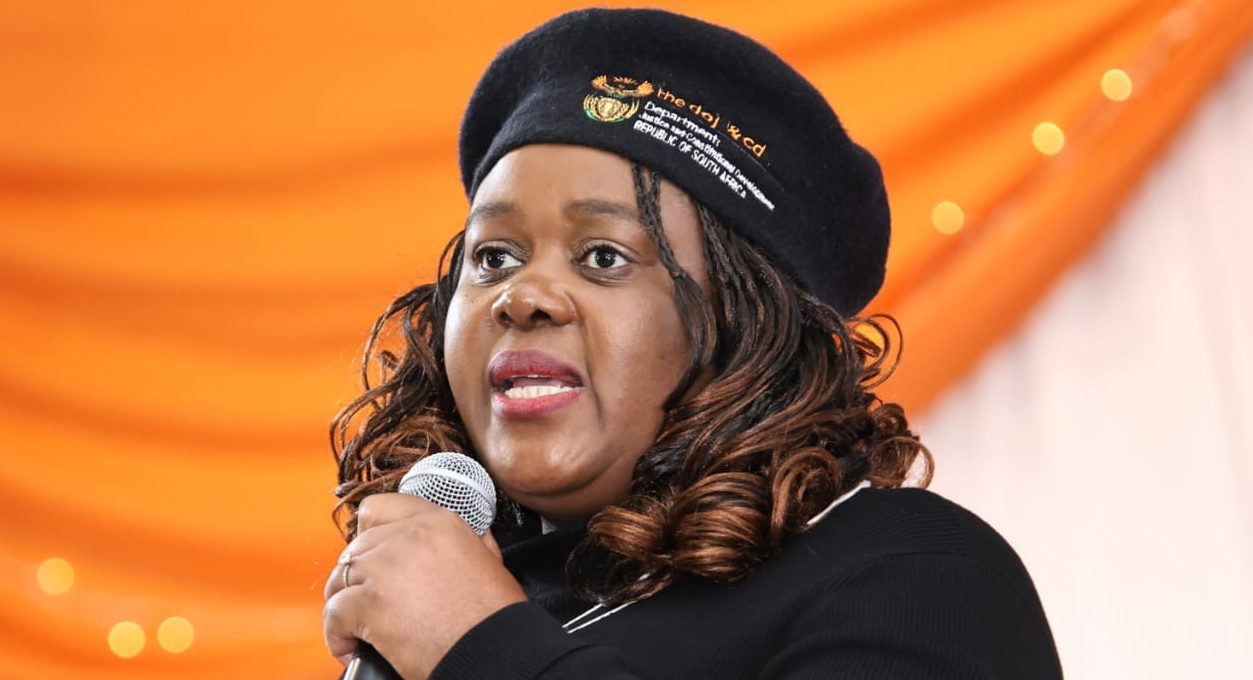
Justice Minister Kubayi delivered the Gallows Lecture in Gqeberha, where she defended the constitutional right to life, honoured victims of apartheid and reaffirmed South Africa’s commitment to human dignity.
Kennedy MudzuliBy Kennedy MudzuliJuly 11, 2026Updated:July 11, 2026No Comments
Facebook Twitter Pinterest LinkedIn WhatsApp Reddit Tumblr Email
Justice and Constitutional Development Minister Mmamaloko Kubayi delivers the Gallows Lecture in Gqeberha. Picture: Supplied
Share
Facebook Twitter LinkedIn Pinterest Email
  • Justice Minister Mmamaloko Kubayi emphasised that the death penalty has no place in South Africa’s constitutional democracy.
  • The Gallows Lecture marked 30 years since the Constitution was adopted and honoured political activists who were executed under apartheid.
  • Kubayi called on South Africans to protect constitutional rights as they work together to overcome poverty, inequality and unemployment.
Justice and Constitutional Development Minister Mmamaloko Kubayi has rejected renewed calls for the return of the death penalty in the country.

Kubayi delivered the Gallows Lecture, titled “Death Penalty: Two systems, one that killed and one that saved,” in Gqeberha on Saturday, 11 July 2026. This event was part of the Department of Justice and Constitutional Development’s programme marking the 30th anniversary of the adoption of the Constitution.

The event followed the successful completion of the Gallows Exhumation Project. This project resulted in the exhumation, handover, and reburial of the remains of 81 political prisoners executed on death row for politically motivated offences.

Attendees included community members, youth groups, Amabutho, veterans of Umkhonto we Sizwe and the Azanian People’s Liberation Army, civic organisations, justice sector representatives, students, educators, religious and traditional leaders, and government officials.

Honouring the victims of apartheid

In her opening address, Kubayi paid tribute to Benjamin Mlondolozi Gxothiwe, Siphiwe Lande, Sipho Mahala, Kholisile Dyakala, Lungile Rewu, Richard Thobile Lloyd, Mnyanda Jantjies, and Mlamlie Milies, who were executed during apartheid.  She stated, “We remember these heroes who lost their lives to the death penalty for their courage and determination in their uncompromising fight against oppression and injustice.”

Kubayi emphasised that South Africa’s Constitution, adopted 30 years ago, remains the foundation upon which the country builds a society based on human rights, equality, fair development, and justice. She reminded those present that democracy came at a high cost. “Those who lost their lives during the dark days of our struggle died believing that their contributions would help build a foundation for a new society,” she said.

Makwanyane changed South Africa’s legal history

Kubayi reflected on the Constitutional Court’s landmark 1995 decision in S v Makwanyane and Mchunu. She described it as the moment South Africa chose life over state-sanctioned execution.

She said, “In handing down that judgment lives were saved, a new chapter in South African law was opened, a victory for the liberation struggle was secured, and a major milestone in the journey toward a more humane and civilised society was marked.”

Kubayi noted that the judgment ended capital punishment and replaced a system “that killed” with one “that saved.” She explained that while the Interim Constitution included a Bill of Rights, it did not specifically address the death penalty. 

This left it to the Constitutional Court to decide if capital punishment aligned with the values of the new South Africa. “In many ways, the court was tasked with defining the future South Africa we wanted to create,” she said.

Apartheid used executions to suppress liberation

Kubayi distinguished between claims that the death penalty deters violent crime and the way apartheid used executions to silence political dissent. She noted that political prisoners and trade unionists were sentenced to death for their involvement in the liberation struggle, and many executions were conducted in secret.

“At the Truth and Reconciliation Commission, it was revealed that 95% of those sentenced to death under apartheid were black, while all those handing down the sentences were white,” she pointed out. Kubayi stated that the Gallows Exhumation Project had restored dignity to families by recovering and returning the remains of political prisoners whose bodies had been treated as property of the apartheid state.

She recalled that after Nelson Mandela’s release in 1990, more than 70 political prisoners still remained on death row. Although the Pretoria Minute, signed by the apartheid government and the ANC in August 1990, cleared the way for their release, many were only freed after sustained protests inside and outside South Africa.

Quoting Paula McBride, the wife of former ANC guerrilla Robert McBride, Kubayi said the death penalty was “a gross human rights violation.” She expressed hope that it would “never, ever, again come back onto our statute books because it brutalises not only those who are sentenced, but those who sentence them. It brutalises our whole country.”

Kubayi said McBride’s words illustrated that capital punishment harms society as a whole and has no place in a constitutional democracy.

Constitution protects the right to life

Kubayi also referenced former Chief Justice Arthur Chaskalson’s unanimous judgment. He found that carrying out a death sentence destroys life, violates human dignity, and constitutes cruel, inhuman, and degrading punishment.

Conviction.co.za

Get your news on the go. Click here to follow the Conviction WhatsApp channe

constitutional democracy Death penalty Gallows Lecture Human Rights Mmamaloko Kubayi
Share. Facebook Twitter Pinterest LinkedIn Tumblr Telegram Email
Kennedy Mudzuli

Multiple award-winner with passion for news and training young journalists. Founder and editor of Conviction.co.za

Related Posts

Judge President Phatudi found guilty of judicial misconduct for not stepping aside from case

July 9, 2026

Constitutional Court bars forced mental health assessments of litigants without evidence

July 8, 2026

Constitutional Court declares Refugees Act asylum provisions unconstitutional

July 7, 2026
Leave A Reply Cancel Reply

Prove your humanity: 8   +   4   =  

Subscribe to our newsletter:
Top Posts

Making sectional title rules that work: A practical guide

January 17, 2025

Protection order among the consequences of trespassing in an ‘Exclusive Use Area’

December 31, 2024

Between a rock and a foul-smelling place

November 27, 2024

Irregular levy increases, mismanagement, and legal threats in a sectional title scheme

June 2, 2025
Don't Miss
Constitutional Law
4 Mins Read

Kubayi rejects calls to restore death penalty, says South Africa must never return to barbarism

By Kennedy MudzuliJuly 11, 20264 Mins Read

Justice Minister Mmamaloko Kubayi has rejected calls to restore the death penalty, saying South Africa must uphold the constitutional right to life and never return to the brutality of capital punishment.

Bank dishonesty database listings cannot be challenged, tribunal tells former ABSA employee

July 11, 2026

Restraint of trade: Where contract, competition and constitutional rights intersect

July 10, 2026

Four missed opportunities might have stopped the Enyobeni tragedy, magistrate finds

July 10, 2026
Stay In Touch
  • Facebook
  • Twitter
  • WhatsApp
Demo
About Us
About Us

Helping South Africans to navigate the legal landscape; providing accessible legal information; and giving a voice to those seeking justice.

Facebook X (Twitter) YouTube WhatsApp Twitch RSS
Latest posts

Making sectional title rules that work: A practical guide

January 17, 2025

Protection order among the consequences of trespassing in an ‘Exclusive Use Area’

December 31, 2024

Between a rock and a foul-smelling place

November 27, 2024
OUR PICKS

Trustees clamp down on Airbnb rentals pending owners’ final decision at February AGM

July 7, 2026

Foreign national married to South African wins citizenship, Home Affairs found in contempt

July 3, 2026

Labour Court finds CPUT unfairly dismissed long-serving employee for ill health

July 8, 2026
© 2026 Conviction.
  • Home
  • Law & Justice
  • Special Reports
  • Opinion
  • Ask The Expert
  • Get In Touch

Type above and press Enter to search. Press Esc to cancel.

Powered by
►
Necessary cookies enable essential site features like secure log-ins and consent preference adjustments. They do not store personal data.
None
►
Functional cookies support features like content sharing on social media, collecting feedback, and enabling third-party tools.
None
►
Analytical cookies track visitor interactions, providing insights on metrics like visitor count, bounce rate, and traffic sources.
None
►
Advertisement cookies deliver personalized ads based on your previous visits and analyze the effectiveness of ad campaigns.
None
►
Unclassified cookies are cookies that we are in the process of classifying, together with the providers of individual cookies.
None
Powered by