


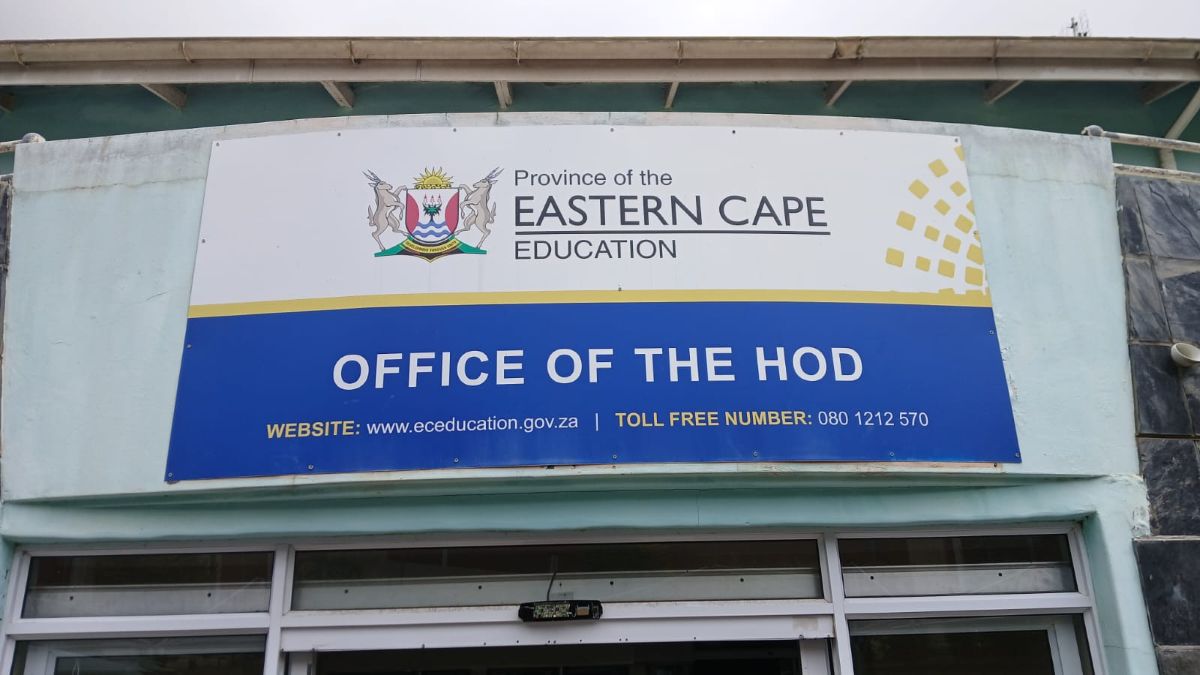
- The High Court found that the Eastern Cape Department of Education unlawfully gave procurement decision-making powers to a private consortium.
- The consortium’s decision to reject Power Stationery’s bid for the 2026 stationery tender was declared unconstitutional and set aside.
- The court ordered the department and the consortium to pay the successful applicant’s legal costs.
The High Court in Makhanda has ruled that the Eastern Cape Department of Education unlawfully delegated its constitutional procurement responsibilities to a private consortium when sourcing learner and teacher support material for public schools.
Judge DO Potgieter found that the department unlawfully handed over key procurement functions to a consortium made up of Lebone Litho Printers (Pty) Ltd, DSV Road (Pty) Ltd and DSV Contract Logistics (Pty) Ltd. This allowed private companies to carry out procurement tasks that are supposed to be handled by the department under South Africa’s public procurement laws.
Afropulse 46 (Pty) Ltd, trading as Power Stationery, brought the application against the Member of the Executive Council for the Eastern Cape Department of Education and several others involved in the procurement process.
How the dispute started
Power Stationery supplied learner and teacher support material to the department after winning a stationery tender in January 2022. The company continued supplying schools from the 2022 to 2025 academic years until the tender ended in January 2025.
In April 2023, the department issued a separate tender to the consortium to act as a Project Management Agency for the acquisition and distribution of learner and teacher support material. They signed a service level agreement on 2 August 2023.
In June 2025, the consortium put out its own request for proposals, inviting suppliers to bid for supplying, warehousing, picking, packing, and delivering stationery packs to schools across the province.
Power Stationery submitted its bid, provided sample packs, attended quality assurance sessions and sent in revised pricing. On 19 August 2025, it received an email saying its bid was unsuccessful because its price was over the approved budget.
After looking into the procurement process, the company went to the High Court, asking for both the delegation of procurement powers and the rejection of its bid to be declared unlawful.
Arguments from both sides
Power Stationery argued that the consortium was carrying out a public procurement function on behalf of the department. Because of this, it said the consortium had to follow Section 217 of the Constitution, the Public Finance Management Act, and other laws about public procurement.
The company also argued that the department could not lawfully give away procurement decision-making powers held by its accounting officer to a private company.
The department and the consortium opposed the application. They argued that the consortium was acting in its own commercial capacity under a valid service level agreement signed after a proper public tender process in 2023.
According to the respondents, the consortium bought goods as a principal, not as an agent of the department, and so did not have to follow the laws that apply to state procurement when choosing suppliers.
They also argued that Power Stationery should have challenged the original 2023 tender that appointed the consortium, not the later procurement decisions.
Court rejects the respondents’ defence
Judge Potgieter rejected those arguments and found that the consortium was performing a public function directly linked to the constitutional right to basic education. The judge said, “The key issue is the true nature of the consortium’s actions in acquiring the goods.”
After looking at the evidence, the court found that the consortium bought learning materials for the department, not for its own private commercial purposes. The judge said, “When a private company does work or uses powers that belong to public entities, it is exercising a public power.”
Judge Potgieter said the department could not avoid its constitutional obligations just because it had appointed a private contractor to handle procurement.
The court found that the Public Finance Management Act only allows procurement powers to be given to officials inside government structures, not to private companies.
Department failed its constitutional responsibilities
The court found that the department did not take part in setting tender specifications, evaluating bids or deciding which suppliers would be appointed.
Instead, the consortium performed all those functions. Judge Potgieter said, “The department gave up these key procurement functions and decision-making processes, which undermined the system for accountability.”
The court concluded that the consortium did not follow the constitutional and legal rules for public procurement when running the stationery tender.
Court orders
The High Court declared that the department’s attempt to delegate procurement decision-making powers to the consortium was unconstitutional and unlawful.
It also found that the department unlawfully failed to carry out its procurement obligations under Section 217 of the Constitution and did not follow its own Supply Chain Management Policy or the duties of its accounting officer.
The court reviewed and overturned the consortium’s decision not to appoint Power Stationery as one of the successful suppliers. However, Judge Potgieter decided not to interfere with learning materials already delivered to schools for the 2026 academic year.
He found that completed deliveries should stay in place to avoid disrupting education, but said no further rights should arise from the unlawful procurement process.
Order on legal costs
The court ordered the Eastern Cape Department of Education and the consortium to pay the costs of the application together. This includes the wasted costs of an earlier postponement and the costs of two counsel.
Get your news on the go. Click here to follow the Conviction WhatsApp channel.
