


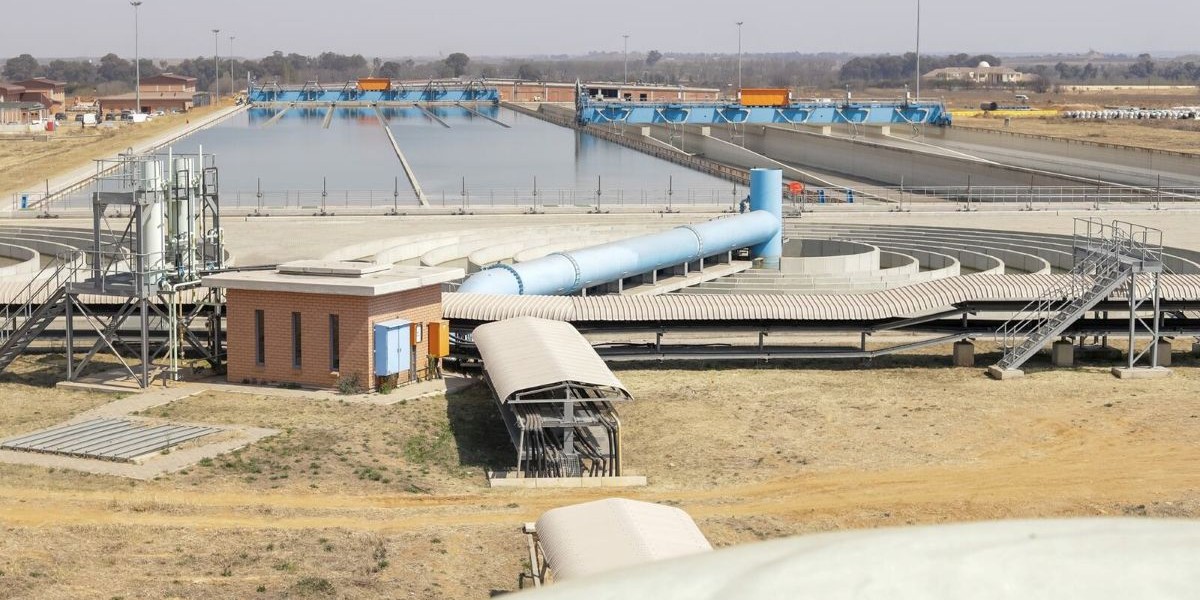
- Rand Water and Eskom will carry out the second and final phase of planned maintenance on Friday, 17 July 2026, from 7am to 7pm.
- The maintenance window has been reduced from 96 hours to 12 hours, with authorities expecting a quicker recovery than during phase one.
- Residents are advised to store water in advance, although some high-lying areas may still experience delayed restoration.
Gauteng residents are once again being urged to store water and brace for disruptions as Rand Water and Eskom begin the second and final phase of a major planned maintenance programme on Friday, 17 July 2026, from 7am to 7pm.
The work targets electrical infrastructure at the Zuikerbosch Purification Plant and completes cross-connections between old and new pipelines. Unlike phase one, this round is scheduled to last just 12 hours.
How phase one went
Phase one ran for 96 hours, from 29 May to 2 June, as Eskom carried out critical electrical maintenance to improve the reliability of the bulk water supply system. Rand Water and municipal authorities officially declared the work a success, with pumping stations such as Mapleton and Eikenhof returning to full capacity by 2 June.
The maintenance itself went largely according to plan, but the recovery period that followed proved more complex, stretching over several days, and in some areas weeks, before supply fully normalised.
The challenges experienced
Phase one was not without its difficulties, and recovery in a network as large and interconnected as Gauteng's was never going to be uniform.
- A necessarily gradual recovery: Johannesburg Water explained that restoring supply is a staged process. Empty pipelines first need to be recharged and air displaced, after which reservoirs must refill before outlets can reopen. This took three to five days in most areas, an expected consequence of a 96-hour shutdown.
- Isolated incidents added pressure: Lesedi Local Municipality experienced pipe bursts linked to pressure fluctuations during the maintenance window, while in Emfuleni, a separate, unrelated leak forced Rand Water's Vereeniging plant to briefly reduce supply to Vanderbijlpark and Sasolburg for emergency repairs. Municipal technical teams remained on site to monitor and respond in both cases.
- Fragile systems took longer to stabilise: Kagiso in Mogale City and Johannesburg's Commando system, serving Brixton, Crosby and Hursthill, took noticeably longer to recover. Officials noted that the Commando system is a known fragile point in the network, being older, more complex and historically slower to rebuild pressure, even outside maintenance periods.
- What worked well: Not every system struggled. The Sandton, Soweto, Randburg and Roodepoort systems showed strong resilience, with minimal impact and quick recovery wherever affected. Water tankers, self-help collection points at municipal depots, and priority supply to hospitals, clinics and old age homes helped cushion the impact elsewhere.
Municipalities say this experience, including identifying where recovery communication could have been clearer, has directly shaped how phase two is being planned.
How phase two differs
Rand Water and its municipal partners have highlighted that lessons learned from phase one have shaped the approach to phase two.
- A much shorter window: While phase one ran for 96 hours, phase two is scheduled for 12 hours, although work in some municipal areas will continue into the weekend. Less time offline means fewer pipelines to drain and recharge, which should result in a faster recovery.
- Refined operational planning: Johannesburg Water has highlighted that it has refined its operational plans, improved system balancing and strengthened coordination with Rand Water, making the impact "less severe".
- Capacity figures published in advance: Rand Water has announced in advance how each system will be affected. Palmiet will pump at 78% capacity, Zwartkopjes and Eikenhof at 50% and 55% respectively, while Mapleton will halt pumping entirely for the duration.
- Coordinated municipal maintenance: The City of Ekurhuleni is using the same maintenance window for its own electrical work at the Mapleton Booster Pumping Station, aligning schedules to reduce the number of separate disruptions residents face.
Affected areas span Johannesburg, Tshwane and Ekurhuleni, along with municipalities including Midvaal, Mogale City, Rand West, Merafong, Rustenburg and Madibeng, as part of the broader goal of improving pump availability and reducing equipment failure risk during winter's lower water demand.
Eikenhof substation City Power outage
A City Power electrical outage at the Eikenhof Substation from 02:00 on 16 July has resulted in the Eikenhof pump station becoming non-operational. Areas in Johannesburg are already experiencing the impact, with reservoir and tower levels expected to decline progressively if power is not restored.
The incident has hindered Johannesburg Water's preparations for the planned maintenance. It is expected to prolong the recovery period for the affected systems once the maintenance has been completed.
What residents should do
Rand Water and Johannesburg Water have cautioned that while the shutdown itself will be shorter, full recovery could still take several days in some areas, particularly high-lying suburbs.
Residents are advised to store water for essential household use in advance, use it sparingly once supply resumes, and monitor official municipal channels for water tanker deployments and restoration updates.
If phase two proceeds as planned, the shorter maintenance window and improved coordination should spare some areas in Gauteng from the extended dry spells experienced during phase one. However, as officials acknowledge, recovery times will still vary from suburb to suburb.
Get your news on the go. Click here to follow the Conviction WhatsApp channel.
The views expressed in this article are those of the author and do not necessarily reflect the views of Conviction.co.za.
