


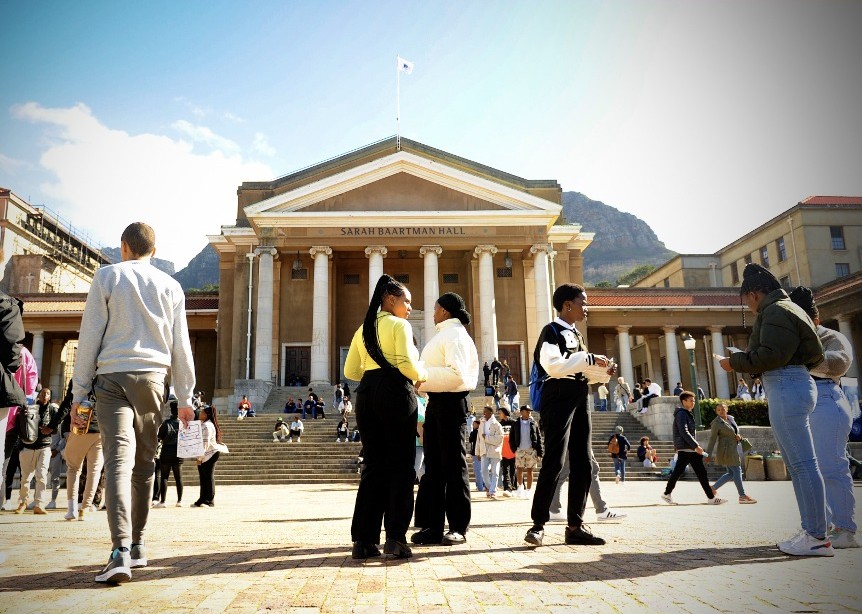
- The Labour Court in Cape Town found that UCT's section 189 consultation process could undermine the pending whistleblower litigation.
- Judge T Gandidze found that Docrat met the requirements for urgent interim relief.
- UCT has been barred from continuing the consultation process until the whistleblower trial is over, and must pay Docrat's legal costs.
The Labour Court in Cape Town has stopped the University of Cape Town (UCT) from continuing a Section 189 consultation process against employee Fahim Docrat, ruling that allowing the process to continue before the conclusion of pending whistleblower litigation could defeat the very purpose of that trial.
Judge T Gandidze granted Docrat an urgent interim interdict after finding that his intended demotion forms part of the issues already before the Labour Court in separate proceedings in which he alleges he suffered occupational detriments after making protected disclosures.
The judge held that permitting UCT to continue with the consultation process, which could ultimately result in Docrat accepting a lower-graded position or facing retrenchment, risked rendering the pending proceedings academic before the court had determined whether the intended demotion was lawful.
Whistleblower dispute already before the court
Docrat is employed by UCT's Development and Alumni Department as Senior Manager for Corporate, Legacy and Individual Giving, a Grade 12 position. He contends that his workplace difficulties began shortly after the appointment of Executive Director Ms Archer in 2022, when she allegedly attempted to remove key functions from his role without following the university's internal procedures.
According to Docrat, he resisted those changes and raised concerns about the restructuring process, amounting to protected disclosures under the Protected Disclosures Act.
He told the court that he was subsequently subjected to a series of occupational detriments, including repeated attempts to demote him, his suspension, failures to promote or transfer him and, most recently, the commencement of a section 189 consultation process that could reduce him to a grade 11 position or lead to his retrenchment. Those allegations are already the subject of pending Labour Court proceedings.
UCT disputes Docrat's version and maintains that the restructuring was a legitimate organisational process affecting several employees rather than retaliation for whistleblowing. The university said the restructuring began in 2023 and was formalised in 2024, resulting in Docrat's position being reclassified at a lower grade.
After Docrat refused to accept the revised position, UCT initiated a Section 189 consultation process to explore alternatives, including redeployment or retrenchment.
Consultation process prompted urgent application
Docrat received the Section 189 notice on 8 May 2026, just days before his whistleblower trial commenced. He immediately informed UCT that the consultation process should be suspended because the intended demotion was already one of the issues before the Labour Court.
UCT rejected that contention, insisting that the consultation process was separate from the pending litigation and should continue. Despite repeated requests to postpone the consultations, the university persisted, prompting Docrat to approach the Labour Court on an urgent basis.
UCT opposed the application, arguing that it lacked urgency because Docrat had known for some time that his position was being downgraded. Judge Gandidze rejected that argument.
"It is that process which is sought to be interdicted in these proceedings, and hence the trigger date for the current application is May 2026, not earlier," the judge said.
The court also rejected UCT's argument that an earlier Labour Court judgment prevented Docrat from seeking the present relief, finding that the previous proceedings concerned different issues and did not deal with the section 189 consultation process now before the court.
Court finds consultation process could undermine pending trial
The central issue before the court was whether UCT should be allowed to continue with the consultation process while the whistleblower case remains unresolved.
UCT argued that the pending trial concerns alleged protected disclosures and Docrat's suspension rather than the restructuring process or intended demotion. Judge Gandidze found that argument unconvincing.
"The pleadings allege that the demotion from pay Grade 12 to pay Grade 11 constitutes an occupational detriment and therefore should not be implemented," the judge said.
The judge noted that the section 189 process was intended to secure Docrat's agreement to accept the lower-graded position or, failing that, to retrench him. If that occurred before the pending trial had been concluded, one of the principal issues awaiting determination by the trial court would effectively be decided outside the litigation.
"The trial court in C51/2025 is best placed to determine which alleged occupational detriment disputes are properly before it and to address only those disputes," Judge Gandidze said. For that reason, the court held that Docrat had established a prima facie right to interim protection pending the outcome of the trial.
Status quo had to be preserved
Judge Gandidze found that refusing interim relief could expose Docrat to irreparable harm. If he accepted the lower-graded position during the consultation process, it could compromise the relief he seeks in the pending trial. If he rejected it, he faced the prospect of retrenchment.
"Allowing UCT to continue with the section 189 LRA process, which might result in a demotion, the very issue the trial proceedings will address, would be to fail Docrat," the judge said.
The court concluded that preserving the status quo was necessary until the Labour Court had determined whether the intended demotion constituted an occupational detriment for making protected disclosures. By contrast, Judge Gandidze found that UCT would suffer comparatively little prejudice if the consultation process was delayed.
The university had already postponed implementation of the restructuring for many months and had not explained why the Section 189 process suddenly had to be finalised before the whistleblower proceedings were completed.
"The harm to UCT if the interdict is refused is far less than the harm to Docrat should the interdict be refused," the judge said.
Protection of whistleblowers
Judge Gandidze said courts should be slow to refuse interim relief where an employee claims that a retrenchment process may amount to an occupational detriment arising from protected disclosures.
"Unless the court intervenes in such matters, the purpose of the PDA will not be achieved, with the consequence that employees will not readily make protected disclosures," the judge said.
The judge emphasised that the court was not deciding whether Docrat had in fact been subjected to unlawful retaliation. That issue remains for determination in the pending whistleblower trial.
For now, the Labour Court has preserved the status quo by interdicting UCT from continuing the section 189 consultation process until judgment has been delivered in the pending proceedings. Judge Gandidze also ordered the university to pay Docrat's costs, including counsel's fees.
Get your news on the go. Click here to follow the Conviction WhatsApp channel.
