


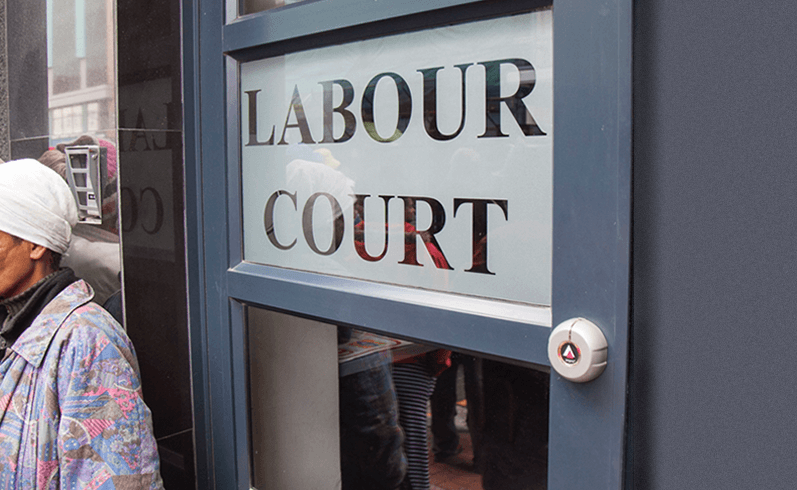
- Bulldog Abrasives asked the Labour Court to enforce restraint and confidentiality undertakings against former employee Schalk Justin Botha.
- Company secretary and in-house legal counsel JC Oliphant had already handled correspondence about the dispute before commissioning the company’s affidavits.
- The Labour Court decided that her involvement meant she had an interest in the litigation and could not act as an independent commissioner of oaths.
The direct involvement of an in-house legal counsel in a restraint of trade dispute has put the spotlight on the limits of who can commission affidavits for litigation.
On 29 May 2026, Bulldog Abrasives Southern Africa filed an application against former employee Schalk Justin Botha and Modpot CC, trading as United Power Purchasing. The company aimed to enforce the restraint and confidentiality undertakings Botha had signed in his employment contract. The respondents opposed the application.
The first issue before the court was about Bulldog’s founding and replying affidavits. Both were commissioned by JC Oliphant, who served as the company’s secretary and in-house legal counsel. Oliphant is also a practising attorney registered with the Legal Practice Council.
The respondents argued that Oliphant should not have commissioned the affidavits because she was already directly involved in the dispute.
Oliphant had already handled the dispute
Oliphant wrote a letter to the respondents’ attorney on 15 May 2026, dealing directly with Botha’s employment and the alleged breach of his restraint and confidentiality obligations.
In the letter, she stated that Botha’s employment by United Power Purchasing, which she described as one of Bulldog’s direct competitors, was a material breach of his employment contract. She also said that keeping Botha employed amounted to intentional unlawful interference with his contractual relationship with Bulldog.
Oliphant included copies of Botha’s restraint and confidentiality agreements and requested a copy of his new employment contract. She also asked whether the respondents’ law firm was representing Botha.
The respondents said this letter showed Oliphant had a direct interest in the dispute. They argued that as Bulldog’s in-house legal counsel, she was acting as the company’s legal representative and could not also serve as an independent commissioner of oaths.
A commissioner of oaths must be independent
The respondents relied on Regulation 7(1) of the Regulations Governing the Administration of an Oath or Affirmation. This regulation says a commissioner of oaths cannot administer an oath or affirmation about a matter in which they have an interest.
They also pointed to previous judgments that found commissioners of oaths must be impartial, unbiased and independent when it comes to the subject of an affidavit.
Bulldog challenged the preliminary objection. The company argued that the authorities cited by the respondents were taken out of context and that the word “interest” in the regulation meant a financial or proprietary interest, or one that affected the commissioner’s own legal rights or liabilities.
The company also relied on a Supreme Court of Appeal decision about the effect of repealed legislation considered in an earlier case dealing with commissioners of oaths. The Court weighed these arguments together with later decisions about the purpose and scope of the independence requirement.
Court finds Oliphant had an interest
Judge MTM Phehane found that the relevant interest was not limited to a financial or proprietary interest.
The court said a commissioner of oaths must be independent of the office where an affidavit is prepared and must not have an interest in the litigation. This principle also applies to attorneys who work closely with a litigant’s legal representative.
Judge Phehane found that Oliphant’s own letter showed her involvement in Bulldog’s dispute. “Ms Oliphant’s letter demonstrates, by its mere wording of references to ‘we’ and ‘our’, that she has such an interest,” Judge Phehane said.
The court found that Bulldog’s founding and replying affidavits were inadmissible. Since those affidavits were not properly before the court, the application could not continue and was struck from the roll.
Court also criticises further affidavits
The court also criticised how Bulldog handled the preliminary objection after the respondents raised it in their fourth affidavit on 25 June 2026. Bulldog did not ask for permission to submit more affidavits. Instead, it waited to see if the respondents would stick with the objection and later filed extra heads of argument just before the hearing.
The company also filed two more affidavits without the court’s permission and submitted re-attested versions of its founding and replying affidavits without approval.
Judge Phehane questioned why Bulldog had not applied for leave to submit the extra documents. The judge said the explanation that the matter was urgent was hard to accept, since the company had known about the objection for several weeks. “I find this submission worrisome,” Judge Phehane said.
The court said that filing four more affidavits without permission put unnecessary pressure on the court and showed disregard for proper legal procedures.
Judge Phehane described Bulldog’s approach as “an ambush” and said this was not how litigation should be handled. The court found that this conduct justified a costs order.
The final order upheld the respondents’ preliminary objection, declared Bulldog’s founding and replying affidavits inadmissible and struck the application from the roll with costs.
Get your news on the go. Click here to follow the Conviction WhatsApp channel.
