Skip to content
Close Menu
ConvictionConviction
  • Home
  • Law & Justice
  • Special Reports
  • Opinion
  • Ask The Expert
  • Get In Touch

Subscribe to Updates

Get the latest creative news from FooBar about art, design and business.

What's Hot

If the work is permanent, the contract must be permanent as well

May 29, 2026

Dead wife contradiction forces Nedbank to return repossessed Nissan Navara

May 29, 2026

Mbeki and Mabandla accuse TRC Commission of sidestepping court challenge

May 29, 2026
Facebook X (Twitter) Instagram
Trending
  • If the work is permanent, the contract must be permanent as well
  • Dead wife contradiction forces Nedbank to return repossessed Nissan Navara
  • Mbeki and Mabandla accuse TRC Commission of sidestepping court challenge
  • Gauteng Health liable after woman loses uterus during childbirth surgery
  • Anti-money laundering Bill proposes lifestyle audits and tougher penalties
  • Children and girlfriend awarded R3.5m pension payout while estranged wife receives nothing
  • Employers must treat retirement contributions like wages, says MIBCO’s Paulos Masemola
  • Legal Indaba 2026 to confront AI, ethics and accountability in South Africa’s legal profession
Facebook X (Twitter) Instagram
ConvictionConviction
Sonneblom
  • Home
  • Law & Justice
  • Special Reports
  • Opinion
  • Ask The Expert
  • Get In Touch
ConvictionConviction
Home » Attorney suspended after pocketing client money and practising without authorisation
Regulatory Law

Attorney suspended after pocketing client money and practising without authorisation

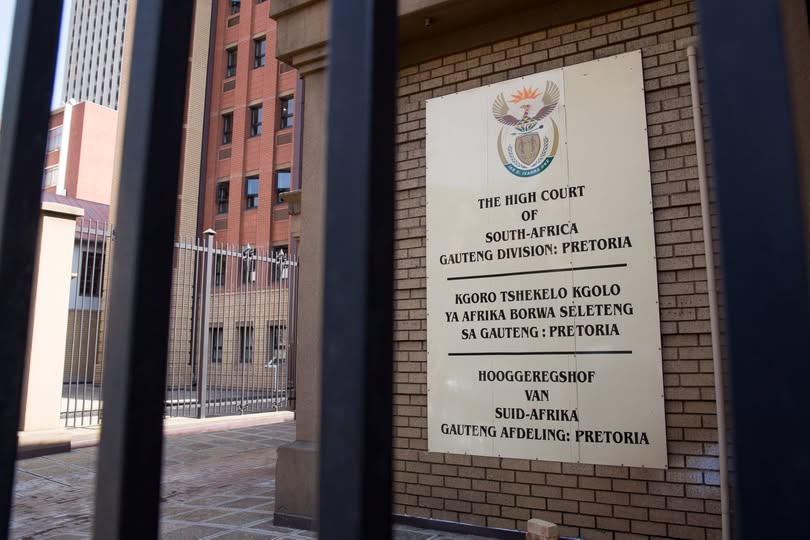
The High Court has found Pretoria attorney George Smith unfit to practise following a string of client complaints, unaccounted-for funds, and years of operating without a Fidelity Fund Certificate.
Kennedy MudzuliBy Kennedy MudzuliMarch 20, 2026No Comments
Facebook Twitter Pinterest LinkedIn WhatsApp Reddit Tumblr Email
Share
Facebook Twitter LinkedIn Pinterest Email
  • Clients handed over thousands of rand and got nothing in return, no service, no refund, and no explanation of where their money went.
  • Smith practised without a Fidelity Fund Certificate from at least 2018, in open breach of the law.
  • The court declared him unfit to practise, ordered his suspension, and awarded punitive costs against him.

Clients paid thousands of rand for legal help they never received. The money went unaccounted for, and when asked to explain, George Smith could not produce a single record to show where those funds had gone.

It is this conduct that ultimately cost Pretoria attorney Smith his right to practise. The High Court in Pretoria heard multiple complaints from ordinary members of the public, each one painting a troubling picture of an attorney who had lost sight of his obligations to his clients.

One client, identified in the judgment only as Mr Naidoo, paid R30 000 to prevent his vehicle from being repossessed. It was repossessed anyway, and he never saw his money again. Mr Fourie paid the same amount for help with an eviction matter and received nothing of value in return. Most strikingly, Ms Pienaar and her family paid R135 000, only for Smith to fail to appear in court and to provide no receipts or financial statements accounting for that sum.

Judge S Potterill recorded the seriousness of this failure, saying, “Smith cannot provide a single financial statement to provide a reckoning of the monies.”

Background and regulatory breaches

The South African Legal Practice Council brought the application, asking the court to suspend Smith on the basis that his conduct showed he was no longer fit and proper to continue practising. Smith had been admitted as an attorney on 28 April 2017 and ran his own practice under the name Smith Attorneys.

The court found that Smith had failed to meet a number of basic, mandatory obligations under the Legal Practice Act. He had not submitted the required audit reports, had not maintained proper accounting records, and had not paid his annual subscription fees, the kind of compliance that every practising attorney is expected to uphold.

Most significantly, he practised without a Fidelity Fund Certificate from at least 2018. Judge Potterill explained, “Lodging auditor reports as required serves as a safety mechanism for the public’s and clients’ money.”

Smith’s opposition and the court’s response

Smith did not seriously challenge the core allegations. He admitted to non-compliance but put it down to financial difficulties, a falling out with his accountant, and the disruption caused by the COVID-19 pandemic. He also raised procedural objections, arguing that a disciplinary hearing should have come first, and claimed that his constitutional rights had been violated.

The court rejected all of these arguments, finding no legal basis for any of them. As Judge Potterill put it plainly, “He can practise his chosen profession, but must comply with the Rules.”

The court also dismissed a series of related attempts by Smith, including efforts to block disciplinary proceedings, claim a right of appearance without satisfying the legal requirements, and extract financial relief from the Legal Practice Council.

Continued unlawful practice and lack of insight

What the court found particularly troubling was that Smith had continued to practise throughout all of this, fully aware that he held no Fidelity Fund Certificate, and even while the suspension application against him had been working its way through the courts for years. He admitted to still practising in 2026 without the required certificate.

Judge Potterill was unequivocal, stating that this conduct was unlawful and serious. Perhaps more damning still, the court found that Smith showed no real appreciation of just how grave his misconduct was.

Judge Potterill stated, “Smith is thus the author of his own misfortune.”

Court finding on fitness to practise

In reaching its conclusion, the court applied the established two-part test, first, whether the misconduct had been proven, and second, whether Smith remained fit to practise. On both counts, the court found against him. The misconduct was established on a balance of probabilities and, critically, it was still ongoing.

Judge Potterill concluded, “Smith has made himself guilty of dishonourable, unworthy and or unprofessional conduct.”

His failure to account for client funds, combined with years of ignoring basic regulatory requirements, meant that Smith had fallen far below the standard that the public is entitled to expect from a practising attorney.

Final order

The court held that Smith is not a fit and proper person to continue practising and ordered his suspension from the roll. Judge Potterill stated, “I am satisfied that Smith is not a fit and proper person to continue to practise.”

Costs were granted against Smith on an attorney and client scale, the most punitive cost order available.

Conviction.co.za

Get your news on the go. Click here to follow the Conviction WhatsApp channel.

Attorney Misconduct Client funds High Court Legal Practice Council Regulatory Law
Share. Facebook Twitter Pinterest LinkedIn Tumblr Telegram Email
Kennedy Mudzuli

Multiple award-winner with passion for news and training young journalists. Founder and editor of Conviction.co.za

Related Posts

Dead wife contradiction forces Nedbank to return repossessed Nissan Navara

May 29, 2026

Children and girlfriend awarded R3.5m pension payout while estranged wife receives nothing

May 28, 2026

Employers must treat retirement contributions like wages, says MIBCO’s Paulos Masemola

May 28, 2026
Leave A Reply Cancel Reply

Prove your humanity: 3   +   10   =  

Subscribe to our newsletter:
Top Posts

Making sectional title rules that work: A practical guide

January 17, 2025

Protection order among the consequences of trespassing in an ‘Exclusive Use Area’

December 31, 2024

Between a rock and a foul-smelling place

November 27, 2024

Irregular levy increases, mismanagement, and legal threats in a sectional title scheme

June 2, 2025
Don't Miss
Employment and Labour Law Series
7 Mins Read

If the work is permanent, the contract must be permanent as well

By Ann-Suhet MarxMay 29, 20267 Mins Read

South African labour courts are increasingly ruling that employers cannot keep workers on endless fixed term contracts where the work itself is permanent, placing greater emphasis on the reality of the job than the label attached to the contract.

Dead wife contradiction forces Nedbank to return repossessed Nissan Navara

May 29, 2026

Mbeki and Mabandla accuse TRC Commission of sidestepping court challenge

May 29, 2026

Gauteng Health liable after woman loses uterus during childbirth surgery

May 29, 2026
Stay In Touch
  • Facebook
  • Twitter
  • WhatsApp
Demo
About Us
About Us

Helping South Africans to navigate the legal landscape; providing accessible legal information; and giving a voice to those seeking justice.

Facebook X (Twitter) YouTube WhatsApp Twitch RSS
Latest posts

Making sectional title rules that work: A practical guide

January 17, 2025

Protection order among the consequences of trespassing in an ‘Exclusive Use Area’

December 31, 2024

Between a rock and a foul-smelling place

November 27, 2024
OUR PICKS

Online marketplace scams are becoming more sophisticated, warns fraud expert Ashwini Singh

May 26, 2026

Children with disabilities experience barriers when trying to report abuse and seek support

May 25, 2026

Understanding employee rights, workplace protections and grievance resolution in South Africa

June 8, 2025
© 2026 Conviction.
  • Home
  • Law & Justice
  • Special Reports
  • Opinion
  • Ask The Expert
  • Get In Touch

Type above and press Enter to search. Press Esc to cancel.

Powered by
►
Necessary cookies enable essential site features like secure log-ins and consent preference adjustments. They do not store personal data.
None
►
Functional cookies support features like content sharing on social media, collecting feedback, and enabling third-party tools.
None
►
Analytical cookies track visitor interactions, providing insights on metrics like visitor count, bounce rate, and traffic sources.
None
►
Advertisement cookies deliver personalized ads based on your previous visits and analyze the effectiveness of ad campaigns.
None
►
Unclassified cookies are cookies that we are in the process of classifying, together with the providers of individual cookies.
None
Powered by