


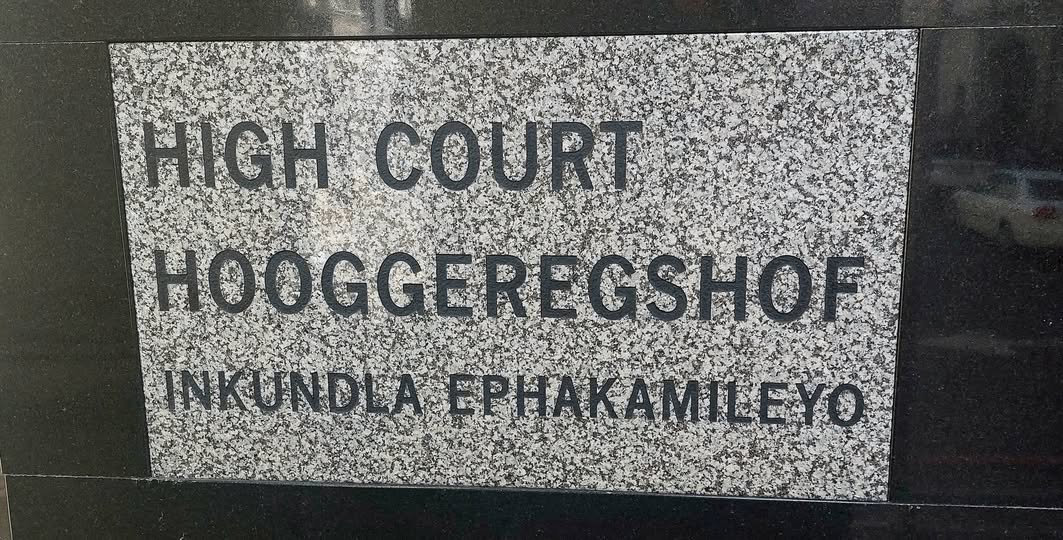
- The accused was convicted after R709 327.32 was deposited into a bank account registered in his name.
- The appeal judges found that the State failed to prove his involvement in intercepting and manipulating emails or establish common purpose with the fraudsters.
- The court found that his explanation that two other people had taken control of his bank account was reasonably possibly true.
The case involved farmer David Stone, who intended to start growing kiwi fruit on his farm in the Donnybrook district, between Ixopo and Bulwer. He approached Treated Timber Products (TTP) to purchase timber poles for a shade-net structure needed to protect the fruit.
After receiving an initial quotation on 13 April 2021, Stone requested amendments and accepted a revised quotation issued on 20 April 2021. TTP required full payment before delivering the poles. Stone received an invoice by email on 22 April 2021 and paid R709 333.41 the following day. He then emailed proof of payment to the supplier.
While Stone was on a business trip to Mpumalanga, a TTP representative contacted him on 6 May 2021 to advise that the payment had not reflected in the company’s bank account. When Stone requested a copy of his proof of payment, he discovered that the account number into which he had transferred the money differed from TTP’s banking details.
The fraud involved the interception and alteration of email communications between Stone and the supplier. The fraudster allegedly intercepted the invoice, replaced TTP’s banking details with those of another account and sent the altered document to Stone.
After receiving the payment, the fraudster also allegedly intercepted Stone’s proof-of-payment email and changed the account reference back to TTP’s correct banking details, making it appear that the supplier had received the money.
Accused admitted opening the beneficiary account
The State linked the payment to a bank account registered in the name of Bongani Archibold Jele. FNB quality assurance manager Ashley Wilson testified that Jele opened the account on 23 March 2021 after his identity was verified through fingerprint checks linked to the Department of Home Affairs database.
The account received R709 327.32 on 24 April 2021. Its bank statement recorded the transaction reference as “Magtape Credit Treated Timber Products”. Wilson also confirmed that Jele changed the cellphone number linked to the account on 30 March 2021 during a visit to the Tembisa Plaza branch.
He returned to the branch on 20 April 2021 to obtain a new bank card. The account’s withdrawal limits were subsequently changed on 24 April 2021. Jele admitted opening the account but maintained that he had handed control of it to two people known as Ma-Africa and Sheppard in exchange for R500.
According to his testimony, Ma-Africa introduced him to Sheppard, who allegedly could not legally open a bank account in South Africa because he was a foreign national.
Jele explained that he changed the cellphone number because Sheppard was operating the account and needed to receive banking notifications. He also testified that he later became concerned about the arrangement after his girlfriend warned him that he could get into trouble for allowing someone else to use an account registered in his name.
He consequently cancelled the original bank card and obtained a replacement, which he eventually handed to Sheppard. Neither Ma-Africa nor Sheppard testified at the trial.
High Court questions evidence linking accused to fraud
The Ixopo Regional Court convicted Jele on 22 November 2022, finding that he had acted with common purpose with unknown individuals to defraud Stone. He was sentenced to 15 years’ imprisonment under the minimum sentencing provisions of the Criminal Law Amendment Act.
Jele initially obtained leave to appeal against his sentence only. However, when the matter first came before the High Court on 17 April 2026, the appeal judges raised concerns about whether the State had established his guilt. The matter was remitted to the regional court for him to seek leave to appeal against his conviction, which was subsequently granted.
In a judgment delivered on 10 November 2026, Judge Robin Mossop, with Judge President Poyo-Dlwati concurring, found that the regional court had failed to properly assess Jele’s defence.
Judge Mossop said an accused person does not carry the burden of proving innocence but is entitled to have their evidence considered alongside the State’s case. He said that where an accused person’s version is reasonably possibly true, they are entitled to an acquittal.
The judge found that the State had relied heavily on the fact that the stolen money entered Jele’s bank account without establishing his involvement in the actual deception. “There was no evidence, or even a suggestion, that the appellant was the person who made the misrepresentation relied upon by the State,” Judge Mossop said.
He added that there was no evidence that Jele had the knowledge, ability or opportunity to intercept communications between Stone and TTP.
The judge also criticised the failure to investigate the new cellphone number linked to the bank account. He said investigators could have established who owned the number, which could have helped determine whether Jele had indeed surrendered control of the account.
Unexplained banking discrepancies weaken prosecution
Judge Mossop identified further gaps in the State’s investigation. Stone testified that he had transferred R709 333.41, while the bank statement showed a deposit of R709 327.32 into Jele’s account. Although the difference was only R6.09, the judge said the State had failed to explain it.
He also questioned why the bank statement described the payment as coming from TTP rather than Stone. The judge found that these discrepancies created further uncertainty about the source of the money. He also noted that the regional court had failed to make proper credibility findings before rejecting Jele’s explanation.
The investigating officer’s evidence, moreover, confirmed that Jele had provided the names Ma-Africa and Sheppard from the outset. On the question of common purpose, Judge Mossop said the State had failed to establish that Jele had intentionally associated himself with the fraud or shared the necessary intention to commit the offence.
During the appeal, the State conceded that the fraud conviction could not stand. It considered whether Jele could instead be convicted of theft but accepted that the evidence was insufficient to justify such a conviction.
Judge Mossop agreed that Jele’s version raised a reasonable alternative explanation that the State had failed to disprove. The High Court in Pietermaritzburg upheld the appeal against both conviction and sentence, set aside the fraud conviction and 15-year prison sentence, and replaced them with a verdict of not guilty.
Get your news on the go. Click here to follow the Conviction WhatsApp channel.
