


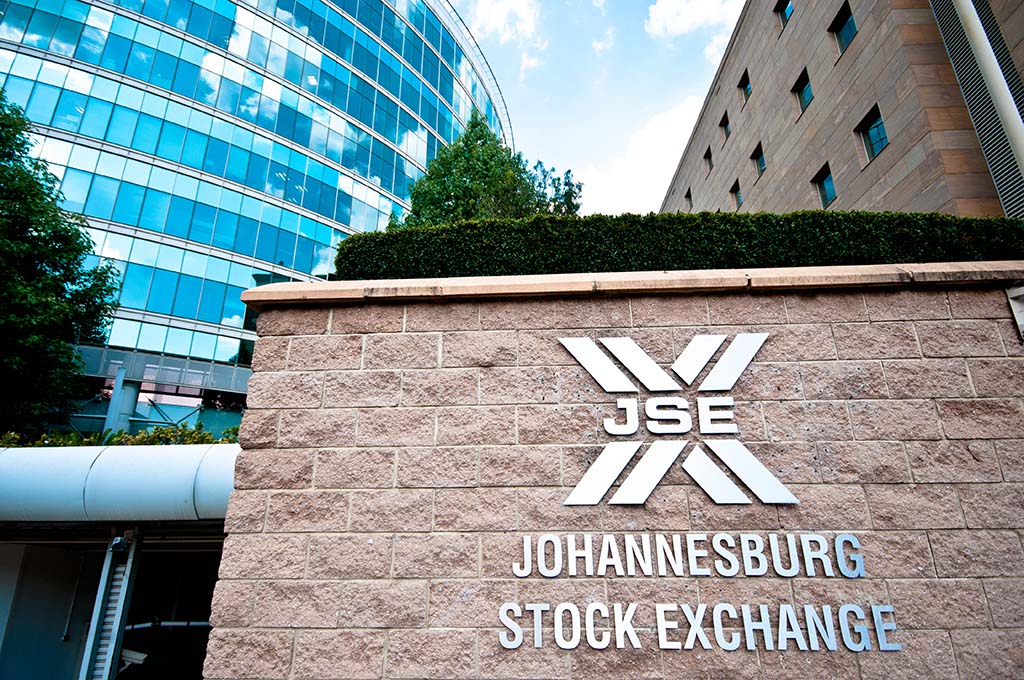
- The Financial Services Tribunal has dismissed Anushka Bogdanov’s attempt to overturn a JSE sanction linked to false PhD claims.
- The tribunal found that Bogdanov deliberately misrepresented her qualifications and relied on forged documents.
- R500 000 fine, public censure and 10-year JSE director ban upheld
Anushka Bogdanov’s attempt to escape a R500 000 fine and a 10-year ban from serving as a director of a JSE-listed company has failed after the Financial Services Tribunal rejected her challenge to findings that she falsely claimed to hold a PhD from London Business School.
In a strongly worded decision, the tribunal upheld the JSE's sanctions and dismissed explanations that Bogdanov advanced during a years-long dispute over qualifications that it found she could not prove she had earned.
A qualification that unravelled
The case stems from Bogdanov’s claim that she obtained a PhD in International Financial Management and Mathematics from London Business School.
Bogdanov joined the board of EOH Holdings in June 2019 and later became lead independent director and deputy chairperson. During the appointment process, she submitted a curriculum vitae reflecting the PhD qualification.
Questions about the degree surfaced after concerns were raised about the authenticity of documents relating to the qualification. An internal investigation later found that a certificate submitted as proof of the doctorate was forged.
According to the investigation, the certificate contained multiple irregularities, including spelling mistakes, an incorrect logo and references to positions and programmes that did not exist at London Business School.
The issue attracted the attention of regulators and eventually led to a lengthy investigation by the Johannesburg Stock Exchange.
Tribunal rejects Bogdanov’s version
Bogdanov maintained that she genuinely believed she had earned the doctorate. She told the tribunal that she completed her thesis in 2008 and defended it before a panel of examiners in London. She further alleged that after the examination she discovered her husband with two members of the institution’s faculty, an incident she said left her traumatised and caused her to return to South Africa.
Bogdanov also claimed that records relating to her studies had later been deleted. The Tribunal was not persuaded.
The panel noted that Bogdanov failed to produce evidence that she had ever been accepted into the programme, registered as a doctoral student, completed the necessary academic requirements or been awarded the degree.
It found that she could not provide basic records that would ordinarily exist for a doctoral qualification, including registration documents, thesis records, details of supervisors and evidence relating to the examination process.
The tribunal also questioned why she could not provide records from her own possession if institutional records had allegedly disappeared. According to the ruling, the explanation that all records had been deleted was simply not believable.
The tribunal further pointed out that Bogdanov continued to refer to herself as “Doctor” for years after the alleged viva voce examination despite knowing, or at least having reason to know, that the qualification had never been conferred.
Three years of investigation
A significant factor in the matter was the length of time it took for Bogdanov to acknowledge that she did not hold a PhD.
The Tribunal noted that the JSE spent approximately three years seeking answers and supporting documentation relating to the qualification and declarations she had submitted.
Despite repeated requests, Bogdanov did not admit that the degree had never been awarded until October 2024, when her legal representatives informed the JSE that the qualification did not exist.
The tribunal found that the delay seriously undermined her credibility. It also rejected attempts to blame others, including a secretary who was allegedly responsible for inaccuracies appearing in official documents submitted on her behalf.
The panel found that such explanations were inconsistent with the duties and responsibilities expected of a director of a listed company.
Findings of fraud and dishonesty
The tribunal used unusually strong language in describing Bogdanov’s conduct. It concluded that the inclusion of the PhD qualification in her curriculum vitae was intentional and fraudulent.
The panel found that forged documents had been used to support the false qualification and held that the conduct appeared to contain elements of criminal wrongdoing.
According to the decision, the evidence pointed to the forgeries having been committed either by Bogdanov herself or with her knowledge and consent. The tribunal rejected the suggestion that she was an innocent victim of mistakes made by others.
It also found that the false qualification appeared in director declarations, public disclosures and company communications that were relied upon by investors and the market.
JSE sanctions remain in force
Bogdanov argued that the sanctions imposed by the JSE were excessive. She contended that her health challenges had not been properly considered and argued that the penalty was inconsistent with sanctions imposed in other matters. The Tribunal disagreed.
It found that the JSE had conducted a fair process and properly exercised its powers after a lengthy investigation and extensive engagement with Bogdanov.
While acknowledging that the sanction was severe, the Tribunal held that it was justified by the seriousness of the misconduct, the use of forged documents and the prolonged failure to provide truthful information.
The panel also rejected comparisons with other disciplinary cases, finding that each matter must be assessed on its own facts. With that, Bogdanov’s challenge came to an end.
The Tribunal dismissed the application, leaving in place the public censure, R500 000 fine and 10-year ban from serving as a director or officer of a JSE-listed company.
Get your news on the go. Click here to follow the Conviction WhatsApp channel.


