


- The DA was unsuccessful in asking the Electoral Court to declare single-candidate proportional representation lists, submitted by four political parties, unlawful.
- The Electoral Court found that parties can supplement insufficient PR lists once the election results establish their seat allocations.
- A former EFF member challenged his nomination, saying it was done without his consent, and secured an order for his name to be removed from a ward ballot paper.
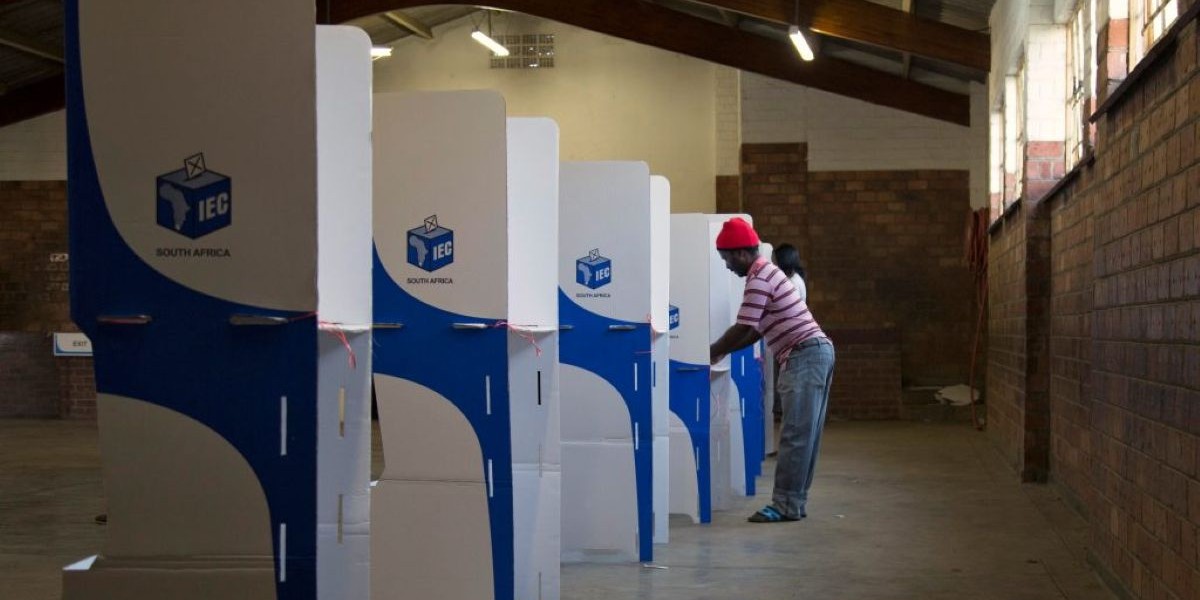
With local government elections just over 48 hours away and special voting already underway, the Electoral Court has delivered two judgments on disputes over political party candidate nominations.
The first judgment dismissed the Democratic Alliance’s (DA) challenge to single-candidate proportional representation (PR) lists submitted by ActionSA, the Economic Freedom Fighters (EFF), uMkhonto weSizwe (MK) Party, and GOOD Party. In a separate matter, the court ordered the Electoral Commission to remove a former EFF member’s name from a ward ballot paper after finding that he had not consented to his nomination.
DA challenge to four parties’ candidate lists fails
In Democratic Alliance v ActionSA and Others, the DA argued that the four parties had deliberately submitted single-name PR lists even though they expected to win multiple seats in several municipalities. The DA said this strategy allowed the parties to withhold the identities of candidates until after the elections and possibly even until after the first meetings of municipal councils.
The DA wanted the court to declare the lists unlawful and claimed they were submitted in bad faith and in fraudem legis, meaning an attempt to get around the law.
ActionSA explained that its 2026 Candidates Selection Policy allows only its successful mayoral candidate to be named on the PR list before the election. The other candidates would be ranked after the election, based on the support received by the party’s ward candidates.
The EFF said it had followed the law, while GOOD said it had asked the Electoral Commission for guidance on submitting single-candidate lists and supplementing them later if needed. The MK Party did not oppose the case.
Acting Judge N Mangcu-Lockwood, with Judge L T Modiba and Professor MR Phooko concurring, found that the law does not prescribe a minimum number of candidates that political parties have to include on their PR lists before elections.
The central issue was how to interpret Items 17 and 20 of Schedule 1 to the Local Government: Municipal Structures Act. Item 17 allows parties to add more names to their lists if the Electoral Commission finds that a party has fewer candidates than the number of seats they have been allocated. Item 20 generally stops parties from changing or supplementing their lists between the close of nominations and a day after the first municipal council meeting.
The DA argued that Item 17 should only apply when a party had genuinely and accidentally underestimated its electoral support. But the court found that the number of seats a party is entitled to can only be established after the votes have been counted and allocated.
The court rejected the suggestion that parties have to show they genuinely underestimated their support before adding more names to their lists. It also found no evidence that the four parties had acted in bad faith or tried to hide what they were doing.
The DA’s applications for declaratory relief and a review of the Electoral Commission’s decision to publish the lists were dismissed. Its conditional constitutional challenge was postponed indefinitely. There was no order as to costs.
Former EFF member removed from ward ballot paper
In a separate judgment, Sivuyile Jacquin Tshikila v Electoral Commission of South Africa and Others, the Electoral Court looked at the inclusion of a candidate’s name on a political party’s ward nomination list without his consent.
Tshikila, a former EFF member and local leader in the Amathole and KwaMaqoma districts, said he found out on 16 September 2026 that his name had been submitted as an EFF candidate for Ward 03 in the Raymond Mhlaba Local Municipality in the Eastern Cape. He said he never signed a nomination form or agreed to stand for election.
He then lodged objections with the Electoral Commission by email on 17 and 18 September 2026 and opened a criminal case at KwaMaqoma for alleged forgery and fraud. The Commission explained that it processes ward nominations submitted by political parties through their authorised representatives.
It said the law allows candidates to be removed before certification but not after the lists have been certified. The Commission did not oppose the application and said it could only remove Tshikila’s name from the certified list if ordered by the Electoral Court. The EFF did not file any papers opposing the application.
Professor Phooko, with Acting Judge JM Shongwe and Acting Judge SM Yacoob agreeing, found that Tshikila had not signed any paperwork for his nomination and accepted that he had not consented to being included on the EFF ward candidate list.
The judgment emphasised that the right to freedom of association includes the right not to associate with others and to make political choices freely. It said the EFF could not force Tshikila to stand for public office against his will. The court also found that his appearance on the ballot paper would mislead voters into thinking he was a willing candidate.
Although the court declared that Tshikila was not an EFF ward candidate, it recognised that the certification process was already complete and the election timetable was approaching. It ordered the Electoral Commission to make sure his name does not appear as a candidate on the ballot paper for Ward 03.
The Commission was told to reprint the ballot paper if possible. If that was not possible, voting officers at each station would have to draw a line through his details so his name was covered and no votes could be cast for him.
The court did not grant his request for an order telling the South African Police Service to investigate his criminal complaint, as SAPS had not been part of the case. There was no order as to costs.
Get your news on the go. Click here to follow the Conviction WhatsApp channel.
