


- He asked the court to order police to finish the investigation within a week.
- He said police rules had stopped him from picking up, visiting and spending normal time with his twin daughters.
- The case was about the balance between a parent’s rights and the independence of police investigations.
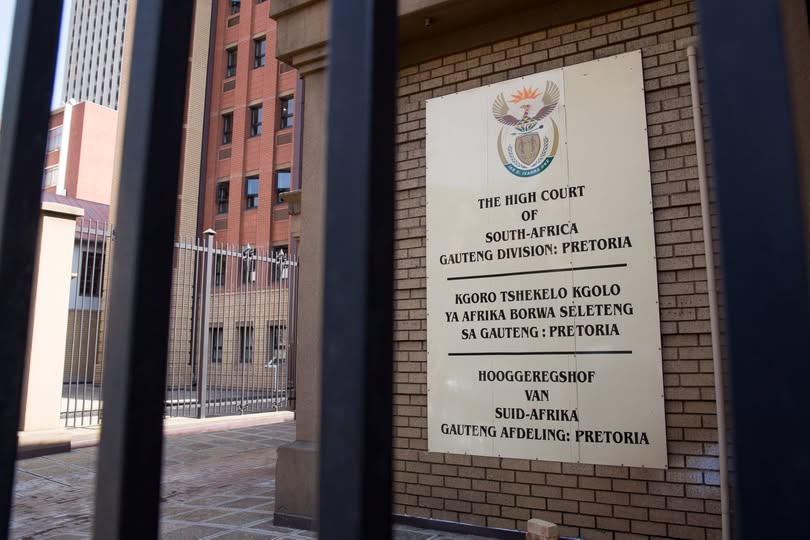
A father accused of sexually assaulting his two-year-old twin daughters asked the High Court in Pretoria to get involved in an active police investigation. He said months of delays had left him separated from his children without a decision on whether he would be prosecuted.
This urgent application followed the breakdown of the parents’ relationship in 2025 and allegations made by the children’s mother in July 2026 that the twins had been sexually assaulted. Detectives opened a criminal investigation, the girls underwent medical examinations and a forensic social worker was appointed to assess the children before the investigation could be completed.
The father denies the allegations and says the investigation has put his life as a parent on hold while the criminal process continues.
A family dispute became a criminal case
The couple’s separation was followed by escalating disputes over the care and contact of their twin daughters. Those disagreements took a dramatic turn when the sexual assault allegations were reported to SAPS, shifting the conflict from the family courts into the criminal justice system.
According to the father, police instructed him not to collect the children from school, take them on holiday or have physical contact with them while the investigation remained active. He told the court that his only contact with the girls was through evening video calls.
He argued that each passing week tightened restrictions on his relationship with his daughters, even though no decision had been made on whether to charge him.
A father searched for answers
The court heard that the father repeatedly contacted members of the Child Protection Unit seeking updates on the investigation. He said he was initially told the remaining forensic assessment would take about two weeks, but weeks later the report still hadn’t been completed.
His frustration extended beyond the child sexual assault investigation. He also complained that police had refused to open criminal cases relating to the alleged theft of his wristwatch and alleged offences involving the children’s mother, believing his complaints had not received proper attention. The central issue before the court remained the unfinished investigation involving the twins.
Police said the investigation could not be rushed
SAPS rejected any suggestion that detectives had failed to perform their constitutional duties. The Minister of Police told the court that investigators had already gathered statements and available evidence but could not complete the docket until the forensic social worker’s report was finalised.
Police argued that investigations involving very young children require careful and thorough evidence gathering and warned that imposing an arbitrary deadline would undermine the integrity of the process.
The father maintained that the continuing delay came at the expense of his daughters’ relationship with their father.
Judge recognises the human cost
Judge D van den Bogert recognised the extraordinary position in which the father found himself. “The investigation against the applicant leaves the applicant in the most unfortunate and untenable position,” the judge said.
The judge noted that the ongoing investigation had a direct impact on both the father and the children, while reaffirming that he remained entitled to the presumption of innocence throughout the criminal process.
Judge Van den Bogert also observed that the father had done everything in his power to resolve the matter quickly. He stated, “He leaves no stone unturned to restore the status quo.”
The Constitution draws the boundary
The High Court was ultimately asked to decide whether judges can direct police how to conduct an investigation and prescribe when it must be completed.
Judge Van den Bogert said courts have an important constitutional role in ensuring that public power is exercised lawfully, but they cannot assume the investigative functions entrusted to SAPS. Judicial intervention is reserved for cases involving bad faith, irrational conduct, an unlawful refusal to investigate or a failure to perform a constitutional duty.
While criticising police for failing to communicate more openly about the expected timeline for the forensic social worker’s report, the judge drew a clear constitutional line.
“This court is not allowed at law to tell the police service how and within what period to do its job” Judge Van den Bogert said.
Get your news on the go. Click here to follow the Conviction WhatsApp channel.
