


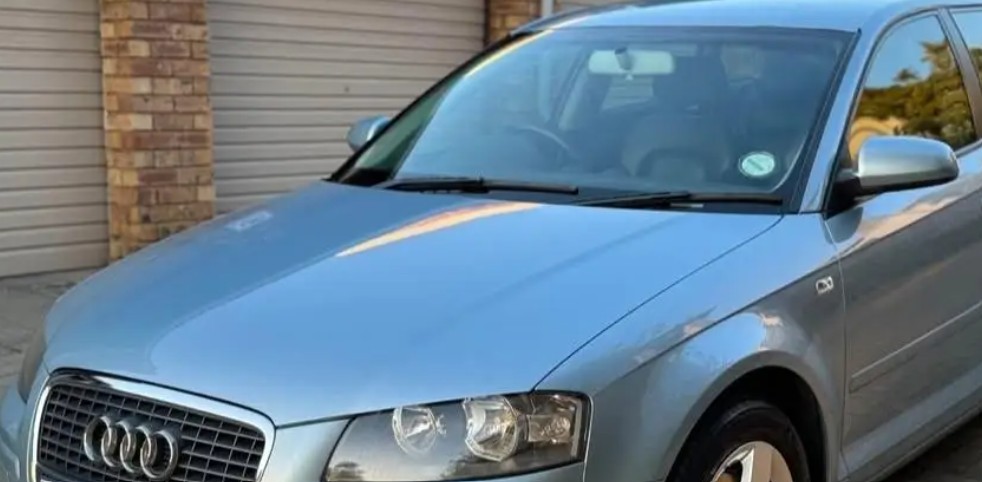
- A new Audi A3 began experiencing electrical faults just six months after the owner took delivery.
- The High Court found the buyer acted reasonably in seeking a refund, as the dealership failed to share critical inspection reports.
- Although the refund application was later withdrawn, the court criticised the dealership for a lack of transparency and ruled that each party would cover their own legal costs.
A Durban woman was found to have acted reasonably when she took her dealership to court after her brand-new Audi A3 developed electrical faults within six months, according to the High Court in Durban.
Judge ME Nkosi found that McCarthy (Pty) Ltd, trading as Bidvest Audi Centre Wonderboom, failed to act transparently after Maheshwari Naidoo’s Audi developed electrical issues. This left her unsure whether the car had a hidden defect when purchased. Although Naidoo later withdrew her refund application under the Consumer Protection Act, the court found she had good reason to take legal action.
Fault emerged after six months
Naidoo received her new Audi A3 on 1 May 2024. The vehicle ran smoothly until 1 November 2024, exactly six months later, when it developed an electrical fault following an attempt by a third-party technician to install a tracking device.
The next day, the vehicle was towed to Audi Centre Durban for inspection. The dealership claimed there were clear signs of water damage and provided photos showing rust on the gearbox bolts, suggesting the gearbox had at some point been submerged in water or salt water. Naidoo disputed that explanation.
On 11 November 2024, she demanded a full refund under Section 56 of the Consumer Protection Act, arguing that the car was defective. Audi Centre Durban later issued a conditional repair quote of R60,341.10, while a second assessment by Audi Centre Umhlanga offered a much lower estimate of R11,774.23, pending further investigation.
Experts disagreed on the cause
The dealership relied on the opinion of diagnostic technician Deon Furber, who concluded that water ingress was the cause of the electrical fault. Furber reported that moisture had activated an 18-amp protective fuse, and that simply replacing the fuse restored the car to normal operation. The dealership also suggested that the water ingress might have occurred while the vehicle was in Naidoo’s possession.
Naidoo remained unconvinced, especially after the dealership refused to give her the report from Audi Centre Umhlanga explaining the nature and extent of the alleged damage. She hired independent motor expert Yves Accolla, whose opinion was very different.
Accolla concluded that the corrosion could have come from exposure to sea salt underneath the vehicle during shipping from Germany to South Africa, or while it was stored near a harbour before delivery. He also suggested that living near the coast might have contributed to salt contamination under the car.
Court rejects challenge to expert report
The dealership argued that Accolla’s unsigned report should not be admitted, saying it amounted to hearsay. Judge Nkosi rejected that argument. “The applicant cannot expect this court to be selective in its consideration of the document by referring only to those parts that support its case,” he said.
“For the sake of fairness, this court is bound to consider the document in its entirety.” The court therefore accepted the report as evidence.
Dealership criticised for withholding reports
Judge Nkosi found that Naidoo had acted reasonably by going to court. He said the dealership repeatedly refused to give her copies of the assessment reports explaining the alleged water damage, even though they relied on those reports to reject her refund request.
The judge also noted the stark difference between the two repair quotes. “If anything, it was the lack of transparency from the dealership that left her unsure whether the car had hidden defects when she took delivery,” he said.
Judge questions dealership’s explanation
Judge Nkosi also raised questions about the dealership’s own evidence. He noted that Furber said the car needed repairs, but also stated that allowing the moisture to evaporate and replacing one fuse returned the vehicle to normal.
“With due respect to Mr Furber, his conclusion is rather confusing,” the judge said. The judge questioned why Naidoo had not simply been told that replacing the fuse might solve the problem, rather than being given repair quotes running into tens of thousands of rand.
“As a customer, it wasn’t unreasonable for Naidoo to expect the dealership to tell her about all her options to restore the car to normal,” he said.
Judge Nkosi also found that the evidence didn’t show when the water got into the car, so it was still possible that it happened before the car reached Naidoo.
Withdrawal ended the refund claim
Naidoo eventually withdrew her application after receiving Accolla’s report. The dealership then asked the court to make her pay their legal costs, while Naidoo filed a counter-application asking for the dealership to pay hers.
Judge Nkosi rejected both applications. While he agreed that Naidoo was justified in taking legal action due to the dealership’s lack of transparency, he also found that she had delayed hiring an independent expert when she had earlier opportunities.
The court also ordered that several allegations accusing the dealership of dishonesty and misleading conduct be removed from Naidoo’s affidavit, as they were considered scandalous, vexatious, or irrelevant.
Order
The High Court dismissed both the dealership’s application for costs and Naidoo’s counter-application. Each party was ordered to pay their own costs arising from the main application, the costs proceedings, and the counter-application.
Get your news on the go. Click here to follow the Conviction WhatsApp channel.


