


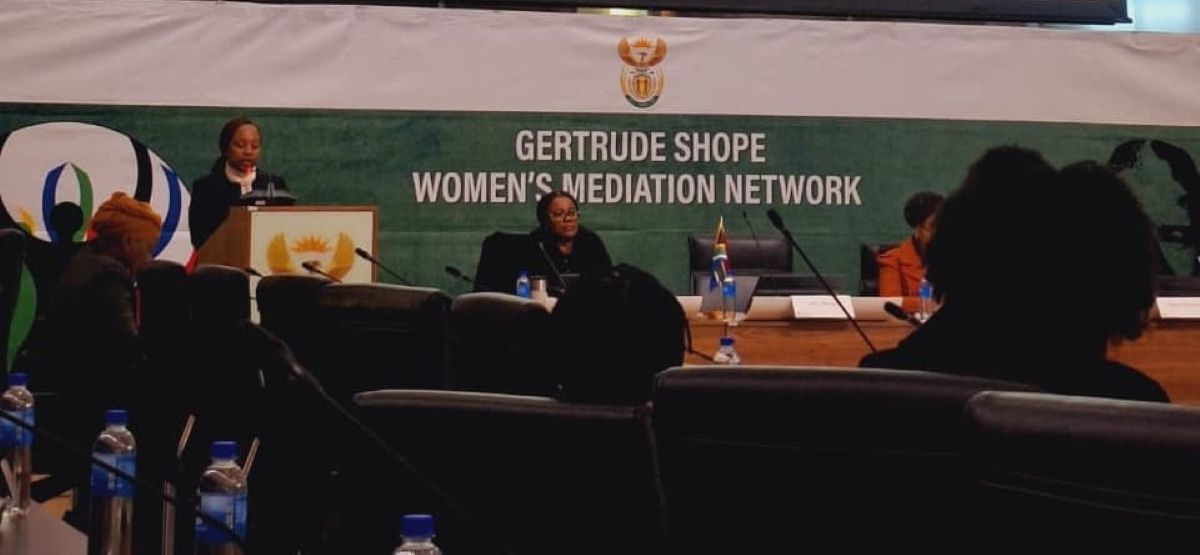
- Gertrude Shope’s legacy inspires ongoing efforts for women’s leadership in politics and peacebuilding.
- Despite progress, South African women still face barriers to full participation and representation.
- Continued collective action and support are needed to achieve true gender equality and empowerment.
Gertrude Shope, one of the most powerful female figures in South Africa’s political landscape, could have been celebrating her 100th birthday. This Women’s Month serves as a reminder of her contribution to women’s political participation, resilience, and representation, as well as her role as a former Member of Parliament who emerged as an agent of change before and after the liberation struggle.
In recognition of Shope’s contribution to South Africa’s political landscape, the Gertrude Shope Women’s Mediation Network (GSWMN) was established to train women in peacebuilding and mediation. This raises important questions: What is the role of women in peace processes and reconciliation, as emphasised by Mama Gertrude Shope’s enduring ideology? Is South Africa ready, together with continental mechanisms, to advance women’s participation in conflict resolution?
The call for women’s voices in conflict resolution and mediation, and for their contribution to South Africa’s political stability during the apartheid era, continued through women-led movements in the democratic period. Government departments, including the Department of Women, Youth and Persons with Disabilities and the Department of International Relations and Cooperation, have worked to bring women together and implement programmes of action.
South Africa served as a non-permanent member of the United Nations Security Council (UNSC), concluding its term in 2020. That position created opportunities for women to influence conflict resolution mechanisms. As Africa’s representative, South Africa could have strengthened women’s leadership further, including advancing the appointment of a South African woman as ambassador.
Women’s empowerment and participation
Shope’s work demands that we continue the journey of women’s empowerment. The mediation network should champion programmes for women and youth that build capacity and promote the inclusion of women in leadership across the continent.
Women must be recognised as mediators, and peace processes should provide opportunities for training, mentorship, and practical exposure to mediation.
In a country where women account for 52% of South Africa’s population of approximately 62 million people, they remain the majority gender, yet opportunities for meaningful participation in conflict resolution remain limited. We still have not fully operationalised pathways for women to participate as stakeholders in conflict resolution across the public sector, private sector, and civil society.
Government, policy, and social change
The integration of women’s participation requires government to create space for broader dialogue, confront gender-based violence and femicide (GBVF), and establish monitoring and engagement platforms that expand employment and leadership opportunities for women. The National Action Plan (NAP) reflects an important commitment to advancing training, support, and women’s participation in political and public life.
Peaceful dialogue on political issues also includes immigration, particularly in light of recent xenophobic attacks against undocumented migrants, where women and children were among the victims. Skills development and early warning systems are essential to help women recognise emerging risks and address the persistent threat of GBVF.
Women’s contribution to peacebuilding strengthens communities, and both the African and international community continue to view South Africa as an important voice in conflict resolution, including its efforts to hold Israel accountable before the International Court of Justice (ICJ) for alleged human rights violations in Palestine.
As women’s movements and stakeholders advocating for inclusion across all sectors, we must continue to strengthen mechanisms that recognise women’s contributions while clarifying the responsibilities of forums, policy platforms, and institutional structures that develop technical skills and empower women. Sustainability, innovation, and long-term investment are essential if women are to participate fully in the labour market, particularly as many remain the primary breadwinners in their households.
Celebrating women’s resilience
As we celebrate women this Women’s Month, we recognise how women have organised themselves within communities to resist oppression and abuse experienced by one of society’s most vulnerable groups. Their collective mission is to respond to emerging crises across Africa while strengthening women’s leadership and ensuring representation that reflects women’s share of the population, because genuine gender balance and equity have yet to be achieved.
In 2025, SADC launched the Women’s Mediation Network to mobilise funding and strengthen recognition of women’s role in diplomacy and peacebuilding. Our hope is that African heads of state will confront the economic marginalisation of women, ensure greater access to initiatives such as the GSWMN, and provide meaningful financial support for women-led projects that expand opportunities and enable women to mentor future generations.
Get your news on the go. Click here to follow the Conviction WhatsApp channel.
The opinions expressed in this article are solely those of the author and do not necessarily reflect the views of Conviction.co.za
