


- Appeal court overturns R50k commission ruling over hearsay.
- Emails and WhatsApps were admitted without proper proof.
- Judgment warns: follow evidence rules or risk losing.
A commission dispute that started with a handshake and ended in the High Court has been thrown out after judges found that the lower court had relied heavily on hearsay and misapplied basic rules of evidence.
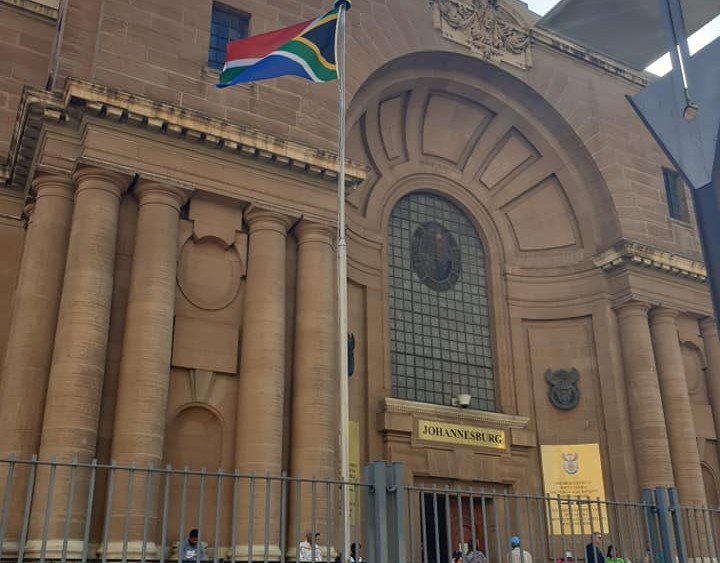
The South Gauteng High Court, sitting in Johannesburg, delivered a strong rebuke against the admissibility of unproven communications including emails and WhatsApp messages in a matter involving a R50 000 commission per truckload allegedly promised in a verbal deal.
The appeal, brought by logistics firm Munro Transport CC, reversed an earlier ruling that had sided with a man who claimed he helped the company land a valuable transport contract. In their unanimous decision, Judge MM Mabesele, with Judge J Motha concurring, said the court below had erred by admitting unproven documents and giving them more weight than they deserved. The appeal was upheld, with no opposition from the respondent, and the original judgment set aside.
A deal made in words
The case began in 2018, when Robin Swiegers, who was employed at the time by a company called NatCorp, claimed he facilitated a business arrangement between Munro Transport and Van Reenen Steel. Swiegers alleged that he entered into an oral agreement with Pierre Botes, then operations manager at Munro Transport, acting with the company’s authority.
Under the agreement, Swiegers would secure logistics business for Munro Transport, and in return, he would be paid a R50 000 agent’s fee per delivery, once the client paid the invoice. Swiegers claimed deliveries had been made, and the company had received payment, but he hadn’t.
Swiegers told the trial court that he had communicated his demand for commission through messages and emails, some of which were allegedly copied to P Munro, the sole member of the company. He said Munro had confirmed the deal during a phone call, and even promised to pay him as soon as Van Reenen Steel settled their account.
But Munro, in sworn testimony, denied the entire transaction, saying neither he nor his company had any dealings with Swiegers. The company, he maintained, did business directly with Van Reenen Steel and had never authorised Botes or anyone else to promise commissions.
Authority in question
The appeal court honed in on the key legal question of whether Botes have authority to bind Munro Transport to a commission-paying agreement?
In his evidence, Munro insisted that Botes, while employed as operations manager, had no authority to enter into commercial agreements on the company’s behalf. His job was limited to logistics and permits, not contracts or client negotiations.
Swiegers, on the other hand, failed to call Botes as a witness to confirm the oral agreement or to testify about his authority. The lower court nevertheless accepted Swiegers’ version, relying on documents and messages allegedly shared among Botes, Swiegers, and copied to Munro.
The appeal judges saw this as a fatal error. “The court below considered the emails... as proof that Mr Botes had authority to act on behalf of Munro Transport. The conclusion reached... is incorrect,” wrote Judge Mabesele, delivering the main judgment.
Hearsay and the rules of court
One of the court’s strongest criticisms was the way the trial judge admitted documents such as emails and WhatsApp messages without any accompanying witness testimony to confirm their authenticity or meaning. In fact, Munro’s legal team had objected to the use of these documents as evidence, citing them as hearsay. But the trial court dismissed the objection without even inviting a response from Swiegers’ side.
The appeal court found this to be a serious procedural lapse. Judge Mabesele stated that just because a document is discovered (disclosed to the other party), does not mean its contents are automatically accepted as evidence. For a document to be admitted and relied upon, it must be properly introduced, usually through a witness who can speak to its origin and relevance.
The court noted: “There were no emails or WhatsApp messages that were forwarded directly to Mr Munro by Mr Swiegers, requesting payment… These documents were hearsay and should not have been admitted into evidence.”
The judgment reinforces the critical distinction between discovering documents in a civil matter and proving them in court, a point often misunderstood by litigants and even lower courts.
Credibility and probabilities
In matters where two parties tell conflicting stories, the law sets a high bar for the plaintiff to prove their version is more likely true than not. The High Court invoked the principle from the case National Employers’ General Insurance v Jagers (1984), which guides courts to test credibility not in isolation, but considering the general probabilities of the case.
Here, the judges found that Swiegers’ failure to produce his alleged contracting partner, Botes, or to prove that Botes had the authority to enter into agreements, significantly undermined his case. His version, while detailed, could not be supported by admissible evidence.
Final outcome
The appeal court granted condonation for the late filing of the appeal, accepting the reasons provided by Munro Transport. It then proceeded to set aside the trial court’s judgment in full.
Swiegers’ claim was dismissed with costs, and while no costs were awarded for the appeal (given that it was unopposed), the ruling sent a strong message about the dangers of relying on hearsay and skipping procedural steps.
Legal lessons: Don’t let procedure sink your claim
This case is a textbook reminder of how civil claims can fall apart not because of the facts alone, but because of the way those facts are presented. Litigants, especially in verbal agreement disputes, must ensure:
- All key witnesses (such as alleged agents or contracting parties) are called to testify;
- Any documents relied on are properly introduced through direct evidence;
- Hearsay objections are respected and addressed;
- Authority to contract is proven with clarity.
#Conviction
Get your news on the go. Click here to follow the Conviction WhatsApp channel.
