




- Over 284 000 people registered as missing worldwide by 2024, far fewer than the true number.
- ICRC’s Family Links Network reconnects families separated by conflict, disaster, and migration.
- The Global Alliance for the Missing unites 13 states in building stronger responses.
Across the world, hundreds of thousands of families live in agonising uncertainty, searching for answers about loved ones who vanished without trace. These disappearances take many forms, victims of enforced disappearance, migrants who never reached their destination, or those lost in war and natural disasters. What unites them is the pain of families left behind, caught between hope and despair.
This reality framed the commemoration of the International Day of the Disappeared on 30 August 2025 in Pretoria. The event placed a sharp focus on the work of the International Committee of the Red Cross (ICRC) and the Global Alliance for the Missing, with South Africa’s own history of disappearances serving as a sobering reminder of why the issue resonates so deeply in the region.
The ICRC’s mandate and the Family Links Network
The ICRC, through its mandate under the Geneva Conventions, has long worked on behalf of families of the missing. Central to this effort is the Family Links Network, a collaboration with Red Cross and Red Crescent societies across the world. The network reconnects people separated by conflict, migration, and disaster, while also supporting families left in limbo.
By the end of 2024, more than 284 000 people worldwide were officially registered as missing through the Family Links Network. Yet this figure is only a fraction of the true number. For each case recorded, many others remain undocumented, especially in conflict zones and fragile states where record-keeping is impossible.
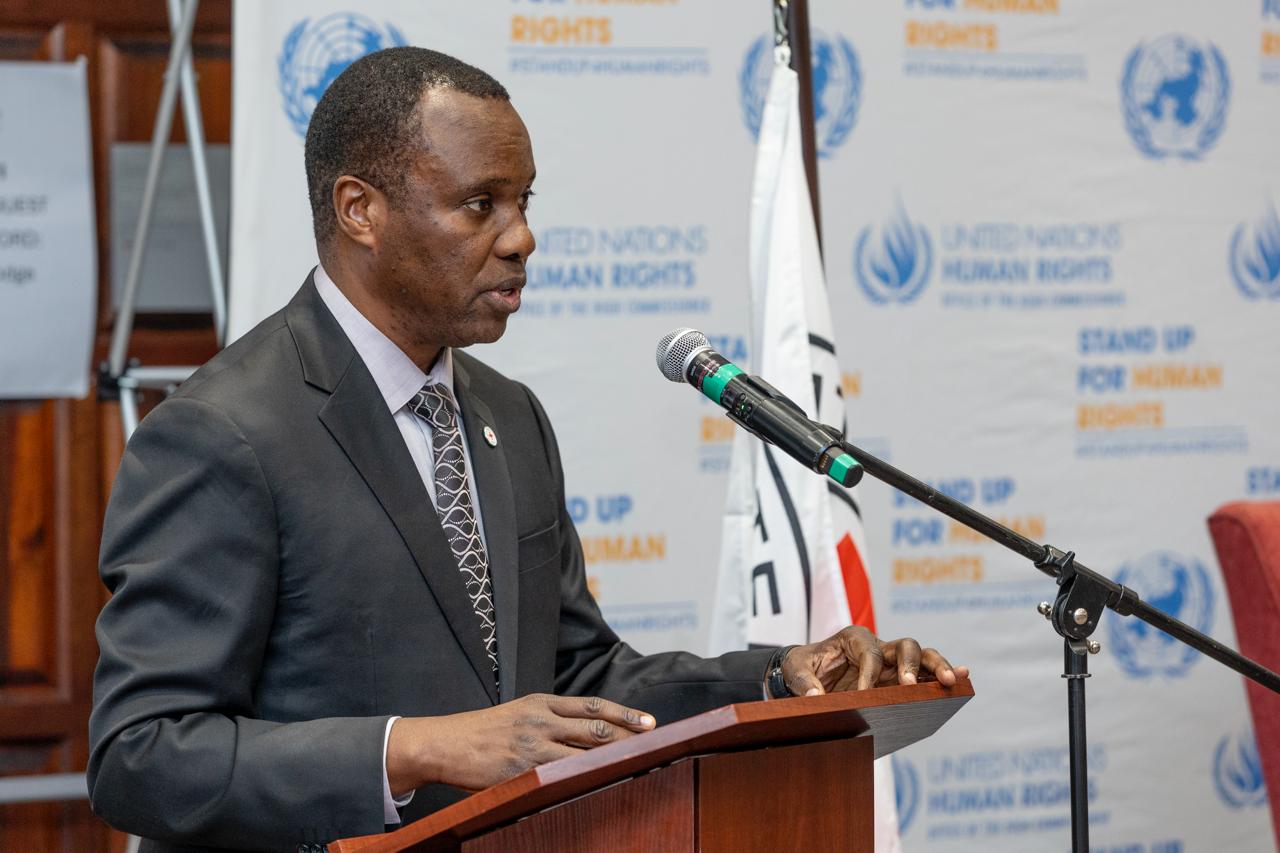
For families, the consequences go far beyond grief. The disappearance of a loved one creates economic instability, legal uncertainty, and social isolation. “Behind every missing person is a family living in anguish,” said Jules Amoti, Head of Delegation for the International Committee of the Red Cross (ICRC) in Pretoria. “They deserve answers, truth, and recognition.”
Building systems, not just responses
Amoti, speaking during the commemoration, underscored the urgent need to strengthen national frameworks, forensic capacity, and legal systems so that disappearances are prevented in the first place, and properly investigated when they occur.
“Addressing missing persons cases is not a task for one organisation,” he said. “It requires governments, humanitarian actors, and communities working hand in hand.”
The ICRC emphasises a holistic approach, helping families cope emotionally and practically, protecting the dignity of the dead, and working with authorities to clarify the fate of the missing. This includes support for medico-legal institutions, the dignified handling of human remains, and the collection and management of information that can provide closure to families.
The Global Alliance for the Missing
In 2021, the ICRC and the Swiss government launched the Global Alliance for the Missing to amplify international cooperation on this issue. Today, the alliance is supported by 13 states; Argentina, Azerbaijan, Colombia, Croatia, Estonia, the Republic of Korea, Kuwait, Mexico, Nigeria, Norway, Peru, Switzerland and The Gambia.
The alliance embodies a recognition that disappearances are not confined to any one region, and that solutions must be collective. By pooling expertise, strengthening national capacities, and holding perpetrators of enforced disappearance accountable, the alliance seeks to provide both prevention and response.
For Amoti, the initiative reflects the only way forward. “The suffering of families is compounded by silence. Every disappearance is not just an absence, but a wound that demands truth,” he said.
South Africa’s own history and the path to reconciliation
South Africa, too, has endured a painful history of enforced disappearances, particularly during the apartheid era. For many families, the search for truth and justice continues decades later.
Amoti acknowledged this context, reminding the audience that the pain of disappearances remains close to home. “For the families present today, this pain is not abstract; it is lived every day. We honour your resilience and your determination to find answers,” he said.
He stressed that confronting cases of the missing does more than provide closure. It contributes to reconciliation, helps rebuild trust in institutions, and lays the groundwork for sustainable peace.
“Let us reaffirm the value of international humanitarian law and human rights law in protecting the rights of the missing and their families. Let us commit to building stronger systems and keeping hope alive,” he concluded.
A call to collective action
The commemoration in Pretoria made clear that enforced disappearances and missing persons are not challenges of the past. They remain present-day realities, affecting every region of the world. For the ICRC, the Global Alliance for the Missing represents both a promise and a responsibility, a recognition that families of the missing cannot be left alone in their search for answers.
In South Africa, across Africa, and globally, the call was the same, that only through collective action, stronger institutions, and unwavering commitment to truth can the silence of the missing be broken.
Conviction.co.za
Get your news on the go. Click here to follow the Conviction WhatsApp channel.


