


- Invisible citizens are not missing because they arrived recently, but because they were never counted properly in colonial and apartheid systems that democracy failed to fix.
- The politics of counting still favour formal housing and documentation, leaving millions in grey areas, farms and informal settlements unrecognised and unplanned for.
- A headcount alone will not solve the problem; recognition must come before statistics if South Africa is to confront structural neglect and exclusion.
A second company in the space of a year is calling into question Statistics South Africa’s instruments. Like Capitec, Fibertime, best known for connecting households in informal settlements to uncapped fibre for just R5 a day, claims that South Africa’s population could be underestimated at 63 million. The company asserts that the country’s population may well exceed 95 million.
For me, it is not a shock at all: Black people have always been “invisible citizens” since colonial times. The arrival of democracy has not really changed this situation.
While some may conveniently ascribe the ‘excess’ numbers to illegal and undocumented migrants, my view is that invisible citizens continue to be missing in the statistical, administrative and policy infrastructure of the state. This includes scores of farm dwellers, unregistered individuals and ‘others,’ giving the lurid picture of evasive uhuru. They are left out not because they arrived recently, but because they were never counted properly in the first place.
The apartheid census was deliberately designed to make Black lives numerically marginal. Post-1994 governance inherited this defective cartography without ever fully reconstructing it. We know every kilometre of irrigated land in the Northern Cape, yet we do not know how many people share a single backyard shack in Tembisa or Khayelitsha.
This legacy is very easy to dissect. In smaller towns like Estcourt, Bergville and Potgietersrus (Mokopane), for example, few families from the upper realm of the tricameral design did not live in countable places in the urban side of the abyssal line. They enjoyed all the economic and living opportunities. On the other side of the divide, millions were confined to “zones of non-being” called Bantustans.
Unfortunately, no one can claim to know about scores of Black people in Soweto, Mahlabathini, farms, or shacks that sprawl “our” cities today. Many see this ruralification of former white-only urban settlements as a signal of the ANC’s failure, but it is not. People are engaging in a large-scale reparation, Aliyah, because no one cares to discuss their obscure status, as everyone obsesses over democracy and the so-called “world-class” constitution. Millions were forcibly removed from their lands over centuries and decades, and others ‘disappeared’ in these events that devious ones frame as Mfecane/Difaqane. Fact.
Political and economic elites conveniently silence this part of our history in the name of private property and investment. In January 2025, ANC Secretary-General Fikile Mbalula claimed that 80% of the Freedom Charter had been fulfilled, but that land reform lagged. But in a typical political inaction by the ANC, Mbalula later argued, “If we take away land from white people, this country will turn into rubble like Zimbabwe…”
Still, the ANC and its GNU partners do not get it; “politicism,” artificial separation of the political and economic realms, including land, is rather an antiquated view. Verkrampte political parties and groups, from AfriForum and VF Plus to the DA and FMF, insist that transferring land to re-settle Black people is “anti-market” or “provocative”. Their transatlantic trips to Washington to flirt with the MAGA (Make America Great Again), under the pretext of ‘white genocide,’ are a desperate attempt to delay the inevitable.
Is the problem with statistics?
The issue is not the ANC’s misgovernance, immigration, or even StatsSA; structural invisibility is our biggest problem. The politics of counting still favour formal, fixed addresses and property-registered households. However, South Africa’s urbanisation is informal, mobile and multi-generational. Starting with the Group Areas to apartheid spatial allocations, grey spots mushroomed across the country as Black workers tried hard to breach the line to create ‘grey areas.’
Grey areas constitute settlements that would be called shacks today, but even more. Many areas near the CBDs of Pretoria, Durban and Johannesburg experienced racial integration long before it was “officialised” in 1990. In 1989, for example, it was estimated that there were 55 000 to 150 000 ‘illegal’ residents in grey areas. These were numbers only in cities where ‘visibility’ was prioritised, unlike in Bantustans, which were human dump sites.
After 30 years since apartheid purportedly died, you are unlikely to be counted if you do not fit the bureaucratic definition of a “home.” You do not officially exist if you move between rural homesteads and township rooms in search of work. The census ignores the reality of poverty and labels those excluded as “illegal.” This invisibility matters. It distorts planning, budgeting, policing, education, health and labour-market policy.
This picture was painted for everyone during lockdowns: nobody was sure who sat where or belonged, which made planning almost impossible. Provinces and municipalities are confronted with ever-changing numbers. For example, former Gauteng premier David Makhura once told me how difficult it was for the province and Tshwane to predict populations in places like Mahube in Mamelodi.
If the population is indeed closer to 95 million, then the fiscal envelope has been financing the wrong denominator for three decades. Treasury austerity becomes mathematically indefensible. Infrastructure appears overburdened only because the state does not know who is actually using it. And xenophobic scapegoating becomes politically convenient because it hides the real crisis, that millions of South African citizens have never been politically or statistically “seen.”
The true eye-opener is not that Stats SA could be 30 million short; it is that we built a democracy without establishing the tools to understand its people. Invisible citizenship is no accident, but it is a persistent structural issue. Counting everyone would force us to face the economic neglect that democracy has hidden but not solved.
Is a physical headcount a solution?
Not quite. But a new debate has ensued as Stats SA insists that its instruments are credible, despite it reportedly acknowledging in July 2025 that “over 500 000 white South Africans have left the country in 25 years, leaving the group at just 7.1% of the population.” Fibertime, on the other hand, toys around with the idea of a recount. Researchers caution that a 30 million undercount may be problematic for Stats SA.
Without getting into the “science” of statistics, the debate will likely once more drift away from the core issues, as the Capitec “10% employment” claim did. Indeed, knowing how many people there are in a country’s borders is very important for biopolitics. But it should not be the end game, as we are talking about people’s lives. Therefore, a headcount may be necessary, but it is not a solution to many ‘invisibles’.
The reality is that if one were to ask councillors in Tshwane, JTG (Northern Cape) and Mbombela about unemployment figures in their wards, they could give you a national figure of 31.9%. The reason for this response is that none of them has the tools to perform an enumeration for planning purposes. Everyone keeps walking into blank spaces and ignoring ‘grey zones,’ where millions of invisibles reside.
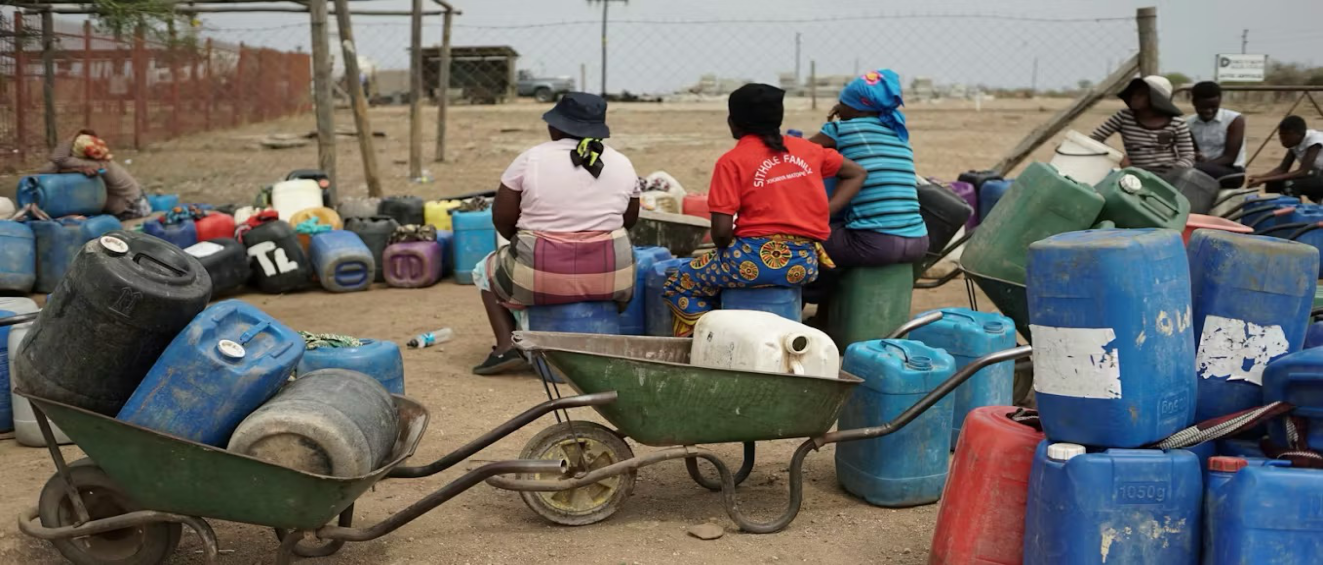
If the net were to be spread wider to farms, rural areas and squatter-camps, the state of confusion grows in leaps and bounds due to the absence of definite data (headcounts or even closest ‘real’ estimates). The reality is that while many of us complain about the lack of delivery of services like water, roads and schools, there are still people living within South African borders who do not know the state. They live in the ‘zones of administrative absence,’ amounting to de facto statelessness inside the country.
Instead of a recount, the focus must be on “bare life,” the life that exists without institutional recognition. South Africa’s invisible millions are not “undocumented” or “not counted” by accident; they are not acknowledged because everyone has never built a presence where they live. To “recount” without changing the terms of visibility reproduces their erasure.
Therefore, counting must be preceded by recognising, and recognition must be preceded by entering the places where democracy has never arrived. We are yet to end a state of ‘two nations’…
Siya yi banga le economy!
Get your news on the go. Click here to follow the Conviction WhatsApp channel.
