


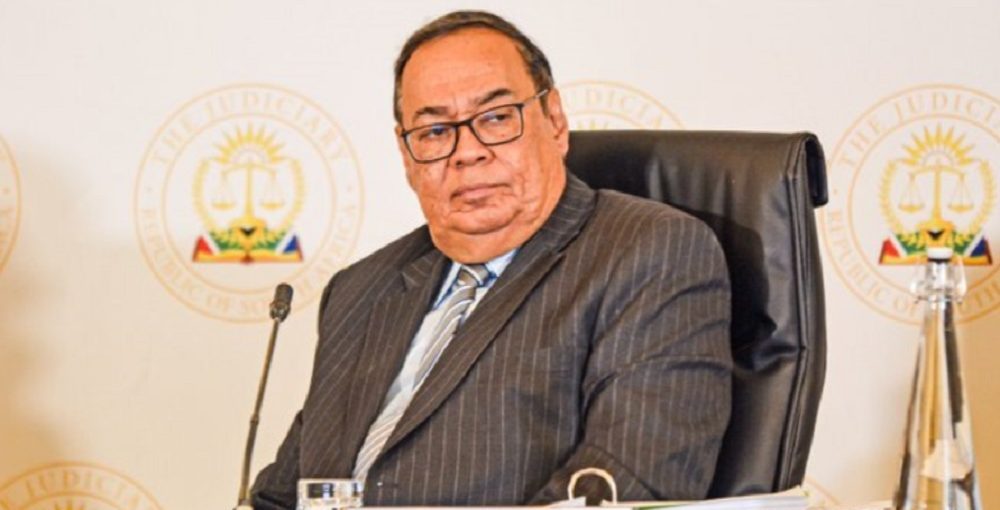
- The South African judiciary paid tribute to retired Judge President Achmat Jappie at a memorial sitting held at the Pietermaritzburg High Court.
- Judicial leaders, government representatives and former colleagues highlighted his humility, integrity and steadfast dedication to constitutional justice.
- Speakers emphasised that his legacy will continue to inspire future generations of judges and reinforce public trust in the judiciary.
The South African judiciary gathered at the High Court in Pietermaritzburg to honour the life and legacy of retired Judge President Achmat Jappie during a special memorial sitting attended by members of the judiciary, government representatives, the legal profession and his family.
The memorial recognised Judge President Jappie's distinguished judicial career and celebrated his contribution to strengthening judicial independence, advancing constitutional democracy and building public confidence in the administration of justice.
Opening the proceedings, KwaZulu-Natal Judge President Thoba Poyo-Dlwati said those gathered had come together not to determine disputes but to celebrate the life and service of one of South Africa's most respected jurists.
"We gather today in this courtroom not to determine disputes, but to pay tribute and acknowledge the contributions and milestones of one of our remarkable jurists," she said.
Leadership built on respect and humility
Judge President Poyo-Dlwati said the occasion honoured not only Judge President Jappie's judicial career but also the values he came to represent throughout his years of service, including independence, humility, diligence, fairness and an unwavering commitment to justice.
Quoting former Chief Justice Arthur Chaskalson, she said the legitimacy of the judiciary rested not only on legal authority but also on the confidence society placed in its integrity, impartiality and fidelity to the Constitution.
Judge President Poyo-Dlwati shared personal reflections, describing Judge President Jappie as a respectful, compassionate and approachable leader who treated every judge with dignity, regardless of seniority. "I never felt disrespected by him as the Judge President, and I was right at the bottom of the list in the division," she said.
She recalled how he visited judges in their chambers when discussing work allocations and remained calm and courteous even under pressure. "I wish I could be as calm as him," she said.
Judge President Poyo-Dlwati also recounted how Judge President Jappie encouraged her to attend mediation training in the United States while remaining mindful of her family responsibilities, and how he readily changed a duty roster after listening to her concerns.
She said his greatest legacy lay not only in the judgments he delivered but in the quiet dignity, humility and integrity with which he led the division.
A voice of reason on the Bench
Speaking on behalf of the heads of court, Deputy Chief Justice of the Republic Dunstan Mlambo said Judge President Jappie's influence extended far beyond KwaZulu-Natal and helped shape South Africa's constitutional judiciary.
Justice Mlambo said he accepted the responsibilities of judicial leadership with distinction, helping build "a judiciary capable of earning public trust and confidence, a judiciary that is independent, disciplined, and faithful to the Constitution."
He described Judge President Jappie as "a voice of reason" whose calm interventions often helped fellow heads of court find common ground. Justice Mlambo also highlighted Judge President Jappie's contribution to judicial reform, his service as an acting justice of the Constitutional Court and his authorship of the Constitutional Court judgment in Transborder Road Transport Agency v Central African Road Services, saying it reaffirmed the importance of constitutional accountability.
Even after retirement, Judge President Jappie continued serving the judiciary by chairing the Judicial Conduct Tribunal, reinforcing the principle that judicial independence must always be accompanied by accountability.
A friendship spanning five decades
Retired Judge Rashid Vahed brought a deeply personal perspective to the memorial, telling those gathered that his friendship with Jappie stretched back more than 50 years.
Opening with humour, Judge Vahed joked that he hoped he would not "be in trouble" for setting protocol aside before explaining that he had been asked to deliver the Bench's tribute because of their lifelong friendship. "Judge President Achmat Jappie was my friend, a friendship that dates back more than half a century," he said.
Judge Vahed said Judge President Jappie, affectionately known to family and close friends as "Jabs", died in a Durban hospital on 22 April 2026 after a short illness.
From apartheid barriers to judicial leadership
He traced Judge President Jappie's journey from his birth in Port Elizabeth on 21 June 1954 to his schooling at Sastri College in Durban and his legal studies at the University of Durban-Westville, where he enrolled after obtaining an exemption under apartheid's discriminatory education laws.
After completing pupillage under Mark Harcourt, Jappie joined the Durban Bar in 1979 and established a respected practice, representing political activists during the turbulent 1980s before his appointment to the Natal Provincial Division in 1998.
Judge Vahed said Jappie earned a reputation for being efficient, courteous, firm and consistently fair. He later served in the Labour Appeal Court, acted in the Constitutional Court, became Deputy Judge President in 2013, and Judge President of the KwaZulu-Natal Division in 2015.
A legacy beyond the Bench
According to Judge Vahed, Judge President Jappie believed the effective administration of the courts was inseparable from the delivery of justice. He championed improved court infrastructure, highlighted systemic shortcomings and supported the transformation of the judiciary.
He said Jappie's lasting legacy would not simply be measured by the judgments he wrote or the offices he held, but by the example he set through humility, fairness, integrity and service.
A call to protect constitutional democracy
Delivering the government's tribute, Deputy Minister of Justice and Constitutional Development Andries Nel said Jappie's life reflected South Africa's journey from apartheid to constitutional democracy.
Nel described Judge President Jappie as a jurist who believed the law should be used to advance justice rather than oppression and who helped give practical meaning to the Constitution after his appointment to the Bench in 1998.
He warned that organised crime, political violence and declining public confidence in institutions made it more important than ever to protect judicial independence. "An independent judiciary is not a privilege enjoyed by judges. It is a guarantee enjoyed by the people," Nel said.
Drawing on former President Nelson Mandela's reminder that judges derive their authority from the people through the Constitution, Nel said Judge President Jappie exercised authority with humility, courage, restraint and humanity.
Honouring a life of service
Concluding his tribute, Nel urged South Africans to honour Judge President Jappie's memory by strengthening the institutions that uphold constitutional democracy.
With the permission of Judge President Poyo-Dlwati, those attending the memorial rose to recite the Preamble to the Constitution, reaffirming their commitment to justice, equality and the rule of law in honour of Jappie's enduring legacy.
Several other speakers also paid tribute to Judge President Jappie.
Get your news on the go. Click here to follow the Conviction WhatsApp channel.


