

Skip to content
Close Menu
ConvictionConviction
  • Home
  • Law & Justice
  • Special Reports
  • Opinion
  • Ask The Expert
  • Get In Touch

Subscribe to Updates

Get the latest creative news from FooBar about art, design and business.

What's Hot

High Court tells NERSA to review Musina Municipality’s late electricity tariff application

August 4, 2026

Johannesburg Labour Court tightens rules for urgent applications and motion proceedings

August 4, 2026

Tribunal tells Pension Funds Adjudicator to review rejected disability benefit claim

August 4, 2026
Facebook X (Twitter) Instagram
Trending
  • High Court tells NERSA to review Musina Municipality’s late electricity tariff application
  • Johannesburg Labour Court tightens rules for urgent applications and motion proceedings
  • Tribunal tells Pension Funds Adjudicator to review rejected disability benefit claim
  • Estate ordered to restore homeowner’s biometric access despite disputed levies
  • Legacy Builders fails to prove claims consumers can earn up to R92 000 working two hours a day
  • Magistrate’s error forces judge to overturn R239 socks theft conviction despite guilty plea
  • What two weeks defending 26 accused taught me about law, life, and resilience
  • R112,000 hospital bill reduced to R750, allowing refugee child’s body to be released for burial
Facebook X (Twitter) Instagram
ConvictionConviction
Sonneblom
  • Home
  • Law & Justice
  • Special Reports
  • Opinion
  • Ask The Expert
  • Get In Touch
ConvictionConviction
Home » Johannesburg Labour Court tightens rules for urgent applications and motion proceedings
Labour Law

Johannesburg Labour Court tightens rules for urgent applications and motion proceedings

New practice direction keeps temporary Johannesburg court arrangements in place while introducing stricter enrolment requirements, mandatory CaseLines compliance and tighter filing deadlines.
Kennedy MudzuliBy Kennedy MudzuliAugust 4, 2026No Comments
Facebook Twitter Pinterest LinkedIn WhatsApp Reddit Tumblr Email
Share
Facebook Twitter LinkedIn Pinterest Email
  • New directive took effect on 27 July 2026.
  • Temporary Johannesburg Labour Court arrangements extended until 31 December 2026
  • Matters that are not hearing-ready will no longer be enrolled.

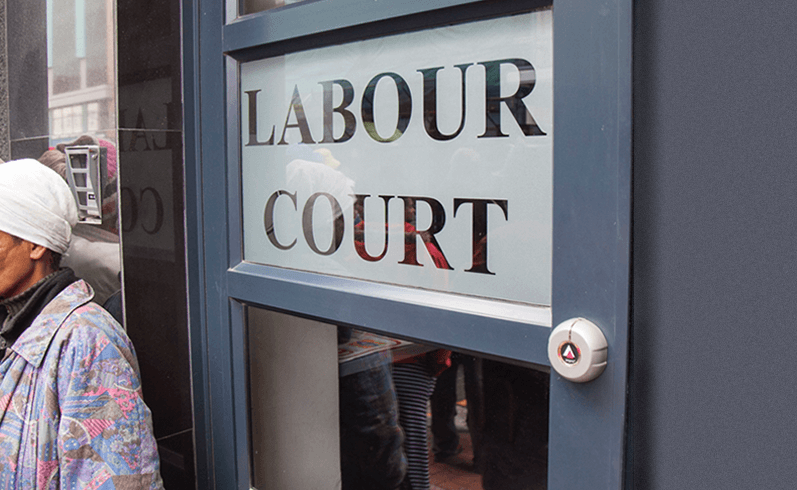
The Labour Court in Johannesburg has introduced sweeping procedural changes aimed at improving the administration of urgent applications and motion proceedings while extending temporary arrangements put in place during the ongoing renovation of the court's Braamfontein premises.

Directive 02 of 2026, issued by Labour Court Judge President E Molahlehi, took effect on 27 July 2026. It introduces stricter case management requirements for practitioners, litigants and Registrars appearing before the Johannesburg Labour Court and extends the temporary operational measures that have been in place since 2025.

Temporary court arrangements continue

The directive confirms that renovations to the Labour Court building in Braamfontein have not yet been completed, requiring the continuation of Directive 03 of 2025 until 31 December 2026, unless the Judge President directs otherwise.

Under the temporary arrangements, Registrar services will continue operating from the fifth floor of 86 Juta Street in Braamfontein. Labour Court trials will continue to be heard at the High Court in Johannesburg, while unopposed motions, contempt applications and interlocutory proceedings will remain at the Land Court in Randburg. Opposed motions and urgent applications will continue to be conducted virtually.

Directive targets operational shortcomings

Judge President Molahlehi says the practice direction was introduced to address systemic problems affecting the urgent and unopposed courts.

According to the directive, late filing of documents, incomplete CaseLines bundles, inconsistent court practices and the enrolment of matters that are not hearing-ready have resulted in unnecessary delays and inefficiencies.

The directive states that these challenges have been worsened by the absence of firm cut-off deadlines, uncertainty regarding roles and responsibilities, and inconsistent enforcement of procedural requirements, leading to inefficiency and ad hoc compromises in urgent proceedings.

Judge President Molahlehi says the new measures are intended to restore procedural discipline, standardise practice, and ensure that matters are properly prepared before being placed before the Court.

Hearing readiness becomes compulsory

The directive introduces a strict hearing-readiness principle. No matter may be enrolled unless it is procedurally compliant and capable of being heard. Following scheduling on Court Online, parties must ensure that their documents are fully updated, indexed and paginated, with a complete CaseLines bundle verified by the Registrar.

Judge President Molahlehi states the Registrar shall refuse final enrolment of any non-compliant matter. The directive also makes it clear that scheduling a matter on Court Online does not amount to final enrolment.

The directive clarifies that Court Online serves as the official filing platform, while CaseLines is the electronic bundle used by judges during hearings. A matter will not be regarded as properly before the court unless its CaseLines bundle is complete, correctly sequenced and updated in accordance with Directive 1 of 2025.

New timelines for unopposed applications

Applicants in unopposed matters must create a complete CaseLines bundle within five court days after receiving a hearing date. The bundle must then be updated and finalised no later than 14 court days before the hearing unless the court directs otherwise.

Registrars have been instructed to refuse enrolment of matters where bundles are incomplete, improperly indexed or paginated, or where documents have been filed outside the prescribed time limits.

Stricter management of the urgent roll

The directive also introduces firm deadlines for urgent matters. Parties must achieve full compliance by 1pm on the Thursday preceding a Tuesday hearing week, while Registrars must close the urgent roll by 4pm on the same day.

Only compliant matters may appear on the final roll, and any matter that fails to meet the deadline may be refused enrolment or struck from the roll. No amendments may be made once the roll has closed without judicial authorisation.

Exception remains for genuine urgency

The directive preserves judicial discretion where genuine urgency exists. It states only matters of genuine and demonstrable urgency may warrant deviation from the prescribed process.

In those instances, the Registrar must immediately refer the matter to the Deputy Judge President, Judge President or Senior Judge for directions before it may be enrolled outside the ordinary process.

Conviction.co.za

Get your news on the go. Click here to follow the Conviction WhatsApp channel.

CaseLines Court Online Labour Court Motion proceedings urgent applications
Share. Facebook Twitter Pinterest LinkedIn Tumblr Telegram Email
Kennedy Mudzuli

Multiple award-winner with passion for news and training young journalists. Founder and editor of Conviction.co.za

Related Posts

Employee loses court bid to overturn Santam dismissal linked to COVID workplace policy

August 3, 2026

Judge says ‘bobbejaan’ comment not racist, likely referred to technical problems

August 3, 2026

No need for medical report before dismissing NWU staffer who missed 260 workdays

July 30, 2026
Leave A Reply Cancel Reply

Prove your humanity: 9   +   5   =  

Subscribe to our newsletter:
Top Posts

Making sectional title rules that work: A practical guide

January 17, 2025

Protection order among the consequences of trespassing in an ‘Exclusive Use Area’

December 31, 2024

Between a rock and a foul-smelling place

November 27, 2024

Irregular levy increases, mismanagement, and legal threats in a sectional title scheme

June 2, 2025
Don't Miss
Constitutional Law
4 Mins Read

High Court tells NERSA to review Musina Municipality’s late electricity tariff application

By Kennedy MudzuliAugust 4, 20264 Mins Read

The High Court in Polokwane ruled that Musina Local Municipality’s one-day delay in submitting its electricity tariff application should not prevent NERSA from considering it.

Johannesburg Labour Court tightens rules for urgent applications and motion proceedings

August 4, 2026

Tribunal tells Pension Funds Adjudicator to review rejected disability benefit claim

August 4, 2026

Estate ordered to restore homeowner’s biometric access despite disputed levies

August 4, 2026
Stay In Touch
  • Facebook
  • Twitter
  • WhatsApp
Demo
About Us
About Us

Helping South Africans to navigate the legal landscape; providing accessible legal information; and giving a voice to those seeking justice.

Facebook X (Twitter) YouTube WhatsApp Twitch RSS
Latest posts

Making sectional title rules that work: A practical guide

January 17, 2025

Protection order among the consequences of trespassing in an ‘Exclusive Use Area’

December 31, 2024

Between a rock and a foul-smelling place

November 27, 2024
OUR PICKS

Legal Practice Council ordered to disclose records behind English-only admission exams

July 28, 2026

Attorney who briefs advocate remains liable for fees unless agreement states otherwise

July 30, 2026

R112,000 hospital bill reduced to R750, allowing refugee child’s body to be released for burial

August 3, 2026
© 2026 Conviction.
  • Home
  • Law & Justice
  • Special Reports
  • Opinion
  • Ask The Expert
  • Get In Touch

Type above and press Enter to search. Press Esc to cancel.

Powered by
►
Necessary cookies enable essential site features like secure log-ins and consent preference adjustments. They do not store personal data.
None
►
Functional cookies support features like content sharing on social media, collecting feedback, and enabling third-party tools.
None
►
Analytical cookies track visitor interactions, providing insights on metrics like visitor count, bounce rate, and traffic sources.
None
►
Advertisement cookies deliver personalized ads based on your previous visits and analyze the effectiveness of ad campaigns.
None
►
Unclassified cookies are cookies that we are in the process of classifying, together with the providers of individual cookies.
None
Powered by