


- AI is already transforming legal research, drafting and contract analysis in South Africa.
- Legal leaders say lawyers are still responsible for checking AI-generated work and using their professional judgment.
- Mongezi Menye says true ethical leadership is shown by the choices lawyers make when no one is watching.
A lawyer burning the midnight oil to prepare court papers for the next day now has a powerful new assistant. In just seconds, artificial intelligence can search thousands of judgments, analyse contracts and summarise lengthy legal documents.
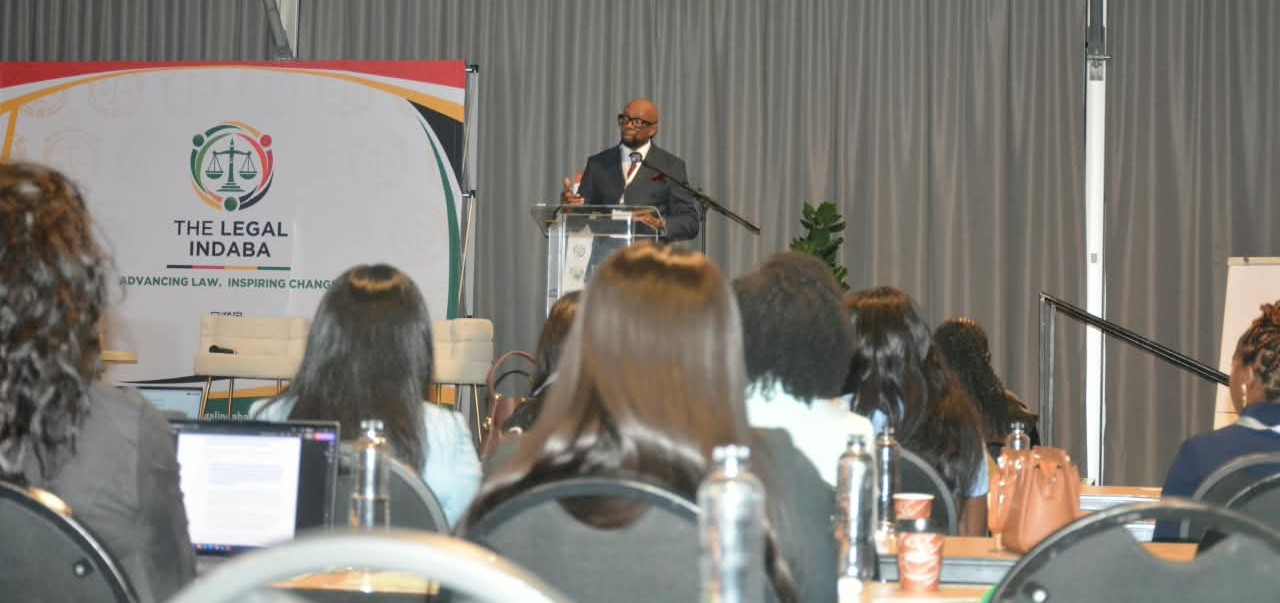
However, as delegates at Legal Indaba 2026 heard, while this technology may change how law is practised, it can never take on the responsibility that comes with the profession.
The conference brought together legal practitioners, academics and institutional leaders to explore the future of the profession under the theme ‘Advancing Law. Inspiring Change.’ Across discussions on technology, governance and ethics, it was clear that while AI has a place in the legal toolkit, accountability will always rest with people.
AI is already inside the legal profession
A panel including Kume Luvhani, co-founder and director at Vaxowave; Professor Charles Maimela, Executive Dean of the University of Johannesburg Faculty of Law; Dr Nomalanga Mashinini, Senior Lecturer at Wits University; Raphael Segal, Director of Legal Interact; and Candy Musekene, Legal Manager at MTN, discussed how AI is changing legal practice, particularly in research, contract analysis, drafting and document review.
The speakers explained how this technology is taking over repetitive tasks that used to consume much of lawyers’ time. Rather than spending hours manually searching through volumes of legislation and case law, lawyers can now use AI to find relevant authorities, organise information and prepare first drafts much faster.
For clients, this efficiency can mean lower legal costs and quicker access to legal services. Delegates agreed that AI could improve access to justice by reducing the financial and procedural barriers that keep many South Africans from getting legal representation.
Still, the panel stressed that efficiency can never replace sound legal reasoning. Every AI-generated argument, citation and document must be checked by the lawyer responsible for the case.
Technology cannot replace judgment
As AI grows more sophisticated, speakers said the profession’s ethical obligations become even more important.
Lawyers were cautioned not to accept AI outputs without question, especially when legal authorities or facts need to be checked independently. Professional judgment, they said, remains the foundation of good legal practice.
The discussion also raised concerns about bias in AI systems trained mainly on data from outside Africa. Without enough South African legal, constitutional and language context, these systems could produce incomplete or misleading results that do not reflect the country’s legal realities.
Accountability begins when nobody is watching
Earlier, Mongezi Menye, Chief Executive Officer of the Public Protector’s Office, challenged the legal profession to match innovation with integrity.
Menye said the profession’s greatest asset is public trust and warned that misconduct by any individual damages confidence in the justice system as a whole. “The public does not distinguish between one attorney and the profession as a whole,” he told delegates.
He reminded lawyers that accountability, responsiveness and openness are constitutional values that matter beyond government and should guide how every legal professional acts each day. While laws like the Promotion of Access to Information Act and the Promotion of Administrative Justice Act help with transparency, Menye said laws alone cannot rebuild trust.
Instead, he said, institutions are judged by whether they act quickly and decisively when something goes wrong and whether there are real consequences for accountability.
Menye encouraged lawyers to mentor young practitioners, help clients who cannot afford legal services and report unethical conduct without hesitation.
He concluded that the real measure of ethical leadership is not found in public praise, but in the private choices lawyers make when the pressure is highest, the financial reward is significant, and no one else is watching.
Get your news on the go. Click here to follow the Conviction WhatsApp channel.


