


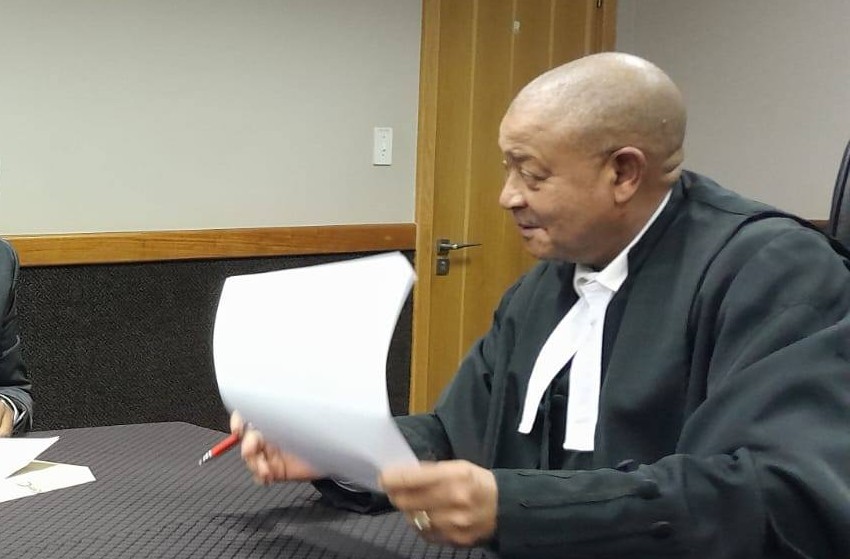
- Limpopo High Court Judge President Phatudi violated Articles 12 and 13 of the Code of Judicial Conduct, received a reprimand, and bias was found.
- Complaint by Adv Sekgame Shadrack Tebeile investigated under Section 17 of the Judicial Services Commission Act, prior involvement cited.
- The committee relied on documentary evidence due to conflicting testimony; a formal recusal application was deemed unnecessary.
Limpopo Judge President George Phatudi has received a formal reprimand from the Judicial Conduct Committee, led by Justice Bess N Jafta, after it found that his previous role as an attorney in a 2013 dispute created reasonable concerns about bias when he later presided over related matters.
Advocate Sekgame Shadrack Tebeile filed the complaint in February 2024, which was examined under section 17 of the Judicial Services Commission Act.
The 2013 case occurred in the Nebo Magistrate’s Court, Limpopo, where George Phatudibe, before becoming Judge President, represented the respondent, Sello Mahlagaume Kgolane. The applicant, Keafisha Ernestina Ratale, aimed to regain possession of erf 819-KS, Vergelegen, Jane Furse, claiming it was wrongfully occupied by Kgolane. After hearing arguments around 8 July 2013, the court dismissed the application in Kgolane’s favour and ordered Ratale to cover the costs.
The complainant in the 2024 case alleged that Judge President Phatudi oversaw a later High Court case involving the same parties and subject without recusing himself, raising concerns about impartiality. “The respondent’s prior involvement created a reasonable concern about bias,” Justice Jafta noted in the ruling, dated 31 October 2025.
Breach of judicial code leads to reprimand
The Committee reviewed Articles 12 and 13 of the Code of Judicial Conduct, which require judges to avoid handling cases they previously worked on and to recuse themselves in instances of real or perceived conflict. Article 12(3) states judges cannot preside over matters where they acted as practitioners, and Article 13 mandates recusal when there is a reasonable suspicion of bias.
“The test for recusal is whether a reasonable litigant would perceive bias,” the ruling states, referring to the Constitutional Court in Bernert v ABSA Bank Ltd. The Committee found that even though Judge President Phatudi claimed the parties agreed to move forward without a recusal application, his prior role created the appearance of partiality.
The reprimand under Section 17 is the Committee’s suggested measure for less serious misconduct. Justice Jafta stressed that judges who do not recuse themselves act unconstitutionally and that their decisions may be void.
Conflicting testimony resolved through documentation
During the inquiry, both sides provided conflicting accounts. The complainant asserted that Judge President Phatudi threatened a costs order to prevent recusal, while the judge claimed he only mentioned that a formal application was needed.
The Committee turned to documentary evidence to clear up these discrepancies, stating: “Oral testimony varied, and the Committee could not determine which account was accurate, relying instead on documentary evidence.”
Get your news on the go. Click here to follow the Conviction WhatsApp channel.


