

Skip to content
Close Menu
ConvictionConviction
  • Home
  • Law & Justice
  • Special Reports
  • Opinion
  • Ask The Expert
  • Get In Touch

Subscribe to Updates

Get the latest creative news from FooBar about art, design and business.

What's Hot

Hantavirus risk remains low in South Africa despite global concern over the Andes variant

May 17, 2026

Archbishop Tutu’s former home named global headquarters in fight against hunger

May 16, 2026

South Africa’s labour law landscape: What employees and employers need to know

May 15, 2026
Facebook X (Twitter) Instagram
Trending
  • Hantavirus risk remains low in South Africa despite global concern over the Andes variant
  • Archbishop Tutu’s former home named global headquarters in fight against hunger
  • South Africa’s labour law landscape: What employees and employers need to know
  • Tourism businesses near South Africa’s national parks call for stronger support
  • Three-year waiting period for attorneys to appear in higher courts declared unconstitutional
  • Father told to pay daughter’s university fees despite maintenance dispute
  • Man faces criminal charge for allegedly accusing another person of witchcraft
  • Community scheme conduct rules submitted without body corporate approval ruled invalid
Facebook X (Twitter) Instagram
ConvictionConviction
Demo
  • Home
  • Law & Justice
  • Special Reports
  • Opinion
  • Ask The Expert
  • Get In Touch
ConvictionConviction
Home » Makate and Vodacom prepare for the final stage in the Please Call Me legal battle
Civil Law

Makate and Vodacom prepare for the final stage in the Please Call Me legal battle

The Supreme Court of Appeal is about to decide what counts as fair compensation for Nkosana Makate’s Please Call Me idea, as his long-running dispute with Vodacom reaches a key moment.
Kennedy MudzuliBy Kennedy MudzuliOctober 27, 2025Updated:October 27, 2025No Comments
Facebook Twitter Pinterest LinkedIn WhatsApp Reddit Tumblr Email
blank
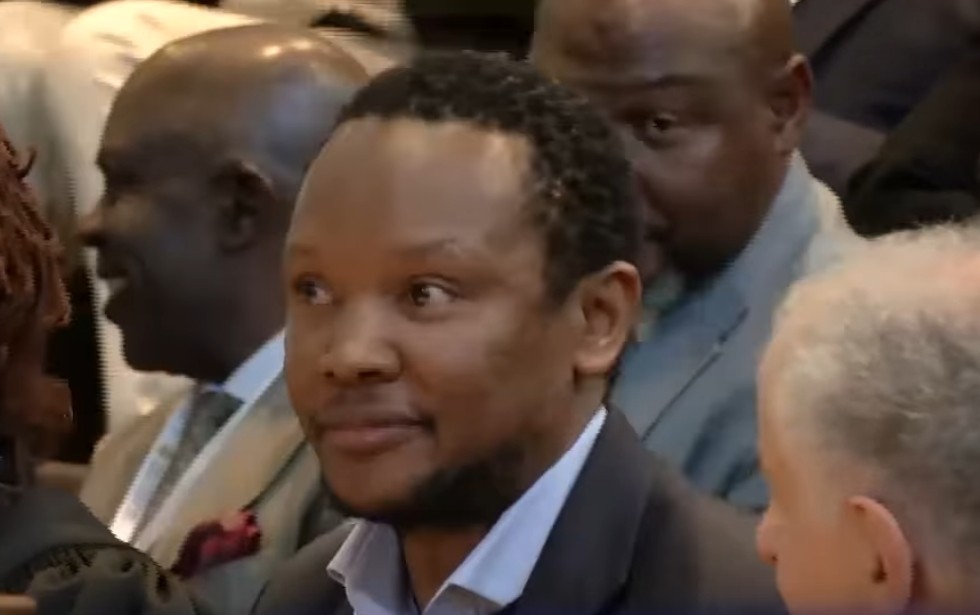
Inventor of Please Call Me, Nkosana Kenneth Makate. Picture: Screengrab
Share
Facebook Twitter LinkedIn Pinterest Email
  • Both Makate and Vodacom have submitted detailed arguments ahead of the Supreme Court of Appeal hearing in November.
  • Makate says Vodacom avoided paying for decades while profiting from his idea.
  • Vodacom defends its R47 million offer and calls the idea short-lived and overvalued.

Nearly 25 years after it began, the Please Call Me dispute between Nkosana Makate and Vodacom has reached another important legal stage. Both sides have now filed very different arguments with the Supreme Court of Appeal.

For Makate, Vodacom’s conduct reflects a long history of avoidance and delay. “Vodacom’s conduct over the past 25 years shows a company determined to escape paying a contractual debt to its contractual partner,” his papers state. He accuses the company of profiting from his innovation while “lying to the public by claiming its CEO had invented PCM.”

Makate’s case centres on his claim that Vodacom agreed to pay him a share of the revenue generated by his idea. While the Constitutional Court confirmed a binding contract exists, Makate maintains that the true dispute is the amount and definition of reasonable compensation owed to him.

Makate says the R47 million amount set by Vodacom’s CEO in 2016 is not reasonable or fair. He believes the CEO’s decision was flawed because it did not consider data showing how successful Please Call Me became.

According to Makate’s filing, an independent audit found that Vodacom sent about 23.6 million Please Call Me messages a day, generating nine million return calls within 24 hours. “This is the staggering success of Mr Makate’s PCM invention, which Vodacom says was worthless just after inception,” he explains in the court papers.

He claims that if his 5 percent entitlement had been properly calculated, he would be owed between R3 billion and R10 billion. “The R47 million is a fraction of the actual 5 percent share that the CEO found Mr Makate is entitled to, a fraction of the billions of rand that Vodacom has raked in since February 2001,” his submission reads.

Makate adds that Vodacom initially offered him nothing when negotiations began. “Vodacom’s first offer was zero Dollars, zero Euros, zero anything,” his papers state.

Vodacom argues the CEO acted fairly

Vodacom, in its own 146-page Heads of Argument, rejects Makate’s accusations and defends the CEO’s process as “careful, lawful and consistent with the Constitutional Court’s order.”

“Mr Makate worked for Vodacom. He came up with a brilliant idea. Vodacom used his idea to develop its ‘Please Call Me’ product,” the company states. “The Constitutional Court held that Vodacom had agreed to pay Mr Makate reasonable compensation for his idea. The CEO determined it in the amount of R47 million.”

Vodacom argues that Makate is now seeking to “rewrite the bargain” by demanding a percentage of revenue and an 18-year payout period, terms that were never agreed to. “His mandate did not say that Mr Makate was entitled to an ongoing or indefinite share of revenue,” the company says. “He is not entitled to an annuity for life.”

The company also disputes the long-term commercial value of the idea. “The idea no longer had any novelty value. It no longer had any commercial value,” Vodacom states. “It became public property, available free of charge to every cellphone network worldwide.”

Vodacom points out that MTN launched its “Call Me” service weeks before Vodacom rolled out PCM in 2001, showing that the concept had quickly become industry-wide. It maintains that the R47 million award “was based on fair assessment, not hindsight,” and describes it as “a very large award for an idea that was brilliant at conception but soon became public property and lost all market value.”

What the court must decide

The Supreme Court of Appeal must now weigh whether Vodacom’s CEO acted within his powers and whether his R47 million award meets the test of “reasonable compensation.” Makate argues the award is irrational and “patently inequitable,” while Vodacom claims it reflects a sound and lawful judgment based on 2001 realities.

If Makate succeeds, the SCA could substantially raise the amount owed to him, potentially into the billions. If he fails, the R47 million offer could stand as the final word on one of South Africa’s longest corporate legal battles.

A costly return to court

Beyond the arguments, Makate faces another bitter hurdle in the form of a R13 million legal bill from the Constitutional Court. Although he did not initiate the last round, the apex court ordered him to pay Vodacom’s costs.

“I do not agree with the awarding of costs in favor of Vodacom,” he said, adding that the ruling “will send a chilling message to a small man in litigation against giants like Vodacom.”

The new hearing is set for 18 November 2025, almost 25 years to the day since Makate first conceived the Please Call Me service. Despite the years of litigation, mounting costs, and corporate opposition, Makate remains firm. “Justice may be delayed, but our courts will not allow it to be denied,” he said.

Conviction.co.za

Get your news on the go. Clickhereto follow the Conviction WhatsApp channel.

Constitutional Court Nkosana Makate Please Call Me Supreme Court of Appeal Vodacom
Share. Facebook Twitter Pinterest LinkedIn Tumblr Telegram Email
Kennedy Mudzuli

    Multiple award-winner with passion for news and training young journalists. Founder and editor of Conviction.co.za

    Related Posts

    ICU doctor must face medical negligence lawsuit over patient’s death

    May 14, 2026

    Resident barred from posting defamatory statements about Manor Estates and its officials

    May 14, 2026

    North West Health Department held liable after child suffers cerebral palsy during birth

    May 14, 2026
    Leave A Reply Cancel Reply

    Prove your humanity: 4   +   3   =  

    Subscribe to our newsletter:
    Top Posts

    Making sectional title rules that work: A practical guide

    January 17, 2025

    Protection order among the consequences of trespassing in an ‘Exclusive Use Area’

    December 31, 2024

    Between a rock and a foul-smelling place

    November 27, 2024

    Irregular levy increases, mismanagement, and legal threats in a sectional title scheme

    June 2, 2025
    Don't Miss
    Special Reports
    4 Mins Read

    Hantavirus risk remains low in South Africa despite global concern over the Andes variant

    By Conviction Staff ReporterMay 17, 20264 Mins Read

    Recent international reports have raised questions about hantavirus cases tied to an outbreak on a…

    Archbishop Tutu’s former home named global headquarters in fight against hunger

    May 16, 2026

    South Africa’s labour law landscape: What employees and employers need to know

    May 15, 2026

    Tourism businesses near South Africa’s national parks call for stronger support

    May 15, 2026
    Stay In Touch
    • Facebook
    • Twitter
    • WhatsApp
    Demo
    About Us
    About Us

    Helping South Africans to navigate the legal landscape; providing accessible legal information; and giving a voice to those seeking justice.

    Facebook X (Twitter) WhatsApp
    Our Picks

    Hantavirus risk remains low in South Africa despite global concern over the Andes variant

    May 17, 2026

    Archbishop Tutu’s former home named global headquarters in fight against hunger

    May 16, 2026

    South Africa’s labour law landscape: What employees and employers need to know

    May 15, 2026
    Most Popular

    Making sectional title rules that work: A practical guide

    January 17, 2025

    Protection order among the consequences of trespassing in an ‘Exclusive Use Area’

    December 31, 2024

    Between a rock and a foul-smelling place

    November 27, 2024
    © 2026 Conviction.
    • Home
    • Law & Justice
    • Special Reports
    • Opinion
    • Ask The Expert
    • Get In Touch

    Type above and press Enter to search. Press Esc to cancel.

    Powered by
    ►
    Necessary cookies enable essential site features like secure log-ins and consent preference adjustments. They do not store personal data.
    None
    ►
    Functional cookies support features like content sharing on social media, collecting feedback, and enabling third-party tools.
    None
    ►
    Analytical cookies track visitor interactions, providing insights on metrics like visitor count, bounce rate, and traffic sources.
    None
    ►
    Advertisement cookies deliver personalized ads based on your previous visits and analyze the effectiveness of ad campaigns.
    None
    ►
    Unclassified cookies are cookies that we are in the process of classifying, together with the providers of individual cookies.
    None
    Powered by