


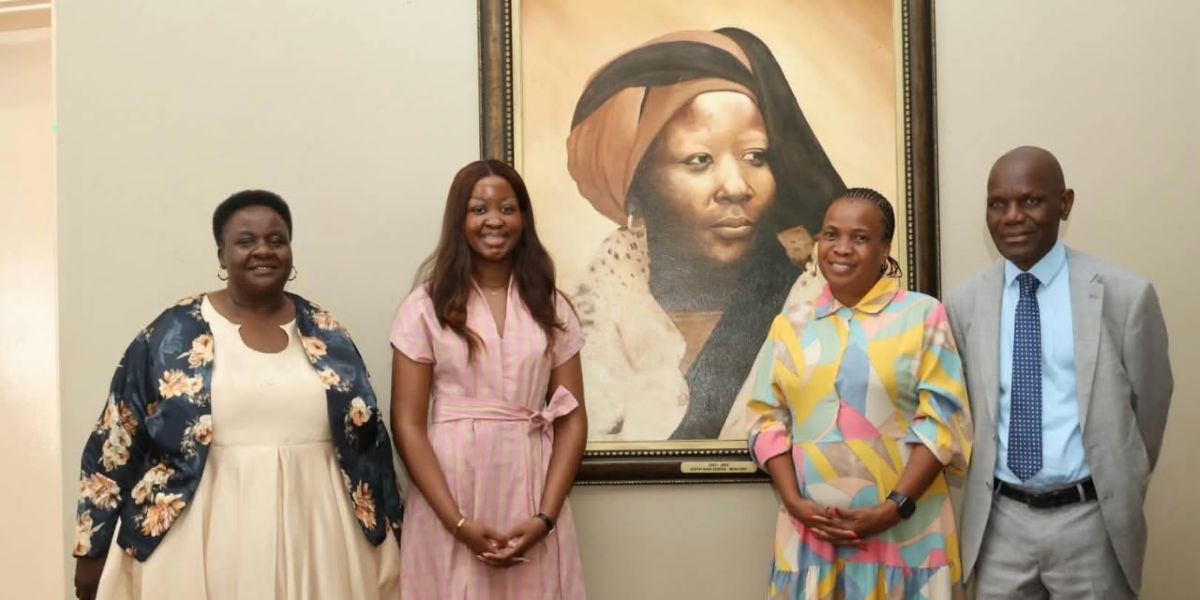
- The Modjadji royal family, Prince Lekukela Modjadji and two traditional structures, asked the court to set aside President Cyril Ramaphosa’s December 2024 recognition of Queen Masalanabo.
- The applicants argued that questions about the succession arose from her upbringing, her customary qualifications and the alleged withdrawal of her identification in 2021.
- The judge found that the applicants had not shown a lawful basis to displace her identification, set aside the recognition or require a fresh investigation.
The High Court in Pretoria has dismissed a major legal challenge to Queen Masalanabo Modjadji’s recognition as Queen of the Balobedu Nation. The President’s 2 December 2024 decision remains in place.
In a judgment delivered on Thursday, 26 November 2026, Judge MMD Lenyai dismissed an application brought by the Modjadji Royal Family, Prince Lekukela Modjadji, the Modjadji Royal Council and the Modjadji Traditional Council.
The applicants asked the court to set aside the President’s recognition of Queen Masalanabo and require the recognition of Prince Lekukela. Alternatively, they sought an investigation under Section 8(4) of the Traditional and Khoi-San Leadership Act into the circumstances of her identification as successor.
The respondents included the President, the Minister of Co-operative Governance and Traditional Affairs, Queen Masalanabo, the Premier of Limpopo, the provincial MEC responsible for traditional affairs, Dr Mathole Seforo Motshekga, the National House of Traditional and Khoi-San Leaders and the Limpopo Provincial House of Traditional and Khoi-San Leaders.
A succession dispute dating back to 2005
The dispute began after Queen Makobo Modjadji VI died in June 2005. Her daughter, Queen Masalanabo, was an infant at the time. She was recognised as successor in January 2006, with the appointment taking effect retrospectively from December 2005.
The applicants said Queen Masalanabo was taken from the royal household as an infant and, as a result, missed essential cultural education. They also cited a 2011 decision about her care arrangements, arguing that her upbringing affected her suitability for the throne.
In November 2015, the royal structures unanimously nominated Masalanabo as Queen-elect, subject to her returning to the royal household and completing the necessary preparation for office.
On 31 March 2016, former president Jacob Zuma recognised the Queenship of Balobedu under the Traditional Leadership and Governance Framework Act. The recognition was published in the Government Gazette in May 2016.
The applicants said the royal family withdrew its identification of Queen Masalanabo on 17 April 2021 and named Prince Lekukela as her replacement. They argued that this was a substantive customary decision endorsed by the royal council, not an attempt by the regent to appoint a successor. The respondents disputed that the 2021 resolutions lawfully displaced the existing succession arrangements.
Queen Masalanabo attained majority on 20 January 2023. On 23 August 2024, the President sought the views of the Limpopo Premier on her recognition. The Premier supported recognition, and the President subsequently consulted the Minister before recognising Queen Masalanabo on 2 December 2024.
Competing accounts of the royal succession
The applicants argued that the 2015 nomination had been conditional and that Queen Masalanabo had not completed the customary preparation required for her installation. They relied on correspondence with the Department of Traditional Affairs, including a request for recognition of Prince Lekukela, and an anthropological report prepared by the experts, identified in the judgment only as Professors De Beer and Van Vuuren.
The report examined customary practices, gender, initiation, upbringing and how successors are prepared within the Balobedu royal family. The applicants argued that its findings supported their claim that Masalanabo had not acquired the necessary customary qualifications.
Queen Masalanabo disputed the applicants’ account. She maintained that her upbringing and education had been necessary for her welfare and that her care arrangements had not amounted to a rejection of her royal identity or succession.
Motshekga, who had been involved in her upbringing, also disputed the suggestion that she had been deliberately deprived of customary preparation. He said visits and contact with the royal family had been permitted and that the applicants’ account did not reflect the circumstances of her childhood.
Judge Lenyai considered both accounts and found that, although the anthropological report contained relevant evidence, it did not resolve the disputed customary facts on its own.
The judge also stressed that the 2016 recognition remained legally in force and could not be set aside simply because disagreements later arose within the royal family.
No automatic displacement of the Queen
A central question was whether the alleged withdrawal of Queen Masalanabo’s identification in 2021 had lawfully displaced the succession arrangements established in 2015. Judge Lenyai found that the applicants had not shown that the alleged withdrawal met the applicable customary and statutory requirements.
The judgment distinguished between the identification of a successor by the royal family and the President’s statutory recognition of that person. The judge also rejected the argument that the resolutions relied on by the applicants could replace the existing recognition of a female successor with recognition of a male successor.
“I accordingly accept the respondents’ submission that a king cannot simply be substituted for a queen by reason of the resolutions relied upon here,” Judge Lenyai stated. The judge clarified that the finding did not settle every question about the future development of Balobedu customary law or determine the rules governing future succession.
Investigation under leadership legislation not justified
The applicants further argued that the information available to the President should have triggered an investigation under Section 8(4) of the Traditional and Khoi-San Leadership Act. The provision requires an investigative committee if there is evidence or an allegation that a successor was not identified in accordance with customary law and customs.
Judge Lenyai found that the applicants had not shown that the legal threshold for an investigation had been met. The court also considered the applicants’ complaint that the President had failed to respond adequately to their request for Prince Lekukela’s recognition.
The judgment reviewed correspondence dating back to April 2022. This included a response from the Director-General of Traditional Affairs on the legal implications of recognising a king when a queenship had already been gazetted. In December 2023, the family was asked to clarify the customary rules and identify the structures responsible for the nomination.
Judge Lenyai found that the correspondence showed the request had been considered, but did not amount to a final presidential decision to recognise Prince Lekukela or refuse the earlier request.
The judge concluded that the applicants had not shown that the President’s decision was irrational, procedurally unfair or unlawful.
Application dismissed
Judge Lenyai dismissed the application. The court refused to set aside Masalanabo’s recognition, require the recognition of Prince Lekukela or order an investigation into the succession. The judge granted condonation for the late filing of notices and affidavits by the third and sixth respondents.
The court made no order as to costs, including the costs of the condonation applications. Each party must therefore meet its own legal expenses. Queen Masalanabo’s recognition as Queen of the Balobedu Nation therefore remains in place.
Get your news on the go. Click here to follow the Conviction WhatsApp channel.
