


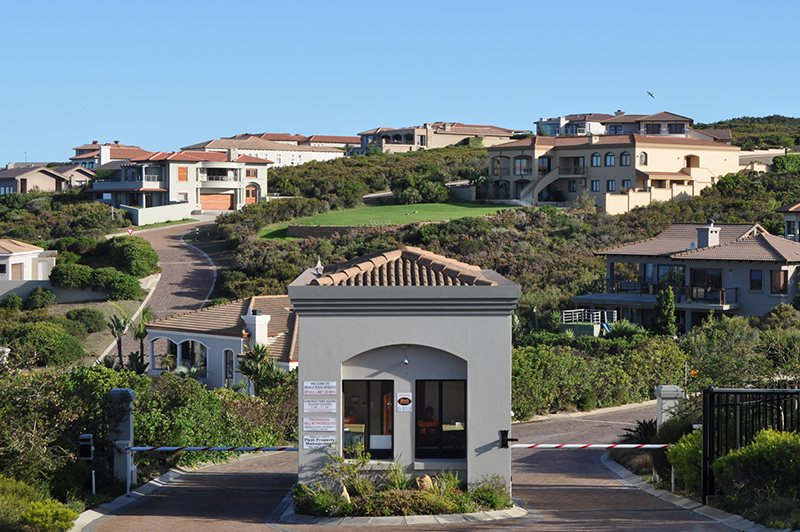
- Trustees unlawfully approved building plans that breached height and design controls, undermining community trust in the governance framework.
- Court confirms architectural guidelines are binding and not subject to trustee discretion, reinforcing the need for transparent and accountable estate management.
- Construction halted until plans undergo proper review and members have their say, protecting the integrity of Whale Rock Heights.
Construction on Erf 8 in Whale Rock Heights Private Estate has been halted by court order following a homeowner’s urgent application to review and set aside approvals granted by the estate’s trustees.
The Western Cape High Court found that the Whale Rock Heights Homeowners Association unlawfully condoned major departures from its own architectural controls, including height restrictions and roof pitch requirements.
The applicant, Thanapal Pillay, argued that the trustees approved building plans submitted by fellow resident Deon Steenkamp without proper compliance with the estate’s Constitution, Architectural Guidelines, Conduct Rules, and Building Regulations. The court agreed, finding that the trustees failed to enforce mandatory controls and acted beyond their powers.
“The enforcement of the Architectural Guidelines of and on behalf of the 1st respondent, by the Trustees, is peremptory,” wrote Judge DM Thulare. “These are not merely a piece of advice, but general rules or principles required to be observed.”
Height breach was major, not minor
At the heart of the dispute was the height of Steenkamp’s building, which exceeded the prescribed limits by over a metre at multiple levels. The Site Analysis: Building Control Plan for Erf 8 set the wall plate level at 108.0m above mean sea level, yet the actual construction reached 109.60m. The ground floor was built at 106.0m instead of the preferred 105.0m contour, and the roof pitch initially failed to meet the minimum 17.5-degree requirement.
“It becomes more serious when it is the lower platform height, the upper ground floor, and the ceiling or wall plate level, which individually are a metre more and collectively increase the extent of the departure,” the judgment stated.
Despite these deviations, the trustees approved the plans without referring the matter to a General Meeting of members, as required for major waivers. The court found this conduct ultra vires and ordered the approvals reviewed and set aside.
Governance framework ignored and members sidelined
Steenkamp submitted three versions of his building plan, withdrawing the second after objections and submitting a third without neighbour consultation. He argued that the final plan contained no controversial features and did not require comment. The court disagreed, finding that the height breaches were substantial and materially affected neighbouring properties and the estate’s aesthetic integrity.
“The 2nd respondent cannot do as he pleases, and is duty-bound to play by the rules of the game for which he signed up in the Estate,” Thulare wrote. “He could not simply proceed to construct and force his own understanding of the restrictions upon other members of the 1st respondent, outside the General Meeting.”
The judgment also criticised the trustees for failing to use internal dispute resolution mechanisms available under the constitution and conduct rules. “The Trustees did not use their discretion to deal with the applicant’s complaints, as well as the other homeowners who also complained about the 2nd respondent’s construction of his dwelling, in terms of the internal processes at their disposal.”
Architectural controls are binding and not optional
Judge Thulare emphasised that architectural controls in lifestyle estates are enforceable design principles that protect community harmony, scenic views, and shared expectations. These controls are not discretionary and must be applied consistently.
“The architectural controls dictate the rules for design and building. Their main purpose is to ensure that buildings and landscapes within a community share a cohesive and pleasing look.”
Construction on Erf 8 has been interdicted pending lawful reconsideration of the plans. Steenkamp must submit the record of the General Meeting’s decision on his plans for Erf 9 within 10 days. Costs were awarded against him, including expert fees and senior counsel costs.
Get your news on the go. Click here to follow the Conviction WhatsApp channel.


