






- Pace’s attorneys repeatedly missed deadlines that governed his appeal against his convictions and sentence.
- The SCA found the explanation for the delays inadequate and criticised the standard of legal representation in the matter.
- The court said the failures wasted judicial resources and affected other litigants whose appeals were ready to be heard.
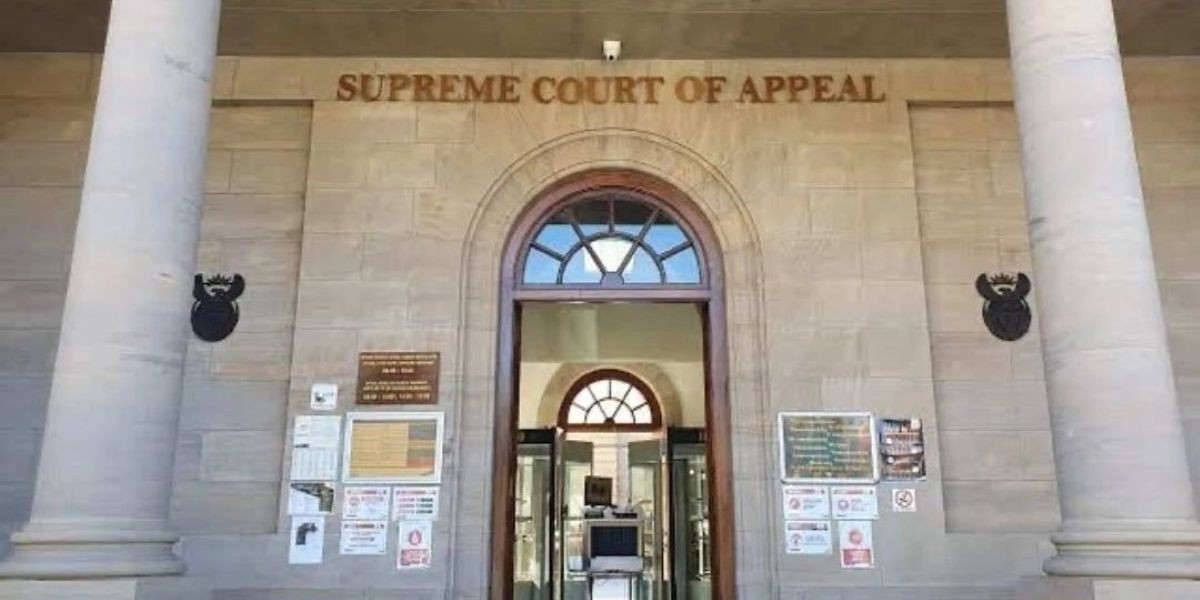
The prosecution of Warren Carl Pace’s appeal was repeatedly disrupted by failures from the legal practitioners handling his case. The Supreme Court of Appeal has now found that important procedural steps were either taken late or not taken at all.
Pace was prosecuted in the Wynberg Regional Court on several charges involving children, including sexual grooming, exposing children to pornography, rape, sexual assault and child abuse. He was convicted on certain counts and sentenced to a cumulative 15 years’ imprisonment.
The High Court in the Western Cape later granted him leave to appeal. It released him on bail while he waited for his appeal. The court subsequently acquitted him on three counts but kept the total sentence at 15 years’ imprisonment, declared him unfit to possess a firearm and ordered that his name be entered on the National Register for Sex Offenders.
Deadlines repeatedly missed
The SCA granted Pace special leave to appeal on 29 November 2023. His notice of appeal was due by 28 January 2024 but was only filed on 20 March 2024, along with an application for condonation.
The problems continued when the appeal record, due on 20 June 2024, was filed on 19 July 2024 without an application for condonation. His heads of argument were due on 30 August 2024 but were only filed on 1 December 2025. By then, the appeal had lapsed.
Although Pace’s attorneys knew this, they did not bring the required application to reinstate the appeal. The SCA therefore dealt only with the application for condonation for the late noting of the appeal.
Court rejects explanation
The explanation for the initial delay came from Charmaine Dippenaar, a senior paralegal at William Booth Attorneys. She said the firm had been told in December 2023 that Pace had been granted special leave to appeal and that an attorney, Rejean Maralack, was tasked with preparing the notice.
According to Dippenaar, the notice was not prepared before the firm’s December shutdown, despite repeated assurances from Maralack. She said Maralack was later medically booked off and resigned from the firm with immediate effect. Another staff member was then appointed to prepare and finalise the notice.
The SCA found the explanation inadequate because important details were missing and the allegations were not supported by confirmatory affidavits. There were no affidavits from Maralack or Booth, and Dippenaar did not explain why supporting evidence could not be obtained.
Judge O Mooki said there was simply no credible explanation for why the condonation application had taken so long to file. “It is plain from this timeline that the appellant’s attorneys adopted a lackadaisical approach to his appeal,” Judge Mooki said.
Court warns of wider consequences
The SCA also found that Pace had not properly established his prospects of success. The application merely stated that he had reasonable prospects without pointing to anything specific in the record to show why the appeal should succeed.
The court said it was not its responsibility to search through the record to find arguments that had not been properly presented by the applicant. The SCA also criticised the State for not complying with its own procedural obligations. Its heads of argument were dated 9 October 2024 but did not bear the Registrar’s stamp, and no explanation was given for the failure.
The court said the procedural failures had consequences beyond the parties because judges had been allocated to the appeal and had prepared for the hearing. “The appeal was not heard on the merits because of the failure by practitioners to perform their duties, both to the Court and to their respective clients,” Judge Mooki said.
The court said this wasted judicial resources and affected other litigants whose appeals were ready to be heard.
SCA refuses condonation
The court stressed that legal practitioners have a duty to their clients and to the court, especially in matters that affect a person’s liberty. “Practitioners have a duty to do right by their clients, more so in matters affecting the liberty of a person,” Judge Mooki said.
The SCA found that the conduct of the practitioners fell below the required standard and that it would not be in the interests of justice to grant condonation.
Condonation was refused, and Pace’s appeal was struck from the roll. The court ordered, however, that Pace would not be liable for the costs of the condonation application and his appearance on 17 August 2026.
With the appeal not heard on its merits, the 15-year sentence imposed by the High Court remains in place.
Get your news on the go. Click here to follow the Conviction WhatsApp channel.


