- South African Postbank claims that terminating its agreement with SASSA will deprive over three million grant beneficiaries of protections against banking costs.
- SASSA argues that Postbank’s case lacks legal grounds, dismisses the subsidy claim, and blames Postbank for the deterioration in relations.
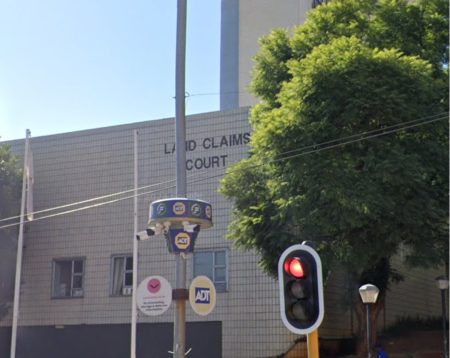
- The Constitutional Court will hear South African Postbank SOC Limited v South African Social Security Agency and Others on Tuesday, 12 May 2026.
Millions of social grant beneficiaries could soon lose protections that help them avoid bank charges. This dispute arises as South African Postbank and SASSA prepare for a courtroom battle regarding their payment agreement.
Postbank asserts that ending the agreement will directly impact grants intended for necessities like food, transport, and basic survival. SASSA contends that Postbank is trying to prevent the lawful end of a contract it has repeatedly failed to fulfil.
The Constitutional Court will hear South African Postbank SOC Limited v South African Social Security Agency and Others on Tuesday, 12 May 2026, in a battle over grant payment protections that millions depend on.
Postbank CEO Ntomboxolo Nikki Mbengashe told the court in the founding affidavit, “It is clear that social grant beneficiaries cannot afford deductions from their grants, which are meant for their basic needs, as every cent counts.”
Mbengashe added, “This application is not a commercial matter; it is fundamentally a human rights case of significant public importance.”
What Postbank says beneficiaries could lose
Postbank states it currently pays grants to 3,057,307 beneficiaries across South Africa. This includes 419,588 old age grant recipients, 101,936 disability grant recipients, 1,428,067 child grant beneficiaries, 11,056 other beneficiaries such as military veterans and foster grant recipients, and 1,080,101 Social Relief of Distress recipients.
According to Postbank, the Master Services Agreement has allowed grant beneficiaries to enjoy free balance inquiries, free withdrawals at participating merchants, free cash withdrawals at Postbank locations, unlimited point-of-sale purchases, free PIN resets, free card replacements in certain situations, and SMS notifications when grant funds are available.
Postbank notes that beneficiaries can access funds through major retailers like Pick n Pay, Spar, Shoprite, Usave, Boxer, and many spaza shops linked through payment partners, allowing low-income households to receive grants without fees, reducing their monthly assistance.
Mbengashe warned, “The constitutional right to social assistance is essential for many, especially children, the elderly, and the poor. It provides the foundation for a life of dignity, equality, and freedom.”
Postbank indicates that if the agreement ends, beneficiaries may encounter monthly service fees of R7, R2 for balance inquiries, R14.56 for ATM cash withdrawals, R22 for bank statements, and R80 for card replacements. According to Postbank, these are costs that many grant recipients cannot bear.
How the dispute reached the Constitutional Court
Postbank claims SASSA notified it about 18 months ago regarding plans to terminate the Master Services Agreement. The two parties exchanged messages throughout 2024 and 2025, but they could not resolve their differences.
On 25 July 2025, Postbank formally announced a dispute and requested that the agreement stay in place while resolutions were sought. Postbank asserts that SASSA declined to engage in the dispute process at the CEO level but agreed to escalate the issue to higher authorities overseeing both organisations.
Despite this, SASSA publicly declared on 20 August 2025 that the agreement would end on 30 September 2025.
Mbengashe further wrote, “Even with ongoing discussions and no meetings between the Ministers, SASSA announced on 20 August 2025 that the MSA would end on 30 September 2025, undermining the agreed resolution process.”
Postbank then took the issue to the Inter-Ministerial Committee on Comprehensive Social Security, arguing that if the termination proceeds, the resolution process would become meaningless.
After its urgent application was dismissed with costs in the Gauteng High Court, Pretoria, Postbank sought direct intervention from the Constitutional Court.
SASSA disputes Postbank’s claims
SASSA strongly disagrees with Postbank’s viewpoint, stating that this issue is not a constitutional crisis but rather a contractual dispute that Postbank has reframed in human rights terms.
SASSA claims that the so-called subsidies Postbank refers to are not direct payments to beneficiaries but service fees owed to Postbank under the Master Services Agreement. Furthermore, it indicates that the legal framework Postbank relies on was revoked in 2022.
In its response, SASSA stated, “The subsidies mentioned by the Applicant are service fees that accrue to the Applicant under the MSA... It is evident that the temporary injunction Postbank seeks is without any valid legal claim.”
SASSA also points out that Postbank has repeatedly failed to meet critical operational responsibilities, citing service disruptions during payment periods, insufficient coverage in rural and township areas, cash shortages at branches, and poor contingency planning.
According to SASSA, Postbank has known since December 2023 that the termination was approaching, and its urgent legal action is a last-ditch attempt to halt a decision already under discussion.
Get your news on the go. Click here to follow the Conviction WhatsApp channel.