


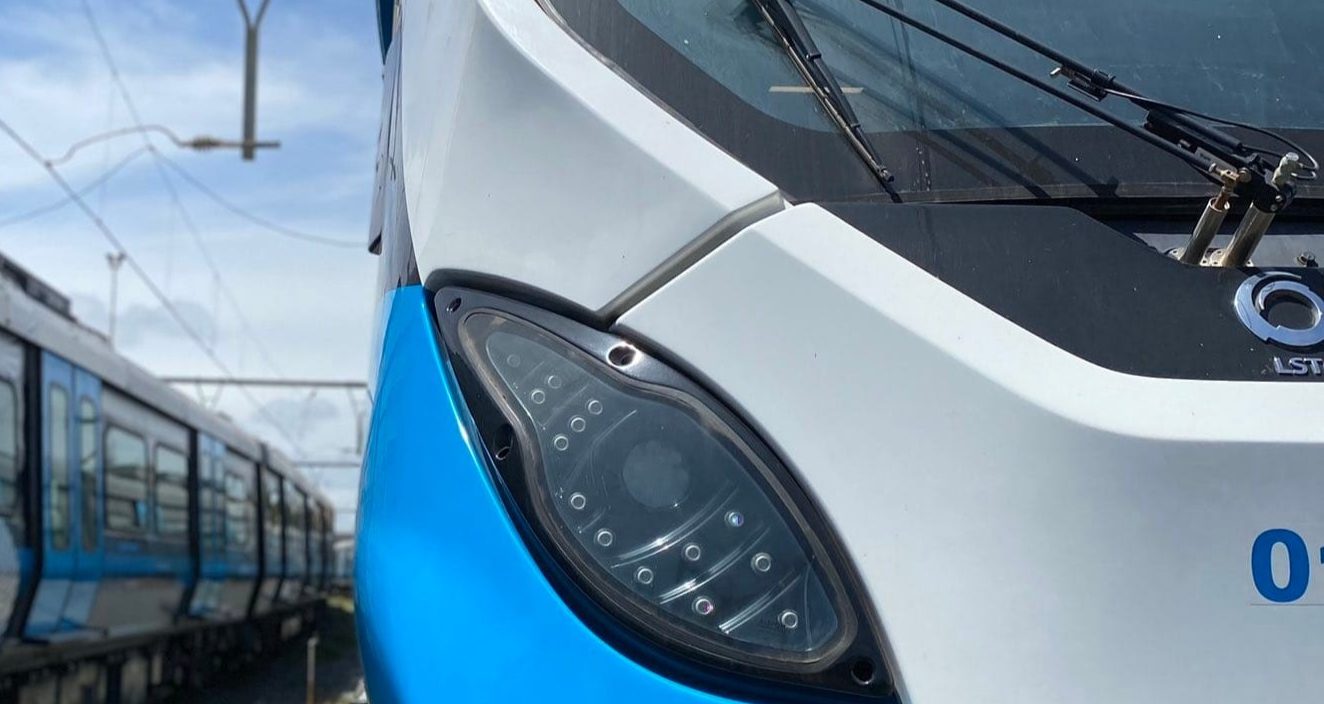
- The High Court held that PRASA was 100 percent liable after a commuter was pushed from an open train door, rejecting claims of contributory negligence and finding that the risk of harm was clearly foreseeable.
- Acting Judge M Pienaar ruled that allowing a train to move with its doors open amounted to a failure to take reasonable steps to protect commuters.
- The court awarded R2.55 million in general damages and loss of earnings, postponed future medical expenses, and ordered PRASA to pay costs on the High Court scale.
A commuter who was pushed from an open train door has been awarded R2.55 million after the High Court in Pretoria found that the Passenger Rail Agency of South Africa (PRASA) was fully liable for her injuries.
Acting Judge M Pienaar concluded that operating a train with open doors created a foreseeable and preventable danger to passengers and that there was no contributory negligence on the part of the injured commuter.
Dimakatso Rachel Tswayi brought a claim for damages after she was injured on 17 April 2015 at Devnish station. Although PRASA initially offered to settle the merits on a 90 percent basis, Tswayi rejected the proposal and insisted on full liability. The matter went ahead on affidavit in line with Rule 38(2) of the Uniform Rules.
Background and the parties’ arguments
Tswayi’s case was that she was pushed out of the open doors of a moving train. In her statement to the police, she explained that while she was travelling home from school, an unknown man grabbed her cellphone and jumped out of the moving train. She stood up and moved toward the door while other commuters were also standing. She was then pushed from behind and fell onto the platform.
PRASA did not deny that it has a duty to make sure coach doors stay closed while the train is moving. However, it argued that Tswayi put herself in harm’s way by reacting to the theft and by standing near a door that was allegedly being deliberately held open by someone else. In its plea, PRASA denied breaching any duty of care and claimed that the sole cause of the incident was Tswayi’s own negligence, arguing that she failed to avoid the incident and did not keep a proper lookout.
Court’s findings on negligence
Judge Pienaar used the well-established test for delictual liability, asking whether a reasonable person in PRASA’s position would have foreseen the possibility of harm and taken steps to prevent it.
The court concluded that PRASA failed to take reasonable steps to avoid the risk. Judge M Pienaar said, “I find that the defendant failed to take reasonable steps to avert the risk, in that it failed to ensure that the train doors can close.” The judge added that a reasonable person would have foreseen the possibility of injury or death if someone fell or was pushed out the door on the far side and landed on the ground.
The court made it clear that leaving train doors open is inherently dangerous. Acting Judge M Pienaar noted, There can be no doubt that leaving the train doors open is a danger to commuters who board that train, as he or she could slip, be pushed, lose their balance, fall from the train, and get hurt.
The judge also held that PRASA should have foreseen that letting a train move with its doors open could lead to a commuter falling and getting injured, and found that Tswayi’s injuries were the result of the agency’s failure to guard against that risk.
Supporting this reasoning, the court referred to Transnet Ltd t/a Metro Rail v Tshabala, where it was held that a reasonable person in PRASA’s position would not have allowed the train to run with the coach doors open, knowing it would tempt passengers to board while the train was moving and that this could be dangerous.
Judge Pienaar also pointed out that the Constitutional Court has previously found that PRASA’s failure to ensure train doors are closed gives rise to negligence, given the risks involved and the duties owed to commuters.
Crucially, the court rejected any suggestion that Tswayi tried to board a moving train. It found that she was pushed by other commuters while she was already standing inside the train, securing herself. The judge concluded there was no contributory negligence and that Tswayi was entitled to recover 100 percent of her proven damages.
Quantum and order
At trial, the parties agreed that past and future loss of earnings would be settled in the amount of R2 million. Tswayi also accepted R550 000 in general damages. The issue of future medical expenses was postponed sine die to allow for amendment of the claim.
The court ordered PRASA to pay Tswayi R2.55 million within 30 days of the order. If payment was not made, interest at 11.25 percent per year would accrue from the 31st day. PRASA was also directed to pay Tswayi’s taxed or agreed party and party costs on the High Court scale, including medico-legal reports, counsel’s fees, and related litigation expenses.
The issue of future medical expenses still needs to be decided.
Get your news on the go. Click here to follow the Conviction WhatsApp channel.
