Skip to content
Close Menu
ConvictionConviction
  • Home
  • Law & Justice
  • Special Reports
  • Opinion
  • Ask The Expert
  • Get In Touch

Subscribe to Updates

Get the latest creative news from FooBar about art, design and business.

What's Hot

Unfair dismissal in South Africa: What the law says, and where things go wrong

June 5, 2026

High Court rules Bitcoin is both money and capital under SA’s exchange control laws

June 5, 2026

Authorities fail to overturn ruling linked to cyclist’s fall into hidden 6.2-metre culvert

June 5, 2026
Facebook X (Twitter) Instagram
Trending
  • Unfair dismissal in South Africa: What the law says, and where things go wrong
  • High Court rules Bitcoin is both money and capital under SA’s exchange control laws
  • Authorities fail to overturn ruling linked to cyclist’s fall into hidden 6.2-metre culvert
  • Municipality cannot reopen a case settled by a binding plea and sanction agreement
  • FSCA imposes R5.39 million in penalties on financial services firms
  • Wits student wins leave to appeal refusal to renew 2026 registration
  • Africa Day celebrations and the enduring gendered contradictions of African unity
  • Businesses urged to make only provable advertising claims
Facebook X (Twitter) Instagram
ConvictionConviction
Sonneblom
  • Home
  • Law & Justice
  • Special Reports
  • Opinion
  • Ask The Expert
  • Get In Touch
ConvictionConviction
Home » Train survivor wins R6.4 million after court rejects ‘shorter life expectancy’ argument
Civil Law

Train survivor wins R6.4 million after court rejects ‘shorter life expectancy’ argument

High court says PRASA must fully compensate amputee passenger, rules that damages cannot be reduced using discriminatory life tables.
Kennedy MudzuliBy Kennedy MudzuliFebruary 2, 2026Updated:February 2, 2026No Comments
Facebook Twitter Pinterest LinkedIn WhatsApp Reddit Tumblr Email
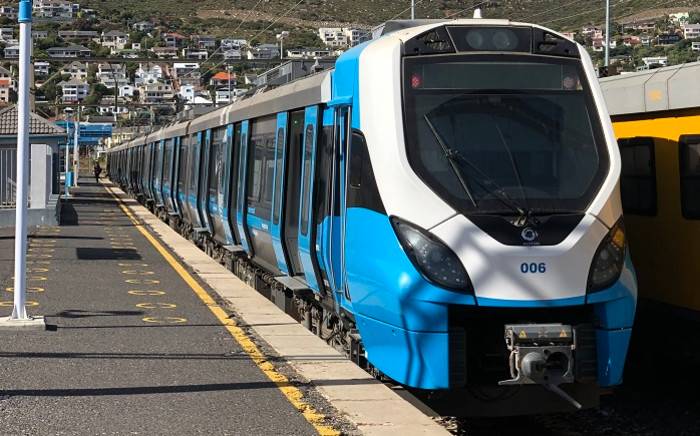
The High Court held PRASA liable to compensate a Gugulethu passenger who was pushed from a moving carriage and permanently injured.
Share
Facebook Twitter LinkedIn Pinterest Email
  • Court awards R6.4 million after 50 percent apportionment, including general damages and lifetime medical costs.
  • Judge rejects use of lower life expectancy tied to income level, finding the approach unfair and discriminatory.
  • PRASA must also fund lifelong transport, prosthetics, home assistance, and companion care.

A Gugulethu man who lost his lower leg after being pushed from a moving train has secured a major damages award after the Passenger Rail Agency of South Africa was ordered to pay more than R6.4 million for the long-term consequences of his injuries.

Western Cape High Court’s Acting Judge F Moosa held that Aviwe Hopewell Tobi must be compensated for the full reality of life as an amputee, including prosthetic replacements, surgeries, physiotherapy, transport, home help, and loss of earnings.

Crucially, the court refused to reduce his claim by assuming he would live a shorter life because of his income or socio-economic status. The judge described this method as unfair and constitutionally troubling.

The ruling follows a 2013 incident near Bonteheuwel, when Tobi was pushed from a moving Metrorail train and suffered catastrophic injuries, including a below-knee amputation, fractures, grafted wounds, and permanent scarring.

A life permanently altered

Tobi was 25 when the accident happened. He spent seven weeks in hospital and underwent multiple surgeries. Doctors amputated his right leg below the knee and performed skin grafts on his left ankle and foot. Years later, he still experiences pain, limited endurance, and mobility problems.

Medical experts agreed he will never regain normal function. He cannot run, struggles to walk long distances, and will eventually rely partly on a wheelchair. He will need new prosthetic limbs every few years for the rest of his life.

The court recorded that future treatment will likely include further reconstructive surgery, possible ankle fusion surgery, repeated physiotherapy, and ongoing assistive devices.

Judge Moosa accepted that these are not luxuries but necessities flowing directly from the accident. “He suffered severe injuries which caused him physical pain and severe emotional stress,” one medico-legal report noted, a finding the court accepted.

The fight over life expectancy

The most contested issue was not the injuries themselves, but how long Tobi is expected to live.

PRASA’s actuary argued the court should use a modified actuarial life table that links life expectancy to income brackets. Because Tobi’s projected earnings were modest, this method would reduce his expected lifespan and, in turn, cut his future damages. The judge rejected this outright.

He found that both the old apartheid-era tables and newer income-based versions risk unfair discrimination. Using a lower life expectancy because someone is poorer, the court said, undermines equality and dignity.

In one of the judgment’s most important findings, the court held that life tables are only guides and must be adapted to avoid injustice. The judge wrote that courts must avoid “a rigid approach” and ensure results are “contextually appropriate and fair.”

He ultimately fixed Tobi’s life expectancy at 71.5 years, which was longer than PRASA proposed, and this increased the value of future care and prosthetic costs.

What the court awarded

After applying a 50 percent apportionment agreed between the parties, the court ordered PRASA to pay R6 407 053.60.

This includes general damages for pain, suffering, disfigurement, and loss of amenities of life; past and future loss of earnings; and millions for future medical and related expenses, such as prosthetics, surgeries, and therapy.

The judge awarded R1.85 million for general damages alone, noting that the accident struck when Tobi was “in the full bloom of life” and permanently curtailed his independence.

Transport and daily living support

The court also recognised the everyday realities of living with a disability. PRASA must pay for Tobi’s transport to medical appointments. For most of his life, costs will be calculated using Golden Arrow Bus Services fares. In the last two decades of his life, when he is expected to slow down further, private rides, such as Uber, had to be funded.

A companion must also be paid to accompany him to appointments. The court ordered payment for home maintenance help and later-life domestic assistance, recognising that heavy tasks like lifting, cleaning, and repairs are now beyond him.

A judgment with wider impact

Judge Moosa warned against methods that effectively value poorer lives as shorter and cheaper to compensate. He stressed that constitutional rights to equality and dignity must inform how actuarial tools are used.

Conviction.co.za

Get your news on the go. Click here to follow the Conviction WhatsApp channel.


Damages awards High Court judgments personal injury law PRASA litigation Public transport safety
Share. Facebook Twitter Pinterest LinkedIn Tumblr Telegram Email
Kennedy Mudzuli

Multiple award-winner with passion for news and training young journalists. Founder and editor of Conviction.co.za

Related Posts

Authorities fail to overturn ruling linked to cyclist’s fall into hidden 6.2-metre culvert

June 5, 2026

Toddler’s future forever changed after an accident just before his third birthday

June 4, 2026

Sportscene lawyers ordered to pay costs after appeal delayed by flawed court record

June 2, 2026
Leave A Reply Cancel Reply

Prove your humanity: 9   +   1   =  

Subscribe to our newsletter:
Top Posts

Making sectional title rules that work: A practical guide

January 17, 2025

Protection order among the consequences of trespassing in an ‘Exclusive Use Area’

December 31, 2024

Between a rock and a foul-smelling place

November 27, 2024

Irregular levy increases, mismanagement, and legal threats in a sectional title scheme

June 2, 2025
Don't Miss
Employment and Labour Law Series
7 Mins Read

Unfair dismissal in South Africa: What the law says, and where things go wrong

By Ann-Suhet MarxJune 5, 20267 Mins Read

Unfair dismissal is one of the most common workplace disputes in South Africa. Understanding the rules can help both employees and employers avoid costly mistakes.

High Court rules Bitcoin is both money and capital under SA’s exchange control laws

June 5, 2026

Authorities fail to overturn ruling linked to cyclist’s fall into hidden 6.2-metre culvert

June 5, 2026

Municipality cannot reopen a case settled by a binding plea and sanction agreement

June 5, 2026
Stay In Touch
  • Facebook
  • Twitter
  • WhatsApp
Demo
About Us
About Us

Helping South Africans to navigate the legal landscape; providing accessible legal information; and giving a voice to those seeking justice.

Facebook X (Twitter) YouTube WhatsApp Twitch RSS
Latest posts

Making sectional title rules that work: A practical guide

January 17, 2025

Protection order among the consequences of trespassing in an ‘Exclusive Use Area’

December 31, 2024

Between a rock and a foul-smelling place

November 27, 2024
OUR PICKS

Agricultural advisors declared scientists in landmark Labour Court ruling

February 17, 2026

R13,914 debt triggers sale of R380 000 home, transfer halted amid execution flaws

April 20, 2026

Understanding employee rights, workplace protections and grievance resolution in South Africa

June 8, 2025
© 2026 Conviction.
  • Home
  • Law & Justice
  • Special Reports
  • Opinion
  • Ask The Expert
  • Get In Touch

Type above and press Enter to search. Press Esc to cancel.

Powered by
►
Necessary cookies enable essential site features like secure log-ins and consent preference adjustments. They do not store personal data.
None
►
Functional cookies support features like content sharing on social media, collecting feedback, and enabling third-party tools.
None
►
Analytical cookies track visitor interactions, providing insights on metrics like visitor count, bounce rate, and traffic sources.
None
►
Advertisement cookies deliver personalized ads based on your previous visits and analyze the effectiveness of ad campaigns.
None
►
Unclassified cookies are cookies that we are in the process of classifying, together with the providers of individual cookies.
None
Powered by