


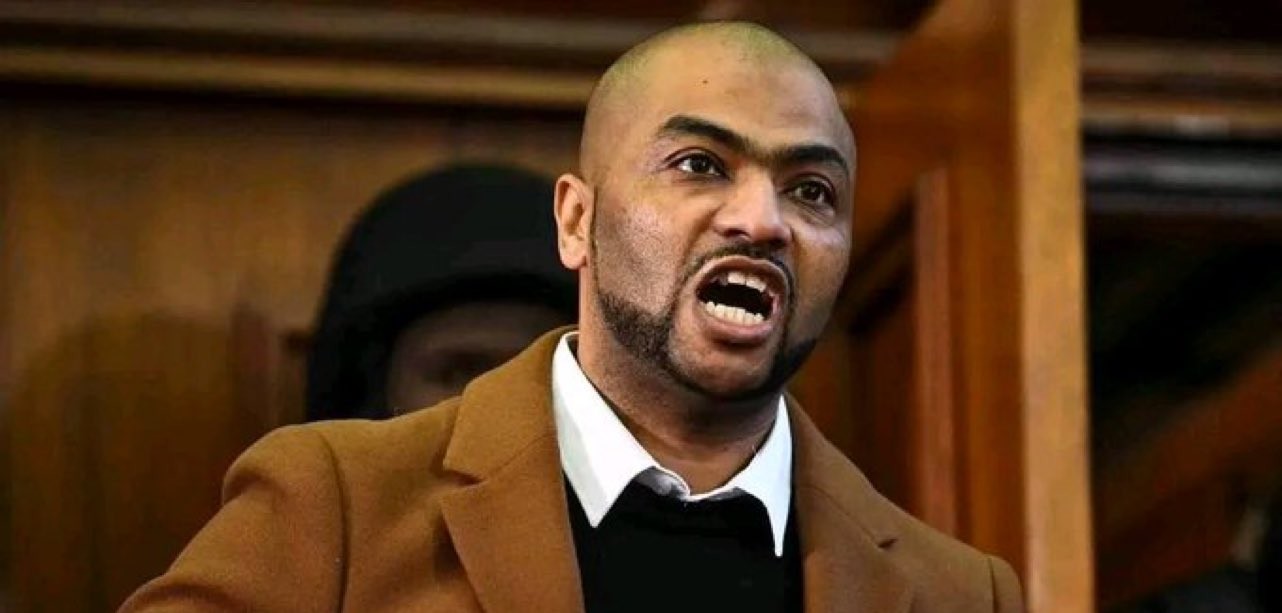
- Defence lawyer Moafrika Wa Maila reflects on the difficult experience of representing a client already judged by the public, and the professional duty to fight for every client’s right to legal representation in court.
- The opinion piece argues that refusing difficult or unpopular cases amounts to discrimination, because every accused person has a constitutional right to legal representation of their choice.
- Maila says difficult cases test a lawyer’s skill, courage, and professional duty, concluding that his legal team fought with everything they had despite the outcome.
Representing a client in court when the country has already decided his fate creates an unusual feeling. It is the feeling of a warrior, the feeling of a rebel, the feeling of a belligerent in war. It is a feeling that says fight to survive.
The court is beautiful and enjoyable when you are representing the soft side, but the court becomes difficult and almost impossible when you represent the hard side. There is a different attitude you need when you speak to the unwanted ones.
The world will judge a lawyer representing a man they believe is not a good man. The lawyer must, in turn, judge the same world and ask how it proved that conclusion. The interest sparked by representing an unwanted man comes from the fact that everyone wants to hear what you will say next.
Professional duty to represent every client
Professional ethics dictate that a good legal practitioner must be committed and focused on delivering the instructions of a client. There is no reason to discriminate against a client because you strongly feel their case is hard. That hard case chose you; you did not choose it.
Rejecting a difficult case is discrimination on its own. Every client has a right to legal representation and the legal representation of his or her choice. A legal practitioner has no oath to discriminate against clients on the basis of their cases. Rather, they have a constitutional obligation and mandate to ensure that all those who seek legal representation are granted an opportunity to exercise it.
The fear that some cases can destroy a lawyer’s career is a mere fallacy and a falsified claim. A lawyer’s career cannot be destroyed by a case or a client. A lawyer is bound to have different kinds of clients, those favourable to represent and those unfavourable to represent. In the case of the latter, remember that in any court matter, there are two lawyers, one in the good books and one in the bad books.
Why difficult cases matter
I personally can represent even the devil if there is a court in heaven to appeal. The reasons may differ, but the real reason is that everyone has a right to be heard. The purpose of representing any person is to relate their case to the court. Some cases are easy to relate and others are hard to relate to. The bottom line is that someone must do it.
The feeling of entering court knowing that you will not have it easy, and that your client is already painted, gives a lawyer a new level of fighting power. If you can master the art of addressing the court when the court is not relaxed with your matter, then you are the best.
Difficult cases are good for testing your capacity and ability to fight. We tried our best. We did all that we could with what we have.
Get your news on the go. Click here to follow the Conviction WhatsApp channel.


