


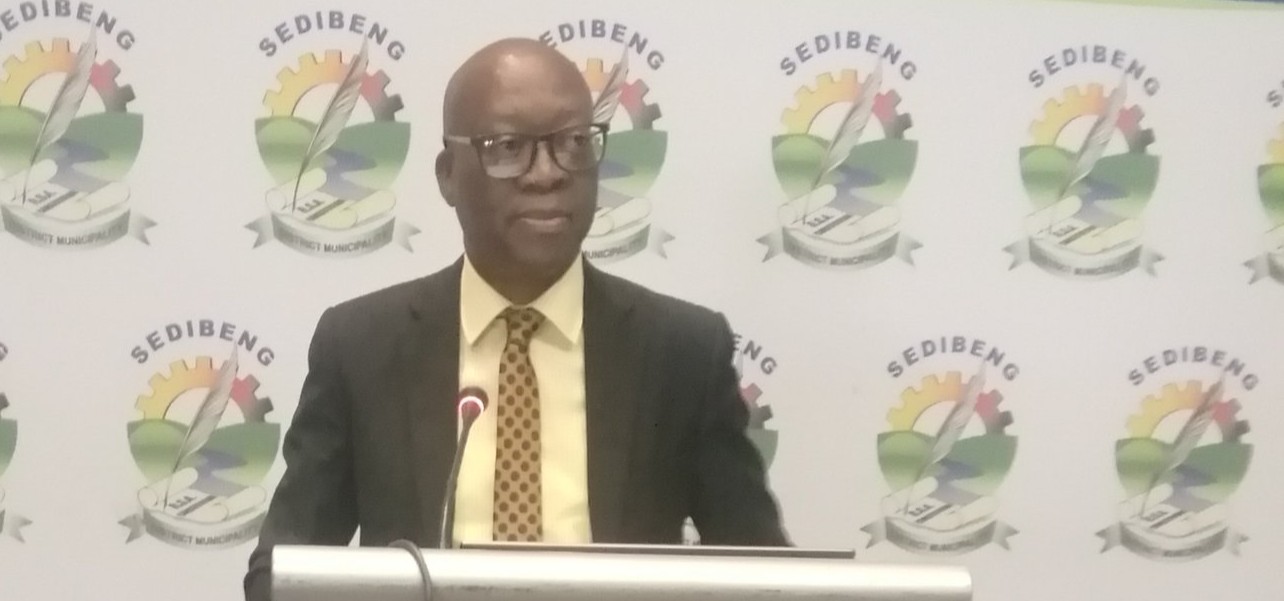
- The High Court declared Motsumi Mathe's precautionary suspension constitutionally invalid.
- The court found that Sedibeng District Municipality failed to give Mathe a meaningful opportunity to respond before suspending him.
- Mathe was ordered to return to work, and the municipality must pay all legal costs.
Sedibeng District Municipality's municipal manager, Motsumi Mathe, has returned to work after the High Court in Johannesburg set aside his precautionary suspension.
Judge SDJ Wilson ruled that Sedibeng acted unlawfully when it suspended Mathe following allegations of misconduct linked to disciplinary proceedings involving the municipality's chief financial officer and related litigation.
While the municipality informed Mathe that it intended to suspend him and invited him to make written representations, it failed to explain why it believed his continued presence in the workplace justified a precautionary suspension.
The court found that this deprived Mathe of a meaningful opportunity to respond to the allegations against him and rendered the suspension unlawful.
Requirements for precautionary suspension
The judgment examined Regulation 6 of the Local Government Disciplinary Regulations for Senior Managers, which governs the suspension of senior municipal officials.
Judge Wilson explained that suspicion of misconduct on its own is not enough to justify a precautionary suspension. A municipality must also have reason to believe that the official's continued presence may jeopardise an investigation, endanger people or municipal property, undermine stability in the municipality, interfere with witnesses or result in further misconduct.
"A mere suspicion of misconduct is insufficient to suspend a senior manager." Judge Wilson wrote in the judgment. The judge further noted that before a senior manager can be suspended, the municipality must provide sufficient information to allow that person to make meaningful representations about why the suspension should not occur.
The court found that Sedibeng failed to identify any facts showing that the requirements for suspension were present and failed to place those reasons before Mathe when inviting his response. Judge Wilson said, "Mr Mathe is plainly correct."
The judge found that there was nothing before the court showing that the municipality had identified the facts on which it believed the requirements for suspension had been met or that Mathe had been allowed to address them.
Failure rendered suspension unlawful
The municipality argued that it had substantially complied with the regulations, but the court rejected that argument. Judge Wilson remarked, "I do not see how."
The judge held that because Mathe was never informed of the municipality's reasons for believing the regulatory requirements had been met, his right to make representations was effectively meaningless.
According to the court, the municipality's conduct breached the principle of legality contained in Section 1(c) of the Constitution.
The municipality also argued that the matter was not urgent and relied on the Constitutional Court's decision in Long v South African Breweries. However, Judge Wilson found that the case was distinguishable because Mathe enjoyed a specific statutory right to make representations before a suspension could be imposed.
Referring to the municipality's conduct, Judge Wilson said, "Here, none of that happened."
Municipality ordered to reinstate Mathe
The court declared the municipal council's resolution of 12 May 2026 constitutionally invalid and set it aside. Sedibeng District Municipality, its Executive Mayor and its Acting Municipal Manager were ordered to allow Mathe to resume his duties immediately and to comply with the applicable regulations should they decide to take further disciplinary steps against him.
Judge Wilson emphasised that the judgment did not prevent the municipality from pursuing disciplinary action in future, provided it complied with the law. "The purpose of my order is not to prejudge Mr Mathe's case, but to ensure that it is dealt with according to law," the judge said.
The court also granted a punitive costs order against the municipality. Judge Wilson agreed with submissions that the municipality's conduct warranted a higher costs order, finding that, "The illegality in this case is so brazen as to justify a costs order as between attorney and client."
Get your news on the go. Click here to follow the Conviction WhatsApp channel.
