

Skip to content
Close Menu
ConvictionConviction
  • Home
  • Law & Justice
  • Special Reports
  • Opinion
  • Ask The Expert
  • Get In Touch

Subscribe to Updates

Get the latest creative news from FooBar about art, design and business.

What's Hot

Unfair dismissal in South Africa: What the law says, and where things go wrong

June 5, 2026

High Court rules Bitcoin is both money and capital under SA’s exchange control laws

June 5, 2026

Authorities fail to overturn ruling linked to cyclist’s fall into hidden 6.2-metre culvert

June 5, 2026
Facebook X (Twitter) Instagram
Trending
  • Unfair dismissal in South Africa: What the law says, and where things go wrong
  • High Court rules Bitcoin is both money and capital under SA’s exchange control laws
  • Authorities fail to overturn ruling linked to cyclist’s fall into hidden 6.2-metre culvert
  • Municipality cannot reopen a case settled by a binding plea and sanction agreement
  • FSCA imposes R5.39 million in penalties on financial services firms
  • Wits student wins leave to appeal refusal to renew 2026 registration
  • Africa Day celebrations and the enduring gendered contradictions of African unity
  • Businesses urged to make only provable advertising claims
Facebook X (Twitter) Instagram
ConvictionConviction
Sonneblom
  • Home
  • Law & Justice
  • Special Reports
  • Opinion
  • Ask The Expert
  • Get In Touch
ConvictionConviction
Home » Judges Matter urges Parliament to act on Judge President Mbenenge misconduct finding
Constitutional Law

Judges Matter urges Parliament to act on Judge President Mbenenge misconduct finding

The call for urgent action comes after the Judicial Service Commission found Eastern Cape Judge President Selby Mbenenge guilty of gross misconduct.
Kennedy MudzuliBy Kennedy MudzuliApril 18, 2026Updated:April 18, 2026No Comments
Facebook Twitter Pinterest LinkedIn WhatsApp Reddit Tumblr Email
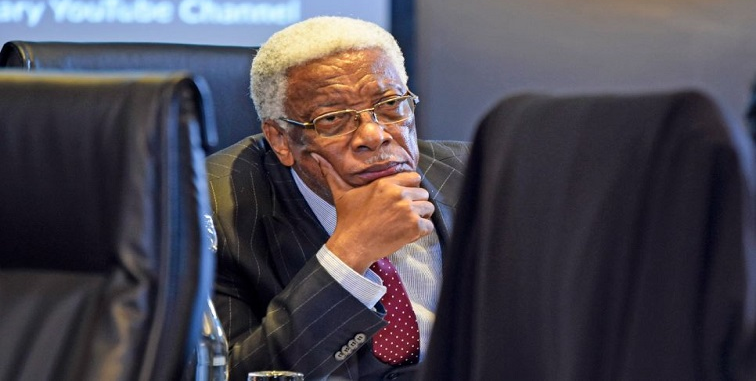
Selby Mbenenge during proceedings before the Judicial Service Commission tribunal into misconduct allegations.
Share
Facebook Twitter LinkedIn Pinterest Email
  • Judges Matter is pushing Parliament to fast-track the Mbenenge matter after the JSC’s damning gross misconduct finding.
  • The case centres on a complaint by court secretary Andiswa Mengo, who alleged sustained inappropriate conduct and an abuse of power.
  • The organisation says Parliament must now decide whether Mbenenge is fit to remain on the bench.

Judges Matter is calling on South Africa’s Parliament to urgently prioritise proceedings against Judge President Selby Mbenenge, after the Judicial Service Commission (JSC) found him guilty of gross misconduct in a ruling that carries significant constitutional weight.

The matter has now entered a critical constitutional phase. The ball is firmly in the National Assembly’s court, and it must decide whether Mbenenge should remain on the bench.

The case has its roots in a complaint lodged by Andiswa Mengo, a secretary at the Makhanda High Court, who accused Mbenenge of sustained inappropriate conduct between June 2021 and November 2022. Her complaint put one of South Africa’s most senior judges under intense scrutiny and set in motion formal disciplinary proceedings.

From tribunal finding to JSC reversal

The matter was first heard by a Judicial Conduct Tribunal, which examined a series of WhatsApp exchanges between Mbenenge and Mengo. The Tribunal described the interaction as a “flirtatious relationship” and concluded that, while the conduct breached the Code of Judicial Conduct, it fell short of gross misconduct or sexual harassment. It found the exchanges were not unwelcome and were broadly consensual, ultimately returning a finding of misconduct only.

That conclusion did not stand. The JSC rejected the Tribunal’s reasoning outright and substituted its own finding, concluding that Mbenenge’s conduct met the constitutional threshold for gross misconduct. It found that “the conduct of Judge President Mbenenge constitutes gross misconduct in terms of Section 177(1)(a) of the Constitution.”

In doing so, the JSC criticised the Tribunal for focusing too narrowly on consent and timing, rather than properly weighing the nature of the conduct and the context in which it occurred. The JSC found that “the Tribunal understated the significance of the admitted conduct and failed to properly assess the extent to which Section 5.1 was contravened.”

Power imbalance central to the complaint

At the heart of the JSC’s reasoning was the stark power imbalance between Mbenenge and Mengo. The Tribunal had treated the interaction as broadly equal, an assessment the JSC flatly rejected, stressing that Mbenenge’s position as Judge President was a defining factor.

The JSC found that “the Tribunal failed to properly consider the impact of the relationship of power between JP Mbenenge and the complainant.” It further held that “such conduct is grossly inappropriate for a person holding the position of Judge, especially in relation to a person in the position of the complainant.”

The JSC also overturned the Tribunal’s conclusion that no sexual harassment had occurred, finding that the wrong standard had been applied and that too little weight had been given to Mengo’s position and the broader context of the interactions.

The constitutional process now moves to Parliament

With the gross misconduct finding in place, the JSC has set the constitutional removal process in motion. It confirmed it will submit its findings, along with reasons and the Tribunal report, to the Speaker of the National Assembly in terms of the Judicial Service Commission Act.

The JSC stated that “the Commission will accordingly submit to the Speaker of the National Assembly its findings, together with reasons and a copy of the report.” It has also invited public submissions on whether it should advise the President to suspend Mbenenge while the parliamentary process runs its course.

Under Section 177 of the Constitution, Parliament must now decide whether to pass a resolution calling for Mbenenge’s removal. If backed by a two-thirds majority, the President would be constitutionally obliged to remove him from office.

Judges Matter calls for urgency and accountability

Against this backdrop, Judges Matter has urged Parliament to act without delay, saying the National Assembly must handle the process efficiently and in a way that reflects the gravity of the JSC’s findings.

The organisation stressed that the constitutional framework depends on timely legislative action once such findings are made, and that any delay risks eroding public confidence in the judiciary and hollowing out the very accountability mechanisms designed to protect it.

Judges Matter also noted that other judicial conduct matters remain before Parliament, including those involving Judge Nana Makhubele and Judge Mushtak Parker.

Andiswa Mengo, a Makhanda High Court staff member who brought the complaint against Judge President Selby Mbenenge.

Conviction.co.za

Get your news on the go. Click here to follow the Conviction WhatsApp channel.

Andiswa Mengo judicial misconduct Judicial Service Commission Parliament South Africa Selby Mbenenge
Share. Facebook Twitter Pinterest LinkedIn Tumblr Telegram Email
Kennedy Mudzuli

Multiple award-winner with passion for news and training young journalists. Founder and editor of Conviction.co.za

Related Posts

Mbeki and Mabandla accuse TRC Commission of sidestepping court challenge

May 29, 2026

Anti-money laundering Bill proposes lifestyle audits and tougher penalties

May 29, 2026

Ramaphosa says Phala Phala panel relied on hearsay and misunderstood its mandate

May 26, 2026
Leave A Reply Cancel Reply

Prove your humanity: 9   +   3   =  

Subscribe to our newsletter:
Top Posts

Making sectional title rules that work: A practical guide

January 17, 2025

Protection order among the consequences of trespassing in an ‘Exclusive Use Area’

December 31, 2024

Between a rock and a foul-smelling place

November 27, 2024

Irregular levy increases, mismanagement, and legal threats in a sectional title scheme

June 2, 2025
Don't Miss
Employment and Labour Law Series
7 Mins Read

Unfair dismissal in South Africa: What the law says, and where things go wrong

By Ann-Suhet MarxJune 5, 20267 Mins Read

Unfair dismissal is one of the most common workplace disputes in South Africa. Understanding the rules can help both employees and employers avoid costly mistakes.

High Court rules Bitcoin is both money and capital under SA’s exchange control laws

June 5, 2026

Authorities fail to overturn ruling linked to cyclist’s fall into hidden 6.2-metre culvert

June 5, 2026

Municipality cannot reopen a case settled by a binding plea and sanction agreement

June 5, 2026
Stay In Touch
  • Facebook
  • Twitter
  • WhatsApp
Demo
About Us
About Us

Helping South Africans to navigate the legal landscape; providing accessible legal information; and giving a voice to those seeking justice.

Facebook X (Twitter) YouTube WhatsApp Twitch RSS
Latest posts

Making sectional title rules that work: A practical guide

January 17, 2025

Protection order among the consequences of trespassing in an ‘Exclusive Use Area’

December 31, 2024

Between a rock and a foul-smelling place

November 27, 2024
OUR PICKS

Agricultural advisors declared scientists in landmark Labour Court ruling

February 17, 2026

R13,914 debt triggers sale of R380 000 home, transfer halted amid execution flaws

April 20, 2026

Understanding employee rights, workplace protections and grievance resolution in South Africa

June 8, 2025
© 2026 Conviction.
  • Home
  • Law & Justice
  • Special Reports
  • Opinion
  • Ask The Expert
  • Get In Touch

Type above and press Enter to search. Press Esc to cancel.

Powered by
►
Necessary cookies enable essential site features like secure log-ins and consent preference adjustments. They do not store personal data.
None
►
Functional cookies support features like content sharing on social media, collecting feedback, and enabling third-party tools.
None
►
Analytical cookies track visitor interactions, providing insights on metrics like visitor count, bounce rate, and traffic sources.
None
►
Advertisement cookies deliver personalized ads based on your previous visits and analyze the effectiveness of ad campaigns.
None
►
Unclassified cookies are cookies that we are in the process of classifying, together with the providers of individual cookies.
None
Powered by